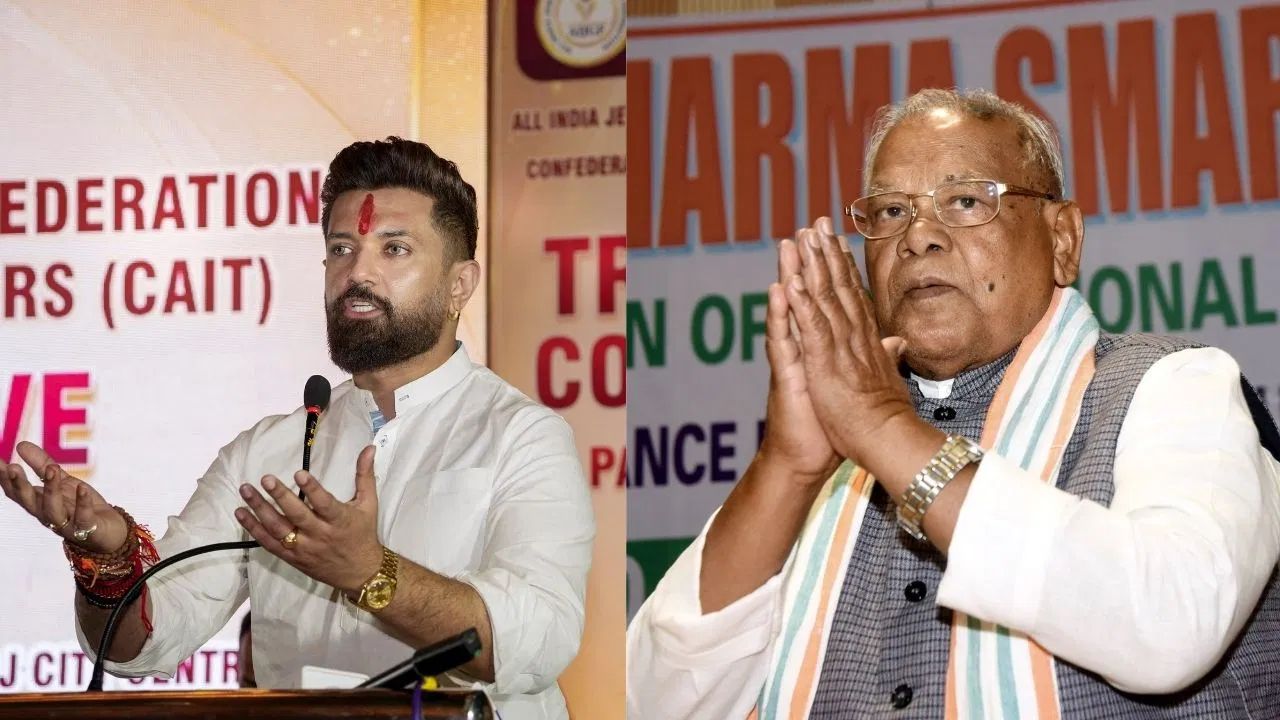
Union Ministers Chirag Paswan and Jitan Ram Manjhi clashed publicly on August 29, 2026, over the sub-categorization of Scheduled Caste reservations. Paswan opposed internal divisions and creamy-layer criteria, arguing quotas address social discrimination. Meanwhile, Manjhi and his party backed targeted welfare to protect the most marginalized communities.
Backed by official political statements, a sharp disagreement between NDA allies over Scheduled Caste sub-categorization has exposed deep policy divisions regarding social justice and reservation frameworks.
Political tensions within the ruling alliance surfaced in Patna on August 29, 2026, as two prominent Dalit leaders and Union Ministers—Lok Janshakti Party (Ram Vilas) chief Chirag Paswan and Hindustani Awam Morcha (Secular) founder Jitan Ram Manjhi—publicly sparred over the sub-classification of Scheduled Caste (SC) quotas. The dispute escalated following remarks by Manjhi’s son and Bihar minister Santosh Kumar Suman, who advocated for a "quota within a quota" to ensure benefits reach the most deprived segments.
The disagreement brings the legal complexities of the Supreme Court's 2024 verdict on sub-categorization directly into the political arena. While the debate centers on equitable distribution for extremely backward sub-castes, it has triggered mutual resignation demands and highlighted competing visions of social engineering within India's political landscape.
Ideological Divide Over Social Discrimination and Economic Status
The confrontation underscores fundamentally different interpretations of why reservation policies were embedded in the Constitution. According to official media statements and press briefings recorded in Patna, the core arguments include:
Paswan’s Opposition to Sub-Quotas: Lok Janshakti Party chief Chirag Paswan asserted that dividing the 22 Scheduled Caste groups in Bihar weakens collective social strength. He maintained that reservation is rooted strictly in historical and ongoing social discrimination—such as untouchability—rather than economic metrics.
Counter-Demand on Resignations: Challenging proponents of the creamy-layer concept, Paswan stated that leaders advocating for economic caps on SC reservations should first surrender their own quota benefits and ministerial posts.
Manjhi’s Call for Targeted Welfare: Defending the sub-categorization model, Jitan Ram Manjhi and Santosh Kumar Suman argued that a small percentage of dominant groups capture the vast majority of benefits, leaving ultra-marginalized communities—such as the Musahar and Dom castes—unrepresented.
Alliance Fallout and Counter-Claims: Rejecting Paswan’s stance, Manjhi countered that failing to protect the most deprived sections harms public interest, leading both camps to question each other's commitment to the underprivileged.
Why It Matters
The practical implications of this political standoff resonate deeply across upcoming electoral battlegrounds and broader social welfare administration. For citizens, regional parties, and lawmakers, the debate dictates whether state governments will utilize Supreme Court permissions to sub-classify reserved categories. How political alliances navigate this tension directly impacts marginalized community empowerment, legislative stability, and coalition dynamics.
Key Facts at a Glance
Event: Public disagreement between NDA Union Ministers over Scheduled Caste reservation sub-categorization.
Key Figures: LJP (Ram Vilas) chief Chirag Paswan and HAM(S) leader Jitan Ram Manjhi.
Date: August 29, 2026.
Location: Patna, Bihar.
Core Conflict: Paswan opposes internal quotas and creamy-layer criteria to preserve Dalit unity, while Manjhi advocates targeted sub-quotas for the most deprived castes.
FAQ Section
What caused the public clash between Chirag Paswan and Jitan Ram Manjhi?
The dispute erupted after Jitan Ram Manjhi’s party supported the sub-categorization of Scheduled Castes and the introduction of creamy-layer principles, which Chirag Paswan strongly opposed.
What is Chirag Paswan's core argument against sub-categorization?
Paswan argues that SC reservation is anchored in historical social discrimination and untouchability, warning that dividing the community into sub-categories fractures collective social justice.
Why does Jitan Ram Manjhi favor creating sub-quotas within Dalit reservations?
Manjhi and his supporters contend that benefits under the current framework disproportionately favor certain groups, leaving extremely marginalized sub-castes like the Musahar community completely unrepresented.
Where can readers find verified official reports regarding this political debate?
Comprehensive tracking of ministerial statements and official press releases is available via The Economic Times and The Times of India.
Source: The Economic Times, The Times of India, The Print, Zee News