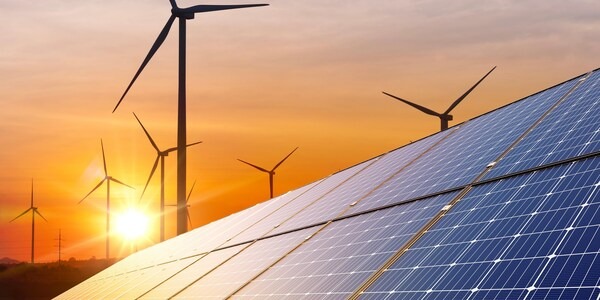
Despite a €10 billion partnership, India and Germany’s solar cooperation faces significant hurdles. Implementation gaps in skilled labor transfer, shifting German subsidy policies, and Indian infrastructure bottlenecks have stalled the "solar promise." While green hydrogen and grid-level dialogues succeed, the ground-level solar sector remains mired in execution challenges.
Despite a multi-billion euro partnership, the bilateral solar energy cooperation between India and Germany continues to struggle with implementation gaps and workforce integration challenges.
NEW DELHI — For years, the strategic partnership between India and Germany has been touted as a blueprint for the global energy transition. With a massive €10 billion commitment through 2030 under the Green and Sustainable Development Partnership (GSDP), the two nations have aimed to drive innovation in renewable energy. However, recent reports indicate that the operational reality of this collaboration—particularly in the solar sector—is falling short of the ambitious political rhetoric, leaving stakeholders questioning the efficacy of the current framework.
Implementation Gaps in Solar Ambitions
While policy dialogue remains robust—highlighted by the Indo-German Energy Forum’s ongoing efforts in green hydrogen and grid integration—the practical implementation of joint solar initiatives has encountered persistent bottlenecks. A primary point of friction lies in the disconnect between large-scale governmental agreements and ground-level execution.
A significant issue highlighted in recent industry reports involves failed attempts at skilled labor migration. Despite formal agreements, such as the initiative to train and transfer skilled workers in the solar sector, reports have confirmed that, in several instances, not a single professional has migrated under these specific schemes. Industry experts note that the focus has often shifted toward domestic training rather than facilitating the cross-border professional integration initially promised to bolster the solar workforce.
Market Hurdles and Investment Uncertainties
In Germany, domestic shifts are also impacting the partnership's momentum. In March 2026, the German government discontinued state subsidies for rooftop solar installations up to 25 kW, citing a decline in photovoltaic prices. Analysts warn that this policy change could stifle investment and reduce incentives for new installations, potentially dampening the collaborative energy in the solar value chain.
In India, while utility-scale solar projects have seen strong auction activity, implementation remains inconsistent. As noted by the Climate Action Tracker, while India has surpassed its interim renewable capacity targets, the transition from successful auctions to actual project commissioning is slowed by transmission delays, land acquisition hurdles, and the renegotiation of power purchase agreements.
Official Sources and Perspectives
According to the Ministry of External Affairs, the GSDP framework has already earmarked approximately €5 billion since 2022 for climate and energy projects. Government officials from both nations, including India’s Ministry of New and Renewable Energy (MNRE), maintain that the partnership remains vital for energy security.
"Continued cooperation between governments, industry stakeholders, and training institutions remains important to align qualifications with actual labour market needs," said Mr. Wedepohl, managing director of International Affairs at BSW Solar. Meanwhile, German Ambassador Dr. Philipp Ackermann has consistently framed the partnership as an economic and strategic necessity to reduce reliance on imported fossil fuels, despite the challenges currently hindering specific solar initiatives.
Why It Matters
The gap between the "solar promise" and reality carries practical implications for both nations. For India, which targets 500 GW of non-fossil fuel capacity by 2030, the reliance on German technology and financing is essential. For Germany, the collaboration is a key pillar of its global climate strategy. If the current bottlenecks—ranging from vocational training mismatches to transmission infrastructure—are not resolved, the two countries risk failing to capitalize on their shared ambition to lead the global shift toward clean, decentralized energy.
Key Facts at a Glance
Funding Status: Out of a €10 billion commitment through 2030, roughly €5 billion has been earmarked since 2022 for climate and renewable projects.
Workforce Challenges: Recent agreements regarding the transfer of skilled solar professionals have faced implementation failures, with few to no workers migrating under initial partnership schemes.
Policy Shifts: Germany’s recent discontinuation of subsidies for small-scale rooftop solar (up to 25 kW) has raised concerns about future investment incentives.
Capacity Targets: India remains committed to 500 GW of non-fossil fuel capacity by 2030, though experts warn that the current "installation-to-generation" transition is stagnant due to low storage and grid integration issues.
FAQ Section
Why is the solar partnership failing to meet expectations? Implementation is hindered by bottlenecks in skilled labor migration, transmission delays, and a disconnect between high-level policy goals and local operational realities.
Is German funding being utilized effectively? Yes, roughly half of the committed €10 billion has been utilized or earmarked for projects, but the efficiency of solar-specific initiatives remains under scrutiny.
How does India’s rooftop solar program fit in? While the rooftop sector is a core focus, it faces challenges such as consumer awareness, business model scalability, and the capability of distribution companies (DISCOMs) to manage integration.
Are there any successes in the partnership? Yes, successful cooperation is evident in areas like green hydrogen roadmaps, battery technology centers of excellence, and grid modernization dialogues.
Source: The Hindu, Ministry of External Affairs (India), Climate Action Tracker, Indo-German Energy Forum