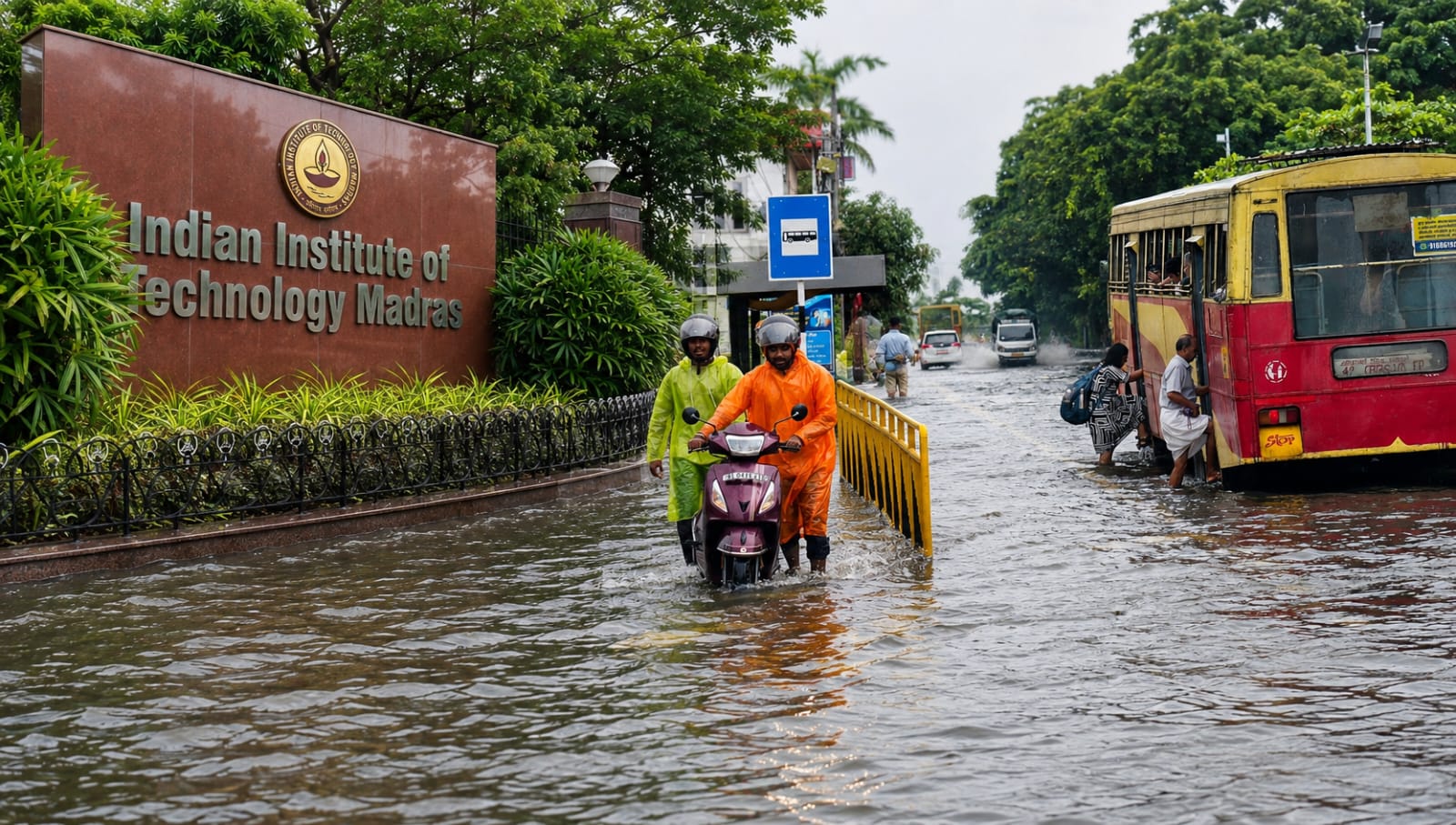
Three years after submission, an IIT Madras hydrodynamic report proposing structural flood mitigation for Kerala's Kuttanad region remains unexecuted. Recommending parallel bypass channels to the Thottappally Spillway and polder fortification, implementation remains stalled due to pending central DPR clearances as residents battle recurring monsoon inundations.
THIRUVANANTHAPURAM — A comprehensive hydrodynamics study conducted by the Indian Institute of Technology (IIT) Madras and the Centre for Water Resources Development and Management (CWRDM) remains unimplemented three years after its submission, leaving the low-lying Kuttanad region vulnerable to recurring seasonal floods.
Commissioned by the Kerala Irrigation Department following severe flood events, the report outlined concrete structural measures to create "room for the river" by expanding spillways, constructing parallel channels, and deploying strategic regulators. However, local residents in Alappuzha and Kottayam districts continue to face annual inundation while waiting for policy action.
Technical Recommendations and Proposed Solutions
The IIT Madras report, titled Hydrodynamic Study for the Scheme-Kuttanad Package-Flood Management Programme-Development of the Thottappally Leading Channel, examined flood dynamics for events ranging from 5-year to 100-year return periods. Key technical solutions proposed in the report include:
Korankuzhy Thodu Parallel Channel: Constructing a parallel bypass channel near Korankuzhy Thodu to divert excess water toward the Thottappally Spillway with minimal disruption to local residential areas.
Veeyapuram Link: Creating a secondary channel linking the Pampa River near Veeyapuram to the Thottappally Spillway to reduce river overtopping in Pullangady and Thakazhy.
Regulator Deployment: Setting up water-flow regulators at critical junctures such as Kuthiyathodu to manage downstream water levels effectively.
Bund Strengthening: Raising and fortifying outer bunds safeguarding vulnerable agricultural polders in Kavalam and Kidangara.
Desilting Estuaries: Clearing the persistent sandbar at the Thottappally spillway mouth to ensure uninterrupted floodwater discharge into the Arabian Sea.
Operational Overview and Project Status
| Project Parameter | Report Details & Current Status |
| Executing Agencies | IIT Madras & CWRDM |
| Commissioning Authority | Irrigation Department, Government of Kerala |
| Core Concept | "Room for the River" (Dutch Flood Mitigation Adaptation) |
| Submission Year | 2023 |
| Key Bottlenecks | Pending Detailed Project Report (DPR) clearance from Central Government |
Official Sources Section
Project details, scientific simulations, and governmental responses are documented in filings by the Kerala Irrigation Department, research bulletins from IIT Madras, and public statements released through the [suspicious link removed].
Official Statements
Former Water Resources Minister Roshy Augustine stated that a separate Detailed Project Report (DPR) covering the Pampa, Manimala, and Achankovil rivers—based on scientific studies—had been submitted to the Union government. "We haven't got the approval from the Centre," Augustine said, noting that the project is designed to expand the river basin carrying capacity.
Why It Matters
Kuttanad lies below sea level, making traditional evacuation measures insufficient without long-term structural engineering solutions. Implementing the IIT Madras recommendations would safeguard agricultural polder lands, protect thousands of homes from annual flood destruction, and stabilize the agrarian economy across Alappuzha and Kottayam districts.
Key Facts at a Glance
Scientific Study: Hydrodynamic research led by IIT Madras and CWRDM completed in 2023.
Primary Recommendation: Construction of a parallel channel at Korankuzhy Thodu to route floodwaters into the Thottappally Spillway.
Administrative Status: State plans remain stalled pending Central DPR approval and funding allocations.
Local Impact: Thousands of residents in Kuttanad continue to face annual inundation during monsoons.
Frequently Asked Questions
What was the main recommendation of the IIT Madras report on Kuttanad?
The report recommended creating parallel channels—specifically near Korankuzhy Thodu—to direct floodwater safely toward the Thottappally Spillway, along with strategic regulators and bund fortifications.
Why has the Kuttanad flood mitigation project been delayed?
Implementation has been delayed due to administrative hurdles, local concerns regarding habitat disruption, and pending Detailed Project Report (DPR) approvals from the Central Government.
What is the "Room for the River" concept mentioned in the study?
It is a flood management framework adapted from the Netherlands that focuses on giving rivers more space to expand through bypass channels and floodplains rather than relying solely on embankments.
Source: Official research reports by IIT Madras, administrative updates from the Kerala Irrigation Department, and statements documented by the Press Trust of India.