TMC West Bengal president Chandrima Bhattacharya resigned from all party posts on July 4, 2026, amid a bitter power struggle between the Mamata Banerjee and Ritabrata Banerjee-led factions. Her departure includes relinquishing roles as a bank signatory and ECI representative, marking a significant escalation in the party's ongoing organizational collapse.
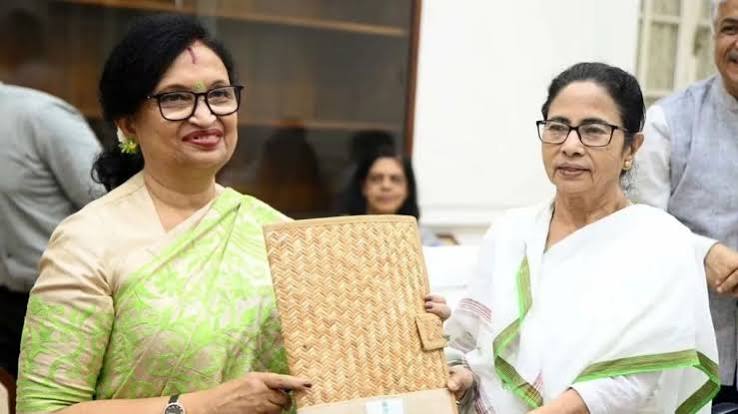
KOLKATA — The Trinamool Congress (TMC) faced a major organizational collapse on Saturday, July 4, 2026, as Chandrima Bhattacharya, the party's West Bengal president, announced her resignation from all official posts. Her departure, coming barely a month after she was appointed to lead the state unit, signals a profound intensification of the internal power struggle currently dismantling the Mamata Banerjee-led faction.
In a formal letter addressed to Mamata Banerjee, Ms. Bhattacharya confirmed her decision to step down from the state presidency and relinquish all other organizational responsibilities, including her role as an authorized signatory for party bank accounts and the party’s representative before the Election Commission of India.
A "Deeply Hurt" Departure
Bhattacharya, a former minister and long-time confidante of Mamata Banerjee, indicated that the decision followed a tense interaction with the party supremo. Reports suggest Banerjee had accused Bhattacharya of allowing a rebel faction—led by Leader of the Opposition Ritabrata Banerjee—to seize control of the party’s state headquarters, Trinamool Bhavan, in Kolkata.
"I was deeply hurt when she called me to say that I had handed over the party office to them, although I do not know how I did that," Bhattacharya told reporters following her announcement. "Once those fundamental binding forces are gone, there is no reason for me to stay in the party."
Growing Factionalism and Defections
The resignation occurs as the TMC grapples with an unprecedented internal split. Following the party's significant defeat in the 2026 West Bengal Assembly elections, where the BJP secured power, the organization has fractured into two primary camps: one led by Mamata Banerjee and another spearheaded by Ritabrata Banerjee.
The rebel faction has been aggressively asserting its control, recently claiming the TMC's Kolkata headquarters, replacing locks, and announcing a parallel leadership structure that recognizes Arup Roy as the party chief. This internal instability has had a ripple effect beyond state borders, with reports indicating that 20 of the party’s 28 Lok Sabha MPs have moved to align themselves with the National Citizens' Party of India and the BJP-led NDA.
Why It Matters: An Organization in Flux
The exit of a senior figure like Bhattacharya creates a power vacuum that further isolates the Mamata Banerjee-led camp. For the party, the loss of its primary authorized signatory effectively complicates the management of legal and financial affairs during a period of intense litigation over the party's official identity and assets. For observers of West Bengal politics, this development suggests that the TMC’s internal fracture is reaching a point of no return.
Key Facts at a Glance
Sudden Resignation: Chandrima Bhattacharya stepped down on July 4, 2026, after only one month as the state president.
Total Withdrawal: She has relinquished all party positions, including roles as an authorized signatory for bank accounts and ECI representative.
Deepening Split: The party is currently divided between the Mamata Banerjee-led faction and a rebel group led by Ritabrata Banerjee.
Wider Exodus: The resignation follows a trend of departures involving former ministers, Rajya Sabha MPs, and local councillors in the wake of the 2026 assembly election loss.
FAQ
Q: Will Chandrima Bhattacharya join the opposition?
A: As of Saturday, Bhattacharya has resigned from her party posts but has not declared an intent to join the rebel faction or any other political party.
Q: Who is currently leading the Trinamool Congress?
A: The party is currently facing a leadership crisis, with the Ritabrata Banerjee-led faction claiming authority over the headquarters and naming Arup Roy as the party chief, while the Mamata Banerjee faction continues to maintain its own organizational structure.
Q: How does this affect the party's financial and legal operations?
A: By withdrawing as the authorized signatory, Bhattacharya has created a significant administrative hurdle for the Mamata Banerjee-led faction, effectively freezing their ability to manage bank accounts and formal filings.
Source: The Hindu, The Economic Times, The Indian Express, ANI News