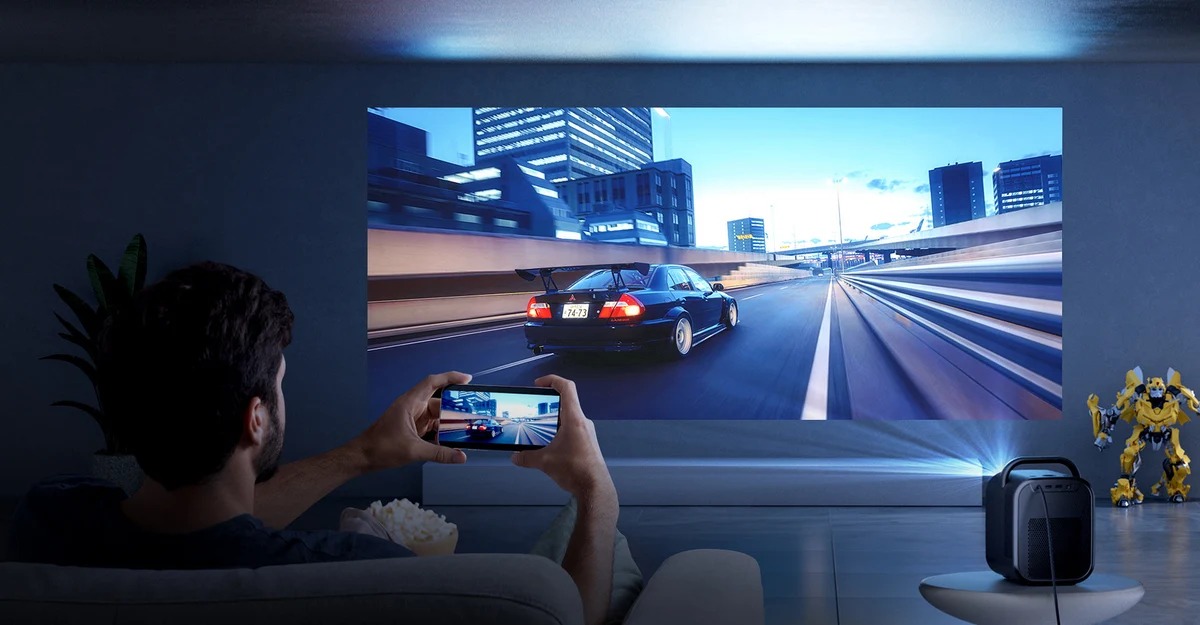
Portable smart projectors provide massive, flexible screens and easy mobility, actively challenging traditional televisions across home entertainment markets. Consumers must carefully evaluate ambient room lighting, hardware audio capabilities, and dedicated wall space before switching. Televisions remain superior for daytime viewing, while projectors dominate darkened environments designed for cinematic movie nights.
Can a Portable Smart Projector Really Replace Your TV?
You're standing in the electronics aisle, torn between a sleek new TV and one of those trendy portable projectors that promises movie-theatre vibes in your living room. It's a tempting swap but before you ditch your television for good, there are a few realities worth knowing.
Industry analysts recently broke down exactly what it takes to make that switch work, and the answer boils down to three things: how much light gets into your room, whether you have a decent wall to project onto, and how much you care about sound quality.
The Screen Size Trade-Off
Let's start with the obvious win for projectors: size. A projector can turn any blank wall into a screen far bigger than most televisions could ever manage, without the need to budget for an oversized TV or rearrange your furniture around it.
But here's the catch. That massive image only looks good in the right lighting.
Why Your Living Room's Lighting Matters More Than You Think
Televisions have one big advantage that's easy to overlook: they generate their own light. Every pixel glows on its own, which is why your TV still looks crisp even with sunlight pouring through the windows.
Projectors work completely differently as they bounce light off a wall, rather than producing it directly. That means any competing light source, whether it's an afternoon sun or a bright overhead lamp, will wash out the image and kill the contrast. If you want your projector to actually look good, you'll need to dim the room significantly. Manufacturers like Epson are upfront about this, noting that rooms with more ambient light need projectors with a much higher brightness output (measured in lumens) than a windowless home theatre would require.
Bottom line: if you're someone who likes watching TV during the day with the curtains open, a projector is going to disappoint you.
Smart Features Have Closed the Gap
One thing today's projectors get right and a very important one at that is convenience. Gone are the days of hooking up a laptop or untangling HDMI cables. Most portable smart projectors now come with built-in streaming apps and Wi-Fi, so you can pull up Netflix or YouTube directly, just like a smart TV.
As for image quality, Full HD is perfectly fine for casual viewing. But if you're planning to go big, you'll want a 4K model to keep the picture looking sharp instead of pixelated. And resolution isn't the only spec worth checking. Pay attention to ANSI lumens (brightness), contrast ratio, and refresh rate, since these numbers matter just as much as pixel count when matching a projector to your specific room.
The Real Perk: Portability
This is where projectors truly shine. When you're done watching, you simply pack it away. Want to move movie night from the bedroom to the backyard patio? That's a five-minute job, not a full home theatre installation. Try doing that with a 55-inch television.
The Downside: Sound
Portability comes at a cost, though, and that cost is audio. While some portable projectors do have built-in speakers, sound quality varies wildly between models, and few can match the reliable, room-filling audio that a standard television delivers straight out of the box. If you go the projector route and want audio to match your bigger screen, you'll likely end up shopping for a soundbar or speaker system too. This extra expense is something many buyers don't initially factor in.
So, Is It Worth Switching?
As one industry analysis put it, a portable projector can genuinely replace your TV, but only under the right conditions: you mainly want a big screen for movies and streaming, you have a wall that works, and you're able to control the lighting in the room.
If your household is all about evening movie nights in a darkened living room, a projector could be a fantastic and surprisingly affordable upgrade. But if daytime binge-watching is your thing, or you're not keen on investing in extra speakers, your trusty television probably isn't going anywhere just yet.
Quick FAQ
Can a projector handle daytime viewing?
Not well. Bright ambient light degrades the image significantly. You'd need to either dim the room or invest in a higher-lumen projector paired with an ambient-light-rejecting screen.
Do portable smart projectors need an external streaming device?
Usually not, most modern models come with built-in smart operating systems and app support for direct Wi-Fi streaming.
Do I need a dedicated projection screen?
Not strictly. A smooth, light-coloured wall works fine for casual use, but a proper projection screen will noticeably improve contrast and colour accuracy if you want the best picture.
SOURCE: Mint Gadgets and Appliances / Epson / Smart TV Hardware Guidelines