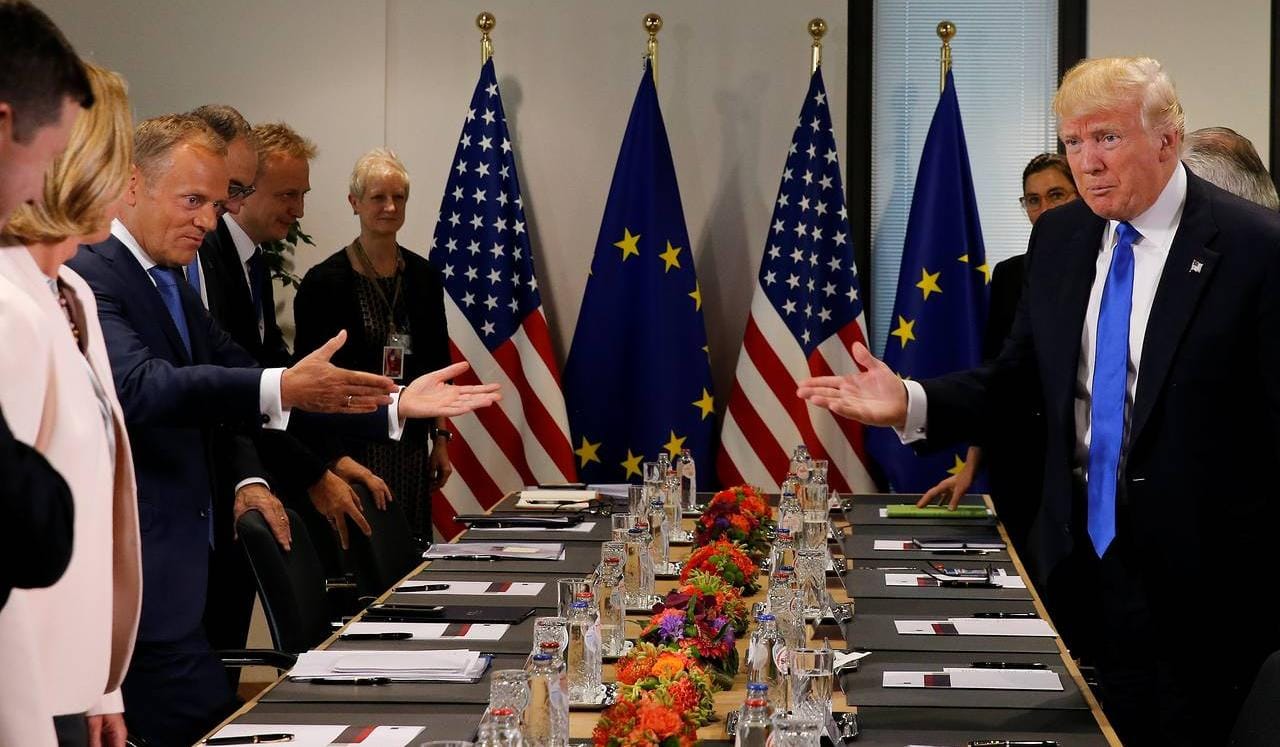
U.S. President Donald Trump announced a Section 301 investigation into European Union regulatory penalties targeting American companies on July 24, 2026. Warning that the EU will face substantial tariffs unless penalties on U.S. tech firms are reversed, the move marks a significant escalation in transatlantic trade friction.
WASHINGTON — U.S. President Donald Trump announced on Friday, July 24, 2026, that his administration is launching a Section 301 investigation into the European Union's regulatory enforcement and fines against American companies. Writing in an official public statement, Trump condemned European regulatory penalties targeting U.S. technology firms, warning that the United States would retaliate by imposing substantial import tariffs on European goods if the penalties are not reversed. The move opens a major new front in transatlantic trade tensions as Washington rebuilds its trade policy architecture.
Escalation Over European Regulatory Actions and Tech Fines
The trade probe specifically targets regulatory decisions and monetary penalties levied by European regulators against U.S. corporations, particularly under the European Union’s antitrust and digital competition frameworks. The statement followed recent European Commission enforcement actions under the Digital Markets Act, including an 890 million euro ($965 million) fine against Google.
Statutory Scope of Section 301
Under Section 301 of the Trade Act of 1974, the Office of the United States Trade Representative (USTR) holds statutory authority to investigate and respond to foreign acts, policies, or practices that are unreasonable, discriminatory, or burden U.S. commerce. If the USTR concludes that European regulatory practices unfairly disadvantage American firms, the administration can legally impose targeted duties, import restrictions, or trade sanctions.
Context: Transition From Emergency Surcharges to Statutory Probes
The directive arrives on the same day the U.S. finalized a separate set of Section 301 forced-labor tariffs ranging from 10% to 12.5% across 60 trading partners, replacing an expiring 150-day temporary global import surcharge. Following a Supreme Court ruling in February that restricted executive tariff powers under national emergency statutes, the administration has systematically shifted to Section 301 trade investigations as its primary legal framework for enforcement.
Trade analysts note that adding a dedicated Section 301 investigation into European tech regulation creates additional leverage for Washington while exposing transatlantic supply chains to new tariff risks.
Impact on Business, Tech Sector, and Financial Markets
The initiation of the investigation increases market uncertainty for multinational companies operating across the Atlantic.
Technology Industry: American tech giants facing European compliance mandates or pending antitrust penalties could gain direct diplomatic leverage, though they risk getting caught in broader regulatory retaliation.
European Exporters: Automakers, luxury goods manufacturers, and industrial exporters across the EU face the prospect of supplemental tariffs should Washington proceed with punitive duties.
Investors and Supply Chains: Global financial markets face heightened volatility as trade policy disputes expand into digital governance and regulatory sovereignty.
Official Sources Section
Regulatory filings, official statements, and government documentation regarding the trade action are available through the following institutional channels:
Quote Section
"European Union taking aim at American companies is not going to continue during the Trump administration," President Donald Trump posted in an official public statement on July 24, 2026. "Please let this TRUTH serve to represent that we will immediately initiate a 301 investigation into the practice of 'robbing' American companies. The European Union will pay a very big price for this illegal and highly unethical conduct. Penalties will be entirely reversed and, we anticipate, a substantial tariff to be placed on them at the earliest possible moment."
Why It Matters
This development signals a structural expansion in U.S. trade policy, shifting trade battles beyond physical goods and into cross-border digital regulation and corporate taxation. For multinational businesses, it demonstrates that regulatory fines issued in Brussels could trigger immediate trade remedies in Washington. If tariffs are enacted, consumer prices on imported European goods could rise while corporate compliance obligations become increasingly politicized across transatlantic markets.
Key Facts at a Glance
Directive Issued: July 24, 2026, targeting European Union regulatory actions.
Legal Mechanism: Section 301 of the Trade Act of 1974, handled by the USTR.
Primary Dispute: EU antitrust fines and Digital Markets Act penalties imposed on American firms.
Demanded Remedy: Complete reversal of regulatory penalties or imposition of substantial retaliatory tariffs.
Frequently Asked Questions (FAQ)
What is a Section 301 investigation?
A Section 301 investigation is a statutory procedure under the Trade Act of 1974 that allows the U.S. government to investigate and respond to foreign trade practices or regulatory policies deemed unfair or restrictive to U.S. commerce.
Why is the U.S. initiating a Section 301 investigation against the EU?
The investigation targets European Union regulatory penalties and antitrust fines levied against American technology companies, which the administration considers unfair and harmful to U.S. economic interests.
How could this action affect European businesses and U.S. consumers?
If the investigation concludes that European regulatory practices burden U.S. commerce, the administration can impose tariffs on European imports, potentially increasing costs for importers and consumers.
How does this action fit into broader U.S. tariff policy?
It represents part of a broader strategy using Section 301 statutory authorities to rebuild U.S. trade enforcement following Supreme Court decisions limiting executive emergency tariff powers.
Source: The White House, Office of the United States Trade Representative (USTR), European Commission.