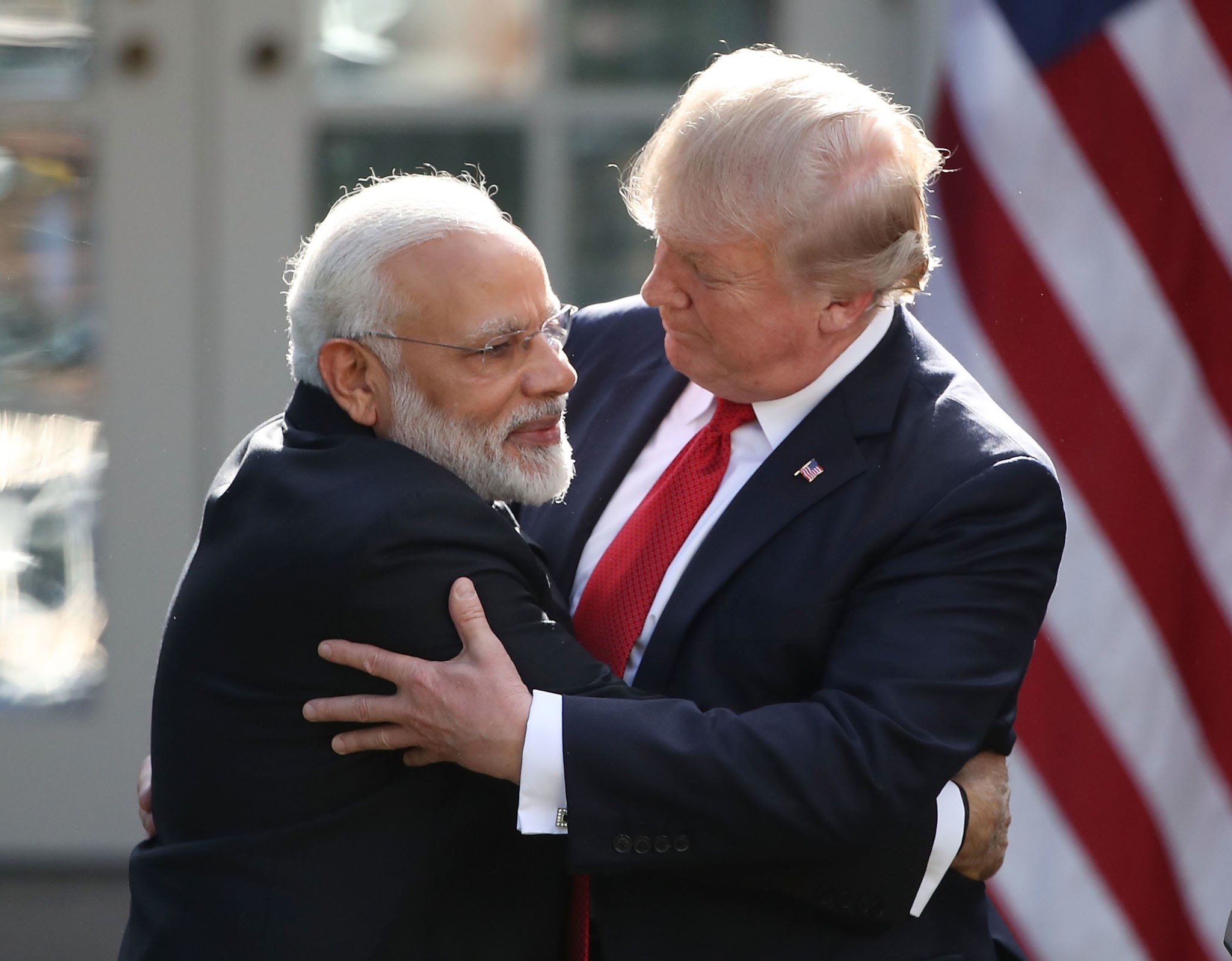
US President Donald Trump highly praised Indian Prime Minister Narendra Modi as a "good friend" during an Oval Office brief, expressing immense confidence that a bilateral trade agreement is imminent. The announcement follows productive four-day negotiations in New Delhi, bringing an interim trade pact into its final execution stages.
WASHINGTON — US President Donald Trump announced on Thursday that the United States and India are moving closer to a comprehensive bilateral trade agreement, explicitly attributing the negotiation progress to his strong personal relationship with Indian Prime Minister Narendra Modi. Speaking to journalists at the White House on June 4, 2026, President Trump struck a highly optimistic note regarding future economic cooperation between Washington and New Delhi, signaling a potential breakthrough after years of complex tariff discussions.
The President’s strategic remarks arrived immediately following the conclusion of intensive, four-day trade negotiations between senior American and Indian officials held in New Delhi from June 1 to June 4, 2026. This development is particularly significant for global financial markets, international investors, and export businesses, as it indicates a strong political willingness to bypass long-standing bureaucratic hurdles in favor of a mutually beneficial interim pact.
Leaders Pivot Toward Mutual Economic Benefits
Addressing reporters in the Oval Office, President Trump emphasized his personal rapport with Prime Minister Modi as a critical driver for the ongoing trade talks. The administration indicated that past grievances regarding lopsided trade imbalances are transitioning into a highly profitable bilateral dynamic.
"I like your Prime Minister a lot. He is a good friend of mine, and we get along well. We have a good relationship," President Trump stated during the briefing. "For years, India took advantage of the United States. They charged us tremendous tariffs and paid nothing. Now it is the exact reverse and we are making a lot of money with India. But we will get to a deal because I like your Prime Minister."
Diplomatic Progress and Sticking Points in New Delhi
The high-level discussions in New Delhi saw delegations from the Office of the United States Trade Representative (USTR) working closely alongside representatives from India's Ministry of Commerce and Industry. According to official briefings from both governments, the sessions covered an expansive portfolio of issues, including:
Trade in physical goods and agricultural commodities.
Simplification of customs procedures and cross-border trade facilitation.
Identification and removal of persistent non-tariff barriers.
Enhanced economic security and supply chain cooperation in the Indo-Pacific.
Confirming the optimistic trajectory, US Ambassador to India Sergio Gor noted that the negotiations have reached their final stages, with approximately 99% of the core structural issues settled. India’s Minister of Commerce and Industry, Piyush Goyal, similarly indicated that technical teams are now concentrating strictly on the final execution details before announcing the initial tranche of the interim deal.
However, a parallel regulatory tracking mechanism continues to shadow the talks. The USTR is currently executing an expansive trade review under Section 301 of the US Trade Act of 1974. This particular review covers roughly 60 global economies—including India, Japan, South Korea, and the United Kingdom—and evaluates import supply chains against forced labor concerns. Under this parallel framework, nations lacking specific import safeguards could face generic tariff increases of up to 12.5%, creating a delicate legal backdrop for the final bilateral signatures.
Official Sources Section
The information detailed in this report is compiled directly from official state press briefings, corporate disclosures, and intergovernmental communications issued by the following authorities:
The White House Executive Office of the President
The Office of the United States Trade Representative USTR
The Ministry of Commerce and Industry, Government of India Ministry of Commerce
Official press statements distributed via the Press Trust of India (PTI)
Quote Section
"The bilateral trade talks were marked by a distinct spirit of cooperation and pragmatism, with both sides reaffirming their absolute commitment to concluding a mutually beneficial agreement that actively strengthens bilateral trade and economic ties."
-Official Statement from the Ministry of Commerce and Industry, India
"Countries that fail to comprehensively address imports linked to forced labor or unfair practices inevitably create uneven, distorted playing fields for American workers."
-Jamieson Greer, United States Trade Representative
Why It Matters
For multinational corporations and investors, a formalized US-India trade agreement establishes structural policy predictability, lowering the risk profile for major supply chain shifts away from East Asia.
For consumers and retail businesses, the reduction of reciprocal tariffs translates directly into lower cross-border acquisition costs for consumer technology, automotive components, agricultural goods, and textiles, stimulating consumer choice and stabilizing local market pricing.
Key Facts at a Glance
Leader Diplomatic Rapport: President Trump explicitly named PM Modi a "good friend," using personal diplomacy to drive the trade narrative.
Negotiation Timeline: A specialized USTR delegation concluded a pivotal four-day negotiation sprint in New Delhi on June 4, 2026.
Deal Proximity: Diplomatic channels report that the interim agreement is nearly finalized, with over 99% of operational terms fully resolved.
Regulatory Shadow: A broader, parallel US Section 301 review concerning global supply chains threatens potential baseline tariffs of up to 12.5% for 60 nations, including India.
FAQ Section
What is the current status of the US-India trade deal?
The United States and India have completed their early June 2026 technical rounds in New Delhi. Officials from both nations state that they are in the final stages of settling the remaining details of an interim economic pact, which will precede a larger Bilateral Trade Agreement (BTA).
Why did President Trump bring up historical tariffs?
President Trump historically criticized India's high tariff landscape, particularly on goods like American motorcycles and agricultural products. His recent remarks acknowledge these past friction points while asserting that updated economic dynamics make a deal highly advantageous for the US now.
What is the Section 301 review mentioned by the USTR?
The Section 301 review is an independent trade investigation conducted by the US government under the Trade Act of 1974. The current review focuses on supply chain integrity across 60 economies. While separate from the bilateral trade deal negotiations, its findings could impose standard duties ranging from 10% to 12.5% on nations failing to meet specific labor compliance rules.
Source: White House Briefing Room, Office of the United States Trade Representative (USTR), Ministry of Commerce and Industry (India), Press Trust of India (PTI).