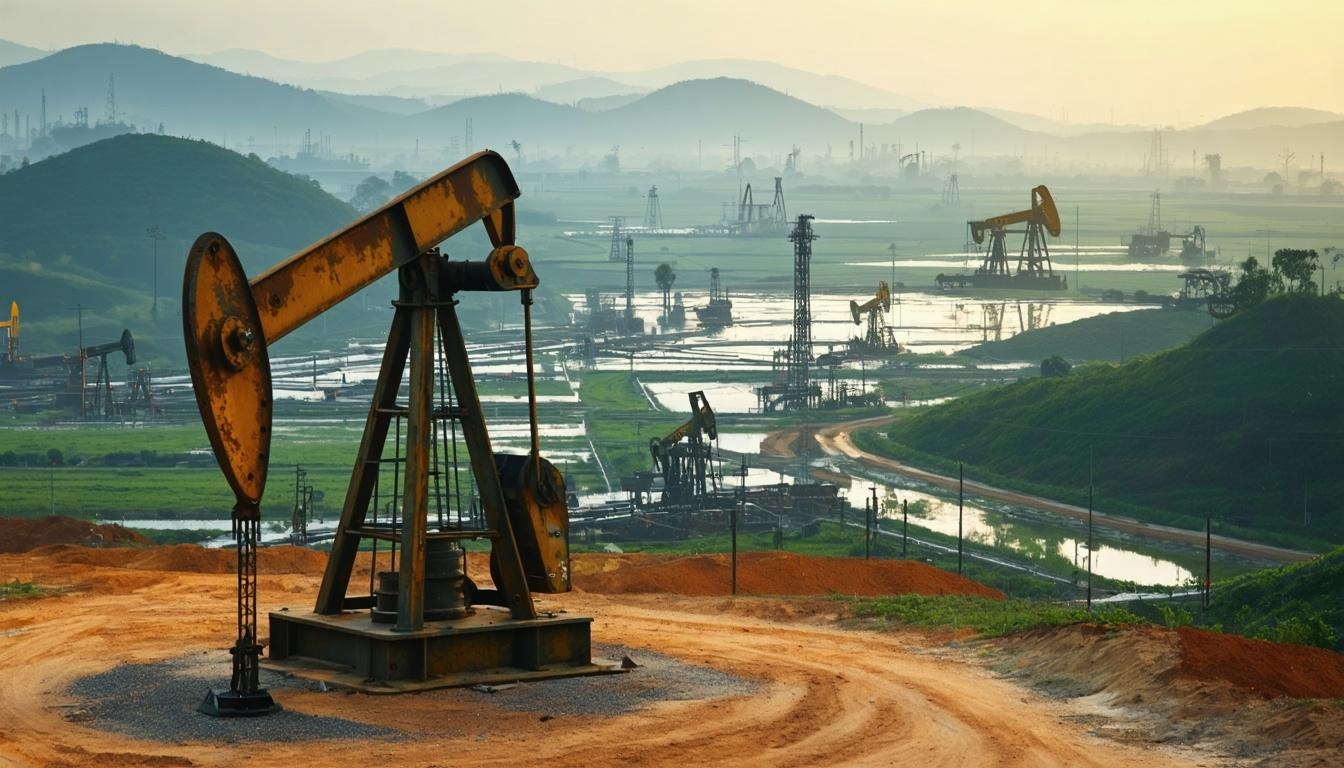
Oil India Limited signed an MoU with the Municipal Corporation of Delhi to establish 500 TPD and 300 TPD compressed bio-gas plants. Official announcements confirm the project will convert organic municipal waste into 30–32 TPD of clean bio-gas, bolstering urban waste management and national renewable energy goals.
Oil India Limited has signed a Memorandum of Understanding with the Municipal Corporation of Delhi to establish compressed bio-gas plants.
Strategic Partnership for Clean Energy and Waste Management
State-owned upstream major Oil India Limited has formalized a strategic partnership by signing a Memorandum of Understanding (MoU) with the Municipal Corporation of Delhi (MCD) to establish advanced compressed bio-gas (CBG) plants. According to official corporate and municipal announcements, the agreement focuses on scaling up municipal solid waste processing and converting organic refuse into clean, usable renewable energy assets within the national capital region.
The initiative is designed to address urban sanitation challenges while simultaneously expanding India's green energy footprint. By leveraging municipal organic waste streams, the collaborative framework aims to curb urban landfill congestion, lower greenhouse gas emissions, and advance national self-reliance goals under clean energy frameworks.
Project Scope and Operational Framework
Under the terms of the newly finalized agreement, Oil India Limited will spearhead the development of designated waste processing facilities. Official disclosures highlight that the project entails building two major compressed bio-gas plants featuring capacities of 500 tonnes per day (TPD) and 300 TPD, respectively.
These high-capacity units are projected to generate approximately 30 to 32 tonnes per day of purified bio-gas from organic waste. Energy sector experts note that integrating such large-scale bio-gas production units into urban centers supports the broader transition toward decentralized renewable energy sources while diversifying public-sector energy portfolios away from conventional fossil hydrocarbons.
Official Sources and Corporate Disclosures
Official details regarding the partnership and plant capacities were retrieved directly from corporate announcements and statutory business filings.
"According to official company statements and municipal disclosures, Oil India Limited partnered with the Municipal Corporation of Delhi to build two Compressed Bio-Gas plants with capacities of 500 TPD and 300 TPD, aiming to produce 30-32 TPD of biogas from organic waste."
Project organizers emphasized that upcoming operational phases will adhere strictly to environmental compliance standards, municipal zoning laws, and technical safety protocols established by urban development authorities.
Why It Matters
The joint initiative carries significant practical implications for urban waste management, municipal sanitation, and India's broader energy transition framework. For citizens and municipal authorities, scaling compressed bio-gas production offers an efficient solution to mounting urban garbage accumulation. For investors and energy analysts, the venture illustrates how traditional hydrocarbon explorers are increasingly incorporating waste-to-energy solutions into their long-term growth trajectories.
Key Facts at a Glance
Partnership Entities: Oil India Limited and the Municipal Corporation of Delhi (MCD).
Plant Capacities: Development of two dedicated compressed bio-gas plants rated at 500 TPD and 300 TPD.
Project Output: Projected generation of 30–32 TPD of clean bio-gas derived from organic municipal waste.
Core Objectives: Enhancing urban waste management, reducing landfill dependency, and expanding national renewable energy capacity.
Frequently Asked Questions
What is the primary objective of the Oil India and MCD agreement?
According to official disclosures, the partnership aims to establish compressed bio-gas plants to process municipal organic waste and generate clean renewable energy.
What are the planned capacities of the compressed bio-gas plants?
The agreement outlines the construction of two facilities with processing capacities of 500 TPD and 300 TPD.
How much bio-gas is expected to be produced daily?
The facilities are projected to yield approximately 30 to 32 tonnes per day of compressed bio-gas.
Where are the official details of this project sourced from?
The information is compiled directly from corporate announcements, official company updates, and municipal regulatory filings.
Source: Oil India Corporate Disclosures, ScanX Market News