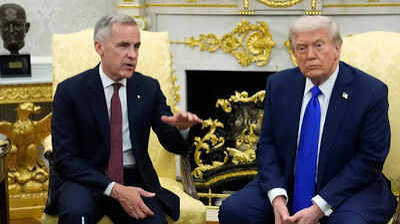
Prime Minister Mark Carney has suspended Canada's trade talks with the United States, citing unfair and uneconomic last-minute demands from Washington. As the U.S. implements a 50 percent tariff on $28 billion of Canadian goods, Ottawa has vowed to match the duties dollar for dollar.
OTTAWA / WASHINGTON — Canadian Prime Minister Mark Carney announced the immediate suspension of trade negotiations with the United States on Friday, August 21, 2026, after last-minute policy adjustments from Washington derailed an impending agreement.
The abrupt breakdown follows 18 months of intensive bilateral talks and came just hours before the United States was set to impose a 50 percent tariff on approximately $28 billion worth of Canadian goods. In response, Carney stated that Ottawa would match the U.S. levies "dollar for dollar" and directed Canadian trade delegations to return home.
Breakdown Over Eleventh-Hour Demands
The sudden collapse caught markets off guard, occurring a day after U.S. President Donald Trump expressed optimism that a finalized agreement was within reach. However, according to the Canadian government, eleventh-hour alterations introduced by American negotiators fundamentally undermined the balance of the pact.
Prime Minister Carney highlighted three core areas that caused talks to collapse, noting that the revised terms threatened core Canadian industries and economic sovereignty:
Automotive Restrictions: U.S. proposals sought to exclude medium- and heavy-duty commercial trucks from tariff relief, threatening key manufacturing operations such as Ontario assembly plants.
Sovereignty and Trade Autonomy: Last-minute language was introduced aimed at restricting Canada's capacity to pursue independent trade agreements with other international partners.
Cultural and Linguistic Protections: Persistent U.S. pushes to dilute internal Canadian protections for language, culture, and regional autonomy proved unacceptable to Ottawa.
Official Sources Section
Quote Section
According to statements released by Canadian Prime Minister Mark Carney during his national address:
"Last-minute changes in the U.S. proposed terms were unfair, uneconomic, and called into question the reliability of any deal. We have recognized from the beginning that America has changed, and that we will not return to our old relationship."
In response, U.S. Trade Representative Jamieson Greer stated:
"Tonight, Canada declined to finalize the trade deal under the terms agreed earlier this week. Despite the U.S. offer to Canada to receive the best treatment of any major exporter to our market, new demands and walkbacks of other commitments by Canada have upended the careful balance reached in the past days."
Why It Matters
For businesses, cross-border supply chains, and investors, the collapse of trade talks marks a historic rupture in one of the world's most integrated economic partnerships. With sweeping 50 percent tariffs taking effect on vital industrial exports, manufacturers face mounting cost pressures, prompting Ottawa to accelerate diversification strategies toward international markets beyond the United States.
Key Facts at a Glance
Action Taken: Canada suspended trade negotiations and recalled its negotiating team to Ottawa.
Trigger: Last-minute U.S. adjustments regarding auto sectors, trade autonomy, and cultural protections.
Retaliation: Ottawa pledged to match incoming U.S. tariffs on $28 billion of goods "dollar for dollar".
Broader Shift: Accelerated Canadian efforts to diversify trade partnerships globally.
FAQ Section
Why did Canada suspend trade talks with the United States?
Prime Minister Mark Carney stated that last-minute changes introduced by Washington to the proposed terms were unfair, uneconomic, and threatened Canadian sovereignty and key industries.
What retaliatory measures has Ottawa announced?
Canada announced plans to match the newly imposed U.S. tariffs "dollar for dollar" on equivalent trade volumes.
How do the new tariffs impact industries?
The tariffs directly affect cross-border trade in key sectors—including automobiles, steel, and aluminum—risking higher operational costs and disrupted supply chains.
Where can stakeholders monitor official updates?
Official governmental press releases and trade policy notices are published through the Prime Minister of Canada Portal and the USTR Official Website.
Source: Prime Minister of Canada, Office of the U.S. Trade Representative, Department of Finance Canada, Reuters