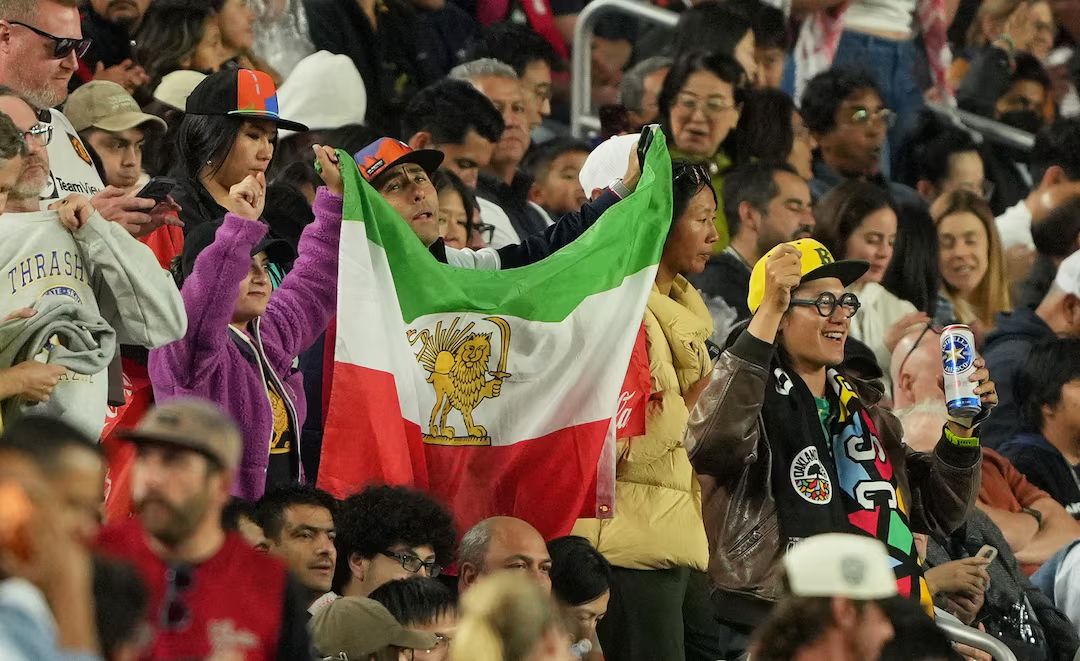
The United States has defended strict "match day minus one" travel restrictions imposed on Iran’s national football team during the FIFA World Cup 2026, citing security priorities. Despite a formal complaint filed by Iran to FIFA over fair play concerns, U.S. officials state the rules remain dynamic ahead of upcoming matches.
HOUSTON, Texas — The United States government has formally defended its strict travel restrictions imposed on the Iran national football team during the FIFA World Cup 2026, even as high-level diplomatic discussions continue behind the scenes. Washington’s insistence on rigorous security measures has prompted a formal grievance from Tehran to football’s global governing body, sparking an intense debate over the intersection of international sports and geopolitics.
The friction arrives at a critical juncture for Group G, where the Iranian team, known affectionately as Team Melli, is competing. Due to the lack of normalized diplomatic relations between the host nation and Iran, American authorities have implemented a rigid "match day minus one" travel policy. This protocol mandates that the Iranian delegation can only cross the border 24 hours prior to a game and must vacate U.S. territory immediately following the final whistle.
Security Priorities Clashing with Fair Play
The strict border enforcement has heavily altered Iran's logistical operations. The squad was forced to shift its official tournament base camp from Tucson, Arizona, across the southern border to Tijuana, Mexico. Consequently, the team must commute internationally via short-haul flights for every match played on American soil.
U.S. officials maintain that these guidelines were established well in advance of the tournament to guarantee safety. Andrew Giuliani, the Executive Director of the White House FIFA Task Force, reiterated the administration's stance to reporters.
"We want to make sure we have this tournament where people are welcome and enjoy the World Cup, while also making sure that we are not just protecting American citizens, but we're also protecting all those international visitors," Giuliani told Reuters.
The Football Federation Islamic Republic of Iran (FFIRI) filed a formal complaint with FIFA, arguing that the travel caps severely damage their technical preparation, athlete recovery, and competitive parity. The federation noted that an elite soccer team requires at least a 48-hour arrival window before a match to ensure optimal physical conditioning.
A Dynamic System Under Review
The operational constraints have drawn fierce public criticism from Iran's technical staff. Following a recent 2-2 draw with New Zealand and ahead of their match against Belgium in Los Angeles, head coach Amir Ghalenoei labeled his squad "the most oppressed team in the whole World Cup," blaming the frequent cross-border commuting for individual errors and physical fatigue.
However, U.S. authorities emphasize that the travel protocols are not entirely static. Discussions regarding Iran's third Group G fixture against Egypt, scheduled to take place in Seattle, remain ongoing.
"The situation is dynamic," Giuliani stated. "We have a plan right now... We will see how it goes for match two, and then there will be discussions the day after in terms of what it looks like for match three in Seattle."
Quote Section
"The team will be allowed to come in, match day minus one, so the day before the match. They'll be asked to leave the day that the match wraps up, so the evening of the match," stated Andrew Giuliani, Executive Director of the White House FIFA Task Force.
Why It Matters
The dispute underscores the logistical vulnerabilities of co-hosting a mega-event across nations with strained geopolitical relationships. For international fans, sponsors, and travelers, the tight security framework showcases the rigid perimeter checks governing the 2026 tournament. For tournament investors and businesses, administrative friction involving a participating nation risks overshadowed sports marketing narratives and highlights the complexities of cross-border sports logistics.
Key Facts at a Glance
24-Hour Rule: Iran's national football team is restricted to entering the United States only one day before a match and must exit the same night.
Base Camp Shift: Due to immigration uncertainties, Iran relocated its primary World Cup training camp from Tucson, Arizona, to Tijuana, Mexico.
Formal Appeal: The Football Federation of Iran has petitioned FIFA over fair play breaches regarding athlete recovery.
Ongoing Review: The White House has indicated that entry rules may be adapted for Iran's final group stage game against Egypt in Seattle.
FAQ Section
Why is Iran's World Cup team subjected to specific travel restrictions?
The United States enforces specialized security protocols and strict visa screening for the Iranian delegation due to ongoing diplomatic tensions and statutory border protection frameworks.
Where is the Iranian team staying during the 2026 World Cup?
The Iranian squad is based in Tijuana, Mexico. They fly directly into U.S. host cities, such as Los Angeles and Seattle, for games before returning across the border immediately afterward.
What is FIFA's stance on the travel dispute?
FIFA has acknowledged receipt of the formal complaint submitted by the Football Federation of Iran. The governing body coordinates closely with local organizing committees to balance national security laws with sporting equity guidelines.
Source: Reuters Sports Division, Football Federation Islamic Republic of Iran Official Correspondence.