The U.S. has flagged over 40 countries, including India, the EU, and Canada, for allegedly assisting Chinese exporters in evading tariffs via third-country transshipment. Backed by new AI border monitoring and retroactive penalty enforcement, Washington aims to close loopholes exploited by shadow trade networks.
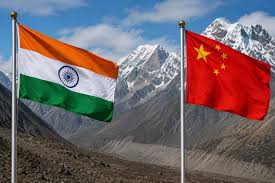
WASHINGTON — In an aggressive push to tighten global trade enforcement, the United States government has flagged more than 40 major economies—including India, the European Union, Canada, Mexico, Japan, and South Korea—as potential conduits for Chinese tariff evasion.
Released by the White House Office of Trade and Manufacturing Policy, the comprehensive report targets what top administration officials term the "Great Transshipment Scam". The practice involves routing Chinese-origin goods through third-party territories, executing minimal assembly or relabeling, and falsely claiming a non-Chinese country of origin to sidestep steep U.S. Section 301 tariffs. The findings introduce new friction into bilateral trade corridors as Washington rolls out advanced artificial intelligence screening tools at its borders.
Tiered Risk Assessment and Global Supply Chains
The administration’s evaluation categorizes the 40-plus nations into three distinct tiers based on their industrial capacity, degree of supply chain integration with China, and trade access to the American market.
Tier 1 ("Diversified Scale Leaders"): Encompasses India, Canada, the European Union, Japan, South Korea, Mexico, Taiwan, and Israel. According to official disclosures, these advanced industrial bases present transshipment vulnerabilities that are deeply embedded within broad, legitimate trade flows.
Tier 2 ("Significant Economic Integration with China"): Features nations such as Vietnam, Thailand, Malaysia, Indonesia, Turkey, and Brazil, which maintain deep manufacturing linkages with Chinese assembly networks.
Tier 3 ("Small, Opportunistic Targets"): Comprises smaller regional hubs including Singapore, the United Arab Emirates, Bangladesh, Cambodia, and the Philippines.
The report highlights deceptive practices such as "screwdriver factories," where goods undergo superficial processing or minor packaging alterations without achieving true substantive economic transformation.
Official Sources Section
Quote Section
According to statements released by White House trade adviser Peter Navarro during the official policy briefing:
"Our message is simply that the way to pay less is not to cheat; it is to stop dumping, respect intellectual property, drop your barriers to American goods and move towards reciprocity. Preferential access to the American market is not a license to launder somebody else's exports."
Why It Matters
For international businesses, manufacturers, and global logistics providers, the heightened scrutiny transforms routine cross-border shipping into a high-compliance operation. With U.S. Customs and Border Protection (CBP) deploying an artificial intelligence-driven monitoring system dubbed "Detective Border," shipments flagged for potential transshipment risk face aggressive audits. Furthermore, new enforcement guidelines allow authorities to retroactively claim penalties and tariffs across a company's past year of imports, raising the financial stakes for global supply chain compliance.
Key Facts at a Glance
Scope: Over 40 countries identified across three distinct tiers of transshipment risk.
Key Nations Flagged: India, Canada, the European Union, Japan, Mexico, and South Korea placed in Tier 1.
Enforcement Mechanism: Implementation of AI-driven border screening ("Detective Border") and retroactive tariff collection powers for CBP.
Primary Target: Bypassing U.S. Section 301 tariffs on Chinese imports through third-party routing and relabeling.
FAQ Section
What is "illegal transshipment" as defined by the U.S. administration?
It is the practice of routing goods through third-party countries, performing minimal assembly or relabeling, and falsely marketing them under a non-Chinese origin to evade American tariffs.
Why were India, the EU, and Canada included in Tier 1?
The report classifies them as major industrialized economies with vast export networks where transshipment risks are intermingled with legitimate, high-volume trade flows.
How will the U.S. enforce these new anti-evasion measures?
The administration is deploying an artificial intelligence system called "Detective Border" to screen shipment patterns and granting CBP authority to retroactively assess duties over previous operating periods.
How does this impact multinational businesses operating in flagged countries?
Exporters must maintain rigorous documentation proving substantial local transformation of goods to avoid severe penalties, retroactive tariffs, and cargo exclusions at U.S. ports.
Source: White House Office of Trade and Manufacturing Policy, Office of the United States Trade Representative, Reuters