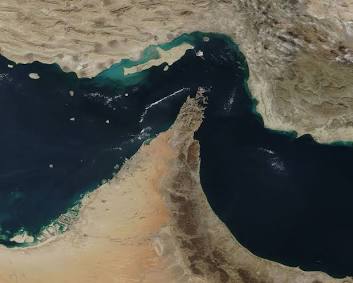
The United States and Iran have enacted a temporary military pause following a violent weekend exchange of missile and drone strikes around the Persian Gulf. Diplomatic teams will meet in Doha, Qatar, on Tuesday to resolve operational friction points regarding shipping rights within the strategic Strait of Hormuz.
WASHINGTON / TEHRAN — The United States and Iran have agreed to an immediate pause in mutual military hostilities. Senior administration officials confirmed on June 28, 2026, that both nations will temporarily stand down from kinetic actions and are scheduled to convene emergency technical talks in Doha, Qatar, on Tuesday, June 30, 2026. The breakthrough comes after a weekend of intense tit-for-tat air and missile strikes that severely threatened a newly established maritime ceasefire in the Middle East.
Escalation in the Strait of Hormuz Prompts Venue Shift
The technical meetings were originally slated to take place in Switzerland to address Iran’s nuclear program. However, significant military flare-ups over the weekend forced a sudden shift in both location and agenda. De-escalation discussions will now prioritize maritime security and freedom of navigation across the Strait of Hormuz, a critical transit chokepoint through which approximately one-fifth of the world's petroleum passes.
The spike in hostilities follows differing interpretations of a Memorandum of Understanding (MoU) signed earlier this month. Under the terms of the June 17 accord, Tehran committed to ensuring the safe passage of commercial shipping vessels through the waterway, while Washington pledged to lift its naval blockade on Iranian domestic ports.
Weekend Strikes Threaten Fragile Regional Truce
The fragile peace disintegrated over the weekend when the U.S. military launched target strikes against Iranian military assets, alleging continued harassment of merchant shipping lines by Iranian forces. Iran’s Islamic Revolutionary Guard Corps (IRGC) retaliated swiftly, deploying drones and ballistic missiles against U.S. naval installations located in Bahrain and Kuwait.
According to regional defense analysts, a major friction point remains the implementation of a direct military-to-military "hotline". Negotiated during previous rounds in Switzerland by a U.S. delegation led by Vice President JD Vance, the communication link was intended to coordinate naval traffic and prevent accidental engagements. U.S. officials stated on Sunday that the hotline is still not operational, as Iranian commanders continue to assert that transiting vessels must directly register their passage with Tehran.
Global Market Impact and Shipping Relief
The announcement of the stand-down has provided immediate relief to energy markets and global logistics firms. Prior to the pause, global oil prices surged, with Brent crude futures climbing to $72.49 a barrel and U.S. West Texas Intermediate rising to $69.96 a barrel amid fears of prolonged disruptions.
Maritime insurance syndicates had briefly raised risk premiums for vessels transiting the Persian Gulf, forcing commercial logistics operators to consider costly rerouting options around Africa. A second U.S. official confirmed that under the temporary pause, "vessels can move freely" while diplomatic personnel work to iron out the technical disputes in Doha.
Official Sources Section
Developments regarding the pause and the upcoming Doha summit have been verified through:
Official briefings from senior U.S. administration representatives reported via Axios andCNN
State-vetted media releases from Iran’s state-run Press TV representing the IRGC navy command.
Official diplomatic logs from the Qatari Ministry of Foreign Affairs acting as the mediating host.
Quote Section
"We decided to stop all the kinetic activity," a senior U.S. official stated on Sunday, confirming the halt of military strikes to allow diplomacy a window of opportunity.
According to officials tracking the maritime tracking data, both factions have agreed to a localized stand-down to ensure that civilian supply lines are not targeted ahead of the Tuesday session.
Why It Matters
The temporary truce directly prevents a broader regional conflict that could shut down the world's most vital energy corridor. For global consumers, a stabilization of the Strait of Hormuz prevents a dramatic spike in retail fuel prices and helps mitigate sticky inflationary pressures. For commercial shipping lines, it eliminates immediate security threats to crews and cargo hull integrity.
Key Facts at a Glance
The Agreement: The US and Iran have paused all active military strikes following heavy weekend skirmishes.
The Meeting: Emergency bilateral technical talks begin Tuesday, June 30, 2026, in Doha, Qatar.
The Waterway: Focus has completely shifted to resolving ambiguities in Article 5 of the June maritime MoU concerning the Strait of Hormuz.
The Technical Stumbling Block: A planned emergency communication hotline between the US military and the IRGC remains unactivated.
FAQ Section
What caused the weekend strikes between the US and Iran?
The US conducted targeted strikes following alleged Iranian interference with commercial ships. Iran retaliated with drone and missile strikes on US military installations in Bahrain and Kuwait, claiming the US violated the baseline ceasefire.
Why were the talks moved from Switzerland to Qatar?
The talks were initially scheduled in Switzerland to focus broadly on Iran's nuclear portfolio. The severe weekend escalation near the Persian Gulf necessitated an emergency venue change to Doha and compressed the agenda exclusively to shipping security.
Is commercial shipping safe to pass through the Strait of Hormuz right now?
Yes. Official statements from both delegations confirm that military forces are standing down temporarily, allowing commercial and merchant vessels to navigate the corridor freely while negotiations proceed.
Source: Official press statements from the White House Press Office, statement releases from Iran's Islamic Revolutionary Guard Corps (IRGC) Navy Command via Press TV, and the Qatar Ministry of Foreign Affairs public briefing logs.