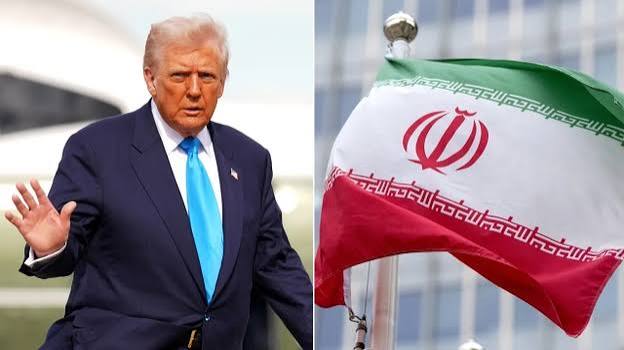
Former President Donald Trump has initiated fresh diplomatic negotiations with Iran for Monday following the cancellation of planned U.S. strikes. Simultaneously, the Middle East faces severe escalation as Israeli airstrikes in Gaza result in 18 deaths, underscoring the volatile interplay between U.S.-Iran relations and the ongoing humanitarian crisis in Gaza.
WASHINGTON/GAZA - Former President Donald Trump announced early Monday that a new round of diplomatic negotiations between the United States and Iran is scheduled to begin today, August 3, 2026. The announcement follows Trump's decision to call off a planned retaliatory strike against Iranian targets, a move that momentarily de-escalated tensions that had spiked following recent regional provocations.
The diplomatic overture coincides with a flare-up of violence in the Gaza Strip, where Israeli military strikes reportedly resulted in at least 18 fatalities over the weekend. Despite ongoing ceasefire efforts involving international mediators, the conflict between Israeli forces and Hamas remains deadlocked, complicating the broader regional security landscape.
Diplomatic Pivot Following Strike Reversal
The decision to pursue negotiations marks a sudden shift in the U.S. approach to the ongoing crisis in the Middle East. According to official briefings from Washington, the military strike was aborted minutes before execution to prioritize a diplomatic window that officials hope could prevent a wider regional conflict.
The upcoming talks are expected to address the security of maritime transit corridors in the Persian Gulf and the broader containment of Iranian-backed proxy activities. While the exact scope of the Monday discussions remains undisclosed, regional analysts suggest that the focus will be on establishing a direct channel to prevent miscalculations that could trigger a full-scale U.S.-Iran war.
Regional Conflict and Gaza Humanitarian Impact
Parallel to the U.S.-Iran developments, the situation in the Gaza Strip has deteriorated. Local health authorities in Gaza reported that Israeli airstrikes hit residential areas, resulting in the deaths of 18 civilians, including women and children. The Israel Defense Forces (IDF) stated that the strikes were targeted operations aimed at dismantling infrastructure used by Hamas leadership, though the high civilian death toll has drawn renewed condemnation from international humanitarian organizations.
The escalation in Gaza, coupled with the uncertainty surrounding the U.S.-Iran negotiations, has significantly hindered efforts by regional partners, including Egypt and Qatar, to broker a lasting ceasefire. The current environment has left millions of civilians in the region in a state of high alert, with infrastructure damage further isolating impacted communities from essential supplies.
Economic and Security Implications
The volatility in the Middle East continues to reverberate through global markets. Energy traders are closely monitoring the potential for supply chain disruptions, particularly regarding oil tanker routes. Global financial markets are exhibiting signs of "risk-off" sentiment, with investors moving capital into traditional safe-haven assets such as gold and government bonds.
For international travelers and commercial aviation, the risk of airspace closure or targeted security threats remains a primary concern. Several international airlines have adjusted flight paths to avoid the contested zones, leading to increased fuel costs and longer travel times for transit through the Middle East.
Official Sources Section
The information provided is based on statements from:
Quote Section
According to officials briefed on the matter:
"The decision to call off the strike was made to ensure that all diplomatic avenues are fully explored. Monday’s negotiations represent a critical opportunity to lower tensions and address the core security concerns affecting the region."
Why It Matters
The convergence of a potential U.S.-Iran breakthrough and intensified fighting in Gaza underscores the interconnected nature of regional Middle Eastern conflicts. Any escalation in the U.S.-Iran dynamic directly affects the stability of the Persian Gulf, while the Gaza conflict creates a humanitarian and diplomatic deadlock that influences political stability across the Arab world.
Key Facts at a Glance
Diplomatic Talks: Fresh U.S.-Iran negotiations are set to commence today, August 3, 2026.
Strike Reversed: The U.S. military aborted a planned retaliatory strike against Iran to allow for diplomatic engagement.
Gaza Casualties: Reported 18 fatalities in Gaza following recent Israeli military operations.
Global Market Impact: Rising geopolitical risk continues to pressure energy markets and global stock indices.
FAQ Section
Why were the U.S. strikes against Iran called off?
The U.S. administration indicated that the strikes were paused to prioritize a new diplomatic effort aimed at de-escalating regional tensions.
How does the situation in Gaza affect the U.S.-Iran negotiations?
The ongoing conflict in Gaza acts as a force multiplier for instability, often complicating the ability of regional mediators to maintain focus on de-escalation between the U.S. and Iran.
Are commercial shipping and travel safe in the region?
Security risks remain elevated. Commercial entities and travelers are advised to monitor official government advisories, as some flight paths and shipping routes have been adjusted to avoid contested areas.
Source: The White House, U.S. Department of Defense, World Health Organization