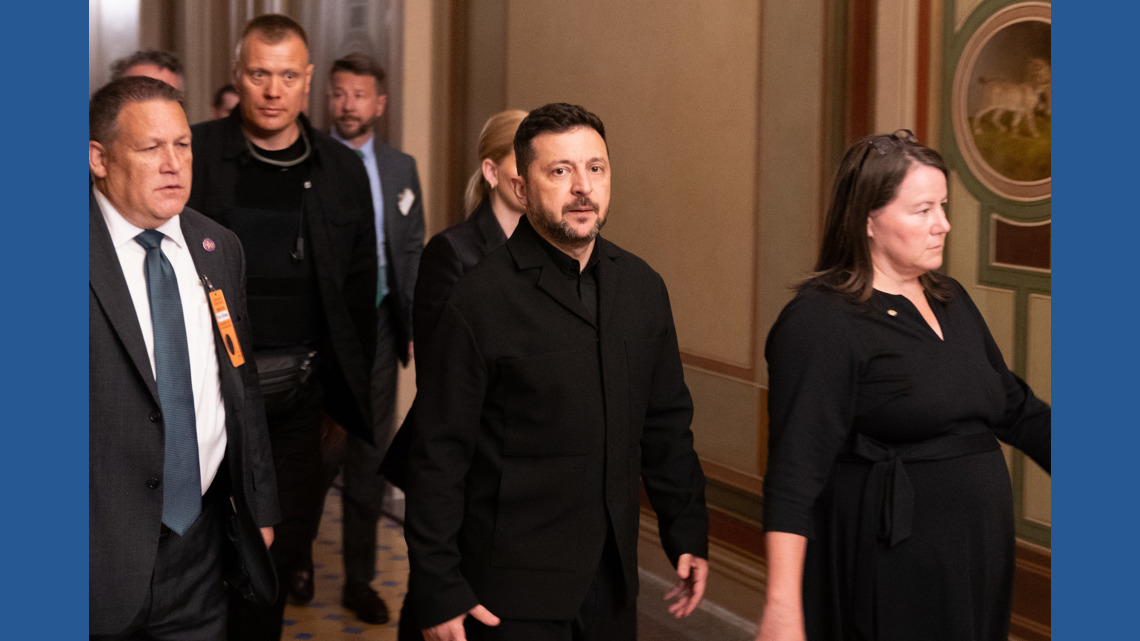
The U.S. Senate voted 86–12 to advance a comprehensive Russia energy sanctions package drafted by the late Senator Lindsey Graham. Attended by Ukrainian President Volodymyr Zelenskyy, the vote moves the bill forward, granting executive authority to impose tariffs up to 100% on major purchasers of Russian energy exports.
WASHINGTON — The United States Senate took its first formal step on Tuesday, July 28, 2026, toward passing a broad energy sanctions package aimed at choking off Russia's war revenue.
The bipartisan procedural motion cleared the chamber in a strong vote as Ukrainian President Volodymyr Zelenskyy watched from the Senate gallery following his attendance at the funeral of the bill's primary author, the late Senator Lindsey Graham.
The legislation, formally titled the Lindsey O. Graham Sanctions Russia and Iran Act of 2026, advanced by an overwhelmingly supportive margin during procedural tallies, clearing the necessary threshold to move toward final Senate debate.
The timing coincided with high-level diplomatic meetings at Capitol Hill, where Ukrainian leadership emphasized the strategic necessity of degrading Moscow's energy export capabilities.
Senate Advances Sanctions Framework Under Bipartisan Support
Procedural Motion Clears Senate Threshold
The Senate recorded a decisive 86–12 procedural vote to advance the legislation, easily surpassing the 60-vote threshold needed to proceed.
The action allows lawmakers to debate the framework, which seeks to penalize foreign nations and commercial entities that purchase Russian crude oil, liquefied natural gas (LNG), and other core energy commodities.
Senate leadership scheduled additional voting procedures throughout the evening, paving the way for final consideration before the chamber adjourns for recess.
Direct Tariffs and Economic Penalties Introduced
Under the core provisions of the draft, the executive branch is granted authority to impose secondary tariffs of up to 100% on goods imported from countries that continue to maintain major volumes of Russian energy imports.
The measure specifically targets major importers of Russian oil and gas, including commercial networks within China and India, while incorporating target exemptions for nations that maintain verifiable plans to phase down imports below specific thresholds.
Additionally, the revised text incorporates expanded sanctions against Iranian financial networks and petroleum exports following executive requests to consolidate counter-aggression measures into a single legislative vehicle.
Strategic Impact on Energy Markets and Foreign Relations
The proposed legislation alters economic calculus for major global importers of Russian crude oil and natural gas.
Global Buyers Face Regulatory Choice: Foreign buyers, particularly in South and East Asia, must weigh the continuation of discounted Russian energy shipments against potential access limits to the U.S. consumer market.
Waiver and Transition Mechanisms: The bill introduces conditional waivers for nations sourcing less than 15% of their natural gas from Russia, provided they demonstrate documented supply-chain diversification efforts.
Executive Authority Discretion: The President is granted discretionary authority to calibrate secondary tariff rates between 0% and 100%, allowing flexibility during bilateral trade negotiations.
Official Sources Section
The details of the legislative package and parliamentary schedule were verified according to official releases from the United States Senate Periodical Press Gallery, statements issued by the Senate Foreign Relations Committee, and public briefings conducted by Capitol Hill leadership.
Technical details regarding trade exemptions and executive waiver provisions reflect official statutory text filed under H.R. 5334.
Quote Section
"This bill is a keystone in that overall effort to handicap the Russian economy and drive Russian President Vladimir Putin to the negotiating table," stated Senator Todd Young (R-Ind.) following bipartisan meetings at the Capitol.
According to officials present during briefings, President Volodymyr Zelenskyy told lawmakers that the legislative push serves as "an important moral signal to a country that is weary and tired, though holding its own."
Why It Matters
If signed into law, the sanctions framework will establish sweeping administrative mechanics affecting global trade flows.
By penalizing foreign importers purchasing Russian energy exports, the U.S. government seeks to accelerate energy supply realignment across Europe and Asia.
Consumers and maritime freight operators could see shifts in global crude benchmarks if major purchasing nations alter their sourcing contracts to maintain access to American financial channels.
Key Facts at a Glance
Bipartisan Support: Senate cleared the initial procedural barrier by an 86–12 vote tally.
Tariff Ceiling: Grants executive authority to apply up to 100% tariffs on nations buying Russian energy.
Secondary Targets: Includes economic sanctions on targeted financial entities linked to both Russia and Iran.
Waiver Exemptions: Features protection for ally states that maintain less than 15% gas reliance on Russian energy.
Frequently Asked Questions (FAQ)
What is the current status of the Russia energy sanctions bill?
The legislation has cleared its first major procedural hurdle in the U.S. Senate via an 86–12 vote. Voting on additional amendments and final passage sequence continues in the chamber.
How does the bill impact foreign countries purchasing Russian oil?
The act grants authority to the President to levy tariffs up to 100% on imports from nations that continue purchasing Russian energy without demonstrating verified phase-out efforts.
When will the House of Representatives consider the measure?
Following final approval in the Senate, the legislative vehicle will move to the House of Representatives for consideration after lawmakers return from their scheduled recess period.
Source: U.S. Senate Press Gallery, Office of Senate Foreign Relations Committee, Congressional Record Services, Reuters, Associated Press.