The U.S. launched a third consecutive night of military strikes against Iranian infrastructure following cruise missile attacks on two oil tankers in the Strait of Hormuz, which killed one Indian crew member. President Trump has reimposed a maritime blockade on Iranian ports and proposed controversial transit fees for the strategic waterway.
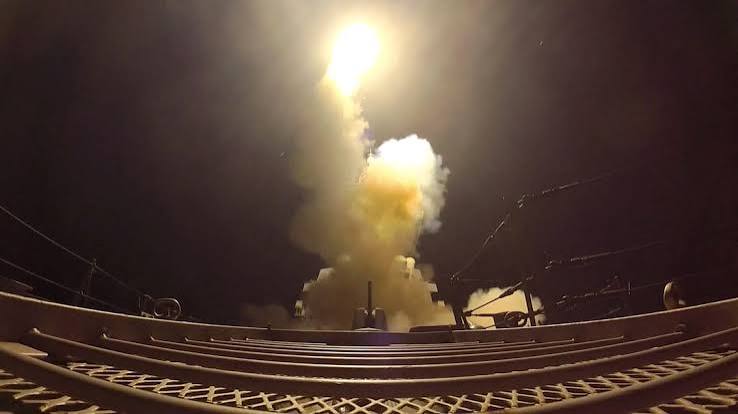
WASHINGTON/DUBAI — The United States military launched a third consecutive night of strikes against Iranian targets on July 14, 2026, intensifying a rapidly deteriorating conflict that has once again centered on the strategic Strait of Hormuz [1.1.5, 1.1.7]. The military action followed a deadly attack by Iranian cruise missiles on two United Arab Emirates-flagged oil tankers, the Mombasa and the Al Bahiyah, which resulted in the death of one Indian crew member and left eight others wounded [1.1.3, 1.1.5, 1.1.7].
The strikes, directed by U.S. President Donald Trump, targeted Iranian air defense systems, radar installations, and maritime attack capabilities, including small boats associated with the Islamic Revolutionary Guard Corps (IRGC) [1.1.2, 1.1.4, 1.1.10]. U.S. Central Command (CENTCOM) confirmed the operation is intended to "degrade [Iran's] ability to attack innocent civilians and commercial shipping" in the vital waterway [1.1.5, 1.1.7].
Diplomatic Crisis and Escalation
The recent violence marks the effective collapse of a fragile memorandum of understanding (MoU) signed last month, which had briefly stabilized the region [1.1.6, 1.1.9]. Following the attack on the tankers in the southern shipping lane—located within Omani territorial waters—President Trump announced the reinstatement of a U.S. maritime blockade on Iranian ports, effective 4:00 p.m. ET on July 14 [1.1.3, 1.1.10].
Furthermore, President Trump has proposed a 20% levy on cargo vessels transiting the Strait of Hormuz to offset the costs of providing maritime security [1.1.1, 1.1.7]. This proposal has drawn sharp criticism internationally, with Brazilian President Luiz Inácio Lula da Silva labeling the move as "piracy" and the International Maritime Organization (IMO) asserting that transit through the strait must remain toll-free [1.1.1, 1.1.7].
Impact on Global Energy and Shipping
The Strait of Hormuz remains one of the world's most critical energy chokepoints, handling roughly 20% of global oil and gas supplies [1.1.4, 1.1.9]. The resumption of hostilities has triggered significant volatility in global energy markets, with Brent crude prices surging by more than 9% following the news of the strikes [1.1.5, 1.1.8].
While the U.S. maintains that it will continue to support transit for compliant commercial vessels, traffic through the strait has plummeted to historic lows as shipping companies assess the risks of the ongoing military engagement [1.1.7, 1.1.10].
Official Sources
U.S. Central Command (CENTCOM): Confirmed the execution of strikes targeting Iranian military infrastructure to protect freedom of navigation [1.1.4, 1.1.10].
UAE Ministry of Defence: Condemned the cruise missile attacks on the Mombasa and Al Bahiyah as a "grave violation" of international law [1.1.3, 1.1.10].
President Donald Trump: Stated that while military pressure is increasing, he believes a final deal with Tehran remains "possible" despite the current escalation [1.1.1, 1.1.5].
Why It Matters
The return to open conflict in the Strait of Hormuz poses a substantial threat to global energy security and international shipping lanes. The collapse of the June ceasefire and the implementation of a naval blockade signify a move toward long-term confrontation, with both Washington and Tehran signaling they are prepared to sustain military exchanges until their respective conditions are met [1.1.6, 1.1.9].
Key Facts at a Glance
Casualties: One Indian crew member killed and eight others injured in cruise missile attacks on UAE tankers [1.1.3, 1.1.10].
Military Action: U.S. forces have conducted three consecutive nights of strikes, targeting over 80 Iranian sites including radar and air defense systems [1.1.2, 1.1.6, 1.1.7].
Blockade: President Trump has ordered the reinstatement of a U.S. naval blockade on Iranian ports [1.1.7, 1.1.10].
Market Impact: Brent crude oil prices rose more than 9% amid fears of continued supply chain disruption [1.1.5, 1.1.8].
Frequently Asked Questions (FAQ)
1. Why did the U.S. reimpose a blockade on Iranian ports?
The U.S. administration stated the blockade is a response to Iran’s "unacceptable" targeting of commercial shipping and its failure to honor the terms of the recent ceasefire agreement [1.1.2, 1.1.10].
2. What is the status of the Strait of Hormuz transit fees?
President Trump proposed a 20% cargo levy, but the proposal has been rejected by international bodies like the IMO, which maintain that the strait must remain toll-free under international law [1.1.1, 1.1.7].
3. Is a diplomatic resolution still being considered?
Despite the military escalation, President Trump has indicated that he believes a deal to end the conflict remains possible, though negotiations have been halted due to the renewed hostilities [1.1.1, 1.1.5, 1.1.6].
Source: The Hindu, Washington Post, AP News, The Guardian, CBS News