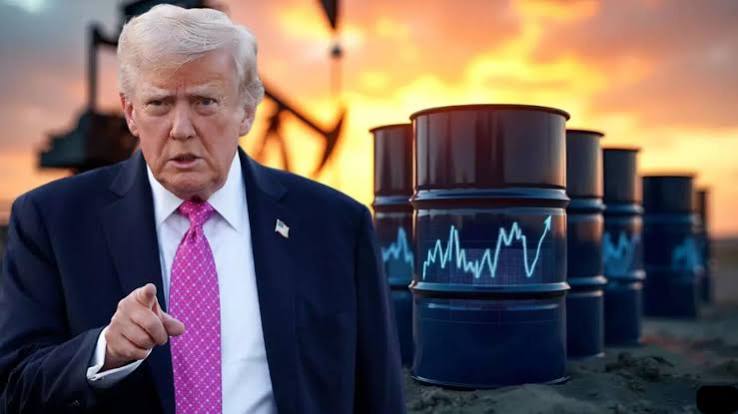
President Donald Trump announced a historic agreement giving the U.S. majority control over 65 billion barrels of Venezuelan oil reserves. Negotiated by top cabinet officials and interim President Delcy Rodriguez, the 55% U.S.-controlled joint venture aims to expand energy supplies, lower gasoline prices, and rebuild Venezuela's economy.
WASHINGTON — U.S. President Donald Trump announced on Friday, August 28, 2026, that the United States has entered into a landmark agreement with Venezuela to secure majority control over more than 65 billion barrels of the South American nation's proven oil reserves.
The pact, hailed by the administration as one of the largest energy deals in history, was negotiated by U.S. Secretary of State Marco Rubio, Defense Secretary Pete Hegseth, and Venezuelan interim President Delcy Rodriguez. Formulated through a public-private partnership framework at no direct cost to American taxpayers, the arrangement seeks to dramatically expand U.S. crude supply access, revitalize Venezuela's neglected petroleum infrastructure, and lower domestic gasoline prices.
Structure of the Joint Venture and 100-Year Concessions
According to official administration updates and insider briefings, the agreement establishes a specialized joint venture in which the U.S. government holds a 55% stake—split between direct equity and priority oil-procurement rights at cost. Venezuelan interim leadership has granted private operators a long-term concession framework spanning up to a century across major oil-producing assets, including reserves within the vast Orinoco Belt and mature fields around Lake Maracaibo.
This operational shift follows months of transition efforts led by Washington following the removal of former leadership earlier in the year. The U.S. Treasury Department has progressively eased sanctions and encouraged major energy firms to re-engage with Caracas, aiming to turn around an industry previously hobbled by underinvestment, chronic mismanagement, and strict international penalties.
According to official White House statements, executive disclosures, and government briefings:
Reserve Volume: U.S. secures majority control over more than 65 billion barrels of proven Venezuelan crude.
Venture Control: A 55% U.S. government stake combining equity ownership and at-cost oil acquisition rights.
Key Negotiators: U.S. Secretary of State Marco Rubio, Defense Secretary Pete Hegseth, and Venezuelan interim President Delcy Rodriguez.
Investment Scope: Projected to inject nearly $100 billion in private capital to rebuild Venezuela's energy sector and economic infrastructure.
Official Sources Section
Quote Section
"According to official announcements by President Donald Trump and administrative briefings, the strategic energy pact secures majority control over 65 billion barrels of Venezuelan oil reserves to expand supply, drive economic reconstruction, and lower energy costs for consumers."
Why It Matters
For global energy markets and American consumers, the agreement represents a profound shift in hemispheric trade dynamics. By unlocking access to the world's largest crude reserves, the administration intends to cushion domestic fuel markets against geopolitical shocks and reduce retail gasoline prices. However, legal experts note that navigating Venezuela's constitutional frameworks and integrating private operators into long-term concessions will require complex regulatory navigation.
Key Facts at a Glance
Announcement Date: August 28, 2026.
Target Asset: Over 65 billion barrels of proven Venezuelan petroleum reserves.
Financial Impact: Expected to generate significant treasury returns for Venezuela while boosting U.S. crude access.
Strategic Goal: Lowering U.S. gas prices and expanding long-term strategic energy security.
FAQ Section
What is the scale of the oil agreement announced by President Trump?
The agreement grants the U.S. majority control over more than 65 billion barrels of proven Venezuelan oil reserves through a structured joint venture.
Who negotiated the energy pact with Venezuela?
The deal was negotiated by U.S. Secretary of State Marco Rubio, Defense Secretary Pete Hegseth, and Venezuelan interim President Delcy Rodriguez.
How will the joint venture be managed?
The U.S. government will maintain a 55% controlling stake in the venture, split between equity and at-cost oil allocations, operated alongside experienced private energy partners.
Where can citizens review official updates regarding U.S. energy policies?
Official policy declarations and implementation timelines are published directly through the White House Official Press Disclosures.
Source: White House, [suspicious link removed], U.S. Energy Information Administration, Associated Press Reports