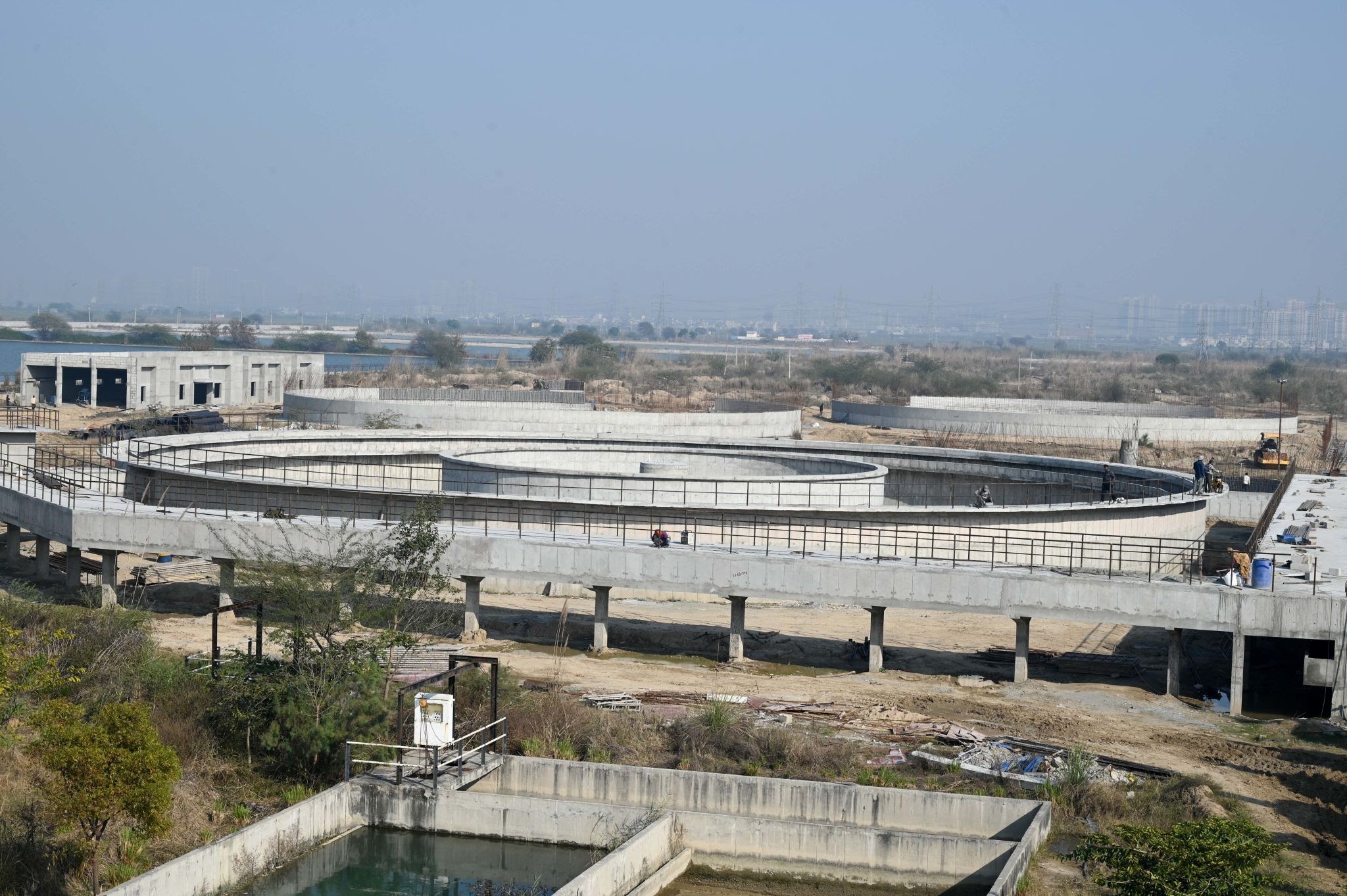
VADODARA, INDIA — The Vadodara Municipal Corporation (VMC) is preparing to launch India's first public blue municipal bond issue to raise approximately Rs 200 crore by July 2026, marking a critical expansion of sustainable finance in the country's debt market. According to municipal authorities and regulatory filings, the proposed debt instrument has secured early administrative approvals, with formal credit evaluation procedures currently being finalized. The capital mobilized from this market operation will be deployed exclusively to fund comprehensive water supply infrastructure, wastewater treatment, and liquid waste management projects mapped under the central government’s flagship Atal Mission for Rejuvenation and Urban Transformation (AMRUT 2.0) program. This development comes at a time when rapidly growing tier-2 urban centers across India are under heavy pressure to reduce reliance on state budgetary grants and secure self-sustaining fiscal frameworks to fund capital-intensive civic utilities.
VADODARA, INDIA - The Vadodara Municipal Corporation (VMC) is preparing to launch India's first public blue municipal bond issue to raise approximately Rs 200 crore by July 2026, marking a critical expansion of sustainable finance in the country's debt market. According to municipal authorities and regulatory filings, the proposed debt instrument has secured early administrative approvals, with formal credit evaluation procedures currently being finalized. The capital mobilized from this market operation will be deployed exclusively to fund comprehensive water supply infrastructure, wastewater treatment, and liquid waste management projects mapped under the central government’s flagship Atal Mission for Rejuvenation and Urban Transformation (AMRUT 2.0) program. This development comes at a time when rapidly growing tier-2 urban centers across India are under heavy pressure to reduce reliance on state budgetary grants and secure self-sustaining fiscal frameworks to fund capital-intensive civic utilities.
Scaling Water Management Projects via Market Debt
The decision by the VMC administration to access public capital markets specifically for water resource management is an attempt to align local governance with the global "blue economy" framework. Blue bonds operate identically to traditional green bonds but are ring-fenced strictly for sustainable marine, oceanic, and freshwater utility developments. VMC officials indicated that the upcoming blue municipal bond issue will create alternative financing avenues to execute broad-scale improvements across Vadodara’s citywide drinking water grid, distribution networks, and localized storm-water drainage systems designed to handle severe weather events.
The administrative wing, overseen by Municipal Commissioner Arun Mahesh Babu, recently introduced the corporation's Rs 7,600 crore draft budget, where the water-focused public issue was earmarked as a core strategic policy. In contrast to standard bank lines, which carry restrictive repayment schedules and floating interest rates, this public bond issue will offer fixed-coupon yields, diversifying VMC's long-term capital structure. The issue is strategically structured to engage multiple layers of the investing public, allowing qualified institutional buyers (QIBs), corporate treasuries, high-net-worth individuals (HNIs), and retail investors to acquire units, with standard entry thresholds designed to welcome widespread public participation.
Tracking VMC’s Structural Shift and Fiscal Health
Vadodara's entry into blue asset issuance follows a distinct history of successful debt market operations. The civic body previously raised Rs 100 crore through commercial municipal bonds in 2022 at a competitive coupon rate of 7.15%. This was followed in 2024 by an additional Rs 100 crore globally certified green municipal bond issue, priced at a 7.9% coupon rate, which was heavily oversubscribed by institutional participants. This consistent performance has built measurable institutional investor confidence in the municipality's administrative capabilities.
However, recent financial balance sheets indicate that traditional revenue lines are facing increasing pressure, emphasizing the importance of market borrowing. Provisional financial statements for the fiscal year ended March 31, 2025, show that VMC's total revenue income slipped slightly to Rs 1,619.60 crore, down from Rs 1,644.59 crore in the previous fiscal year. Concurrently, operational and revenue expenditure expanded to Rs 1,623.87 crore, driven primarily by rehabilitation costs and repairs following major civic flooding events in August 2024. Consequently, the corporation's revenue surplus contracted from Rs 264 crore down to Rs 74 crore over the same timeline. Tapping into alternative, targeted financing options like a blue municipal bond issue allows the municipality to fulfill its pending Rs 497 crore equity contribution for central infrastructure schemes over the next three to four years without overwhelming its daily operational cash balances.
Central Incentives and Multi-Layered Investor Safeguards
To boost participation in the municipal debt sector, the Ministry of Housing and Urban Affairs provides a direct financial incentive mechanism for local bodies issuing public bonds. Under current guidelines, the central government offers an incentive equal to 10% of the total volume raised, capped strictly at Rs 20 crore per issue. By securing this capital injection, VMC can offset underwriting, legal, and transactional costs, lowering the real cost of debt capital.
To secure an optimal credit rating from commercial agencies like CRISIL—which recently reaffirmed VMC’s existing long-term debt profile at an 'AA/Stable' tier—the corporation utilizes a specialized, trustee-managed escrow structure. All municipal tax collections and specified non-tax revenues are directed into a dedicated bank collection account. The escrow bank operates under rigid instructions to systematically move funds into an Interest Payment Account (IPA) and a Sinking Fund Account (SFA) before allowing cash outlays for general administrative expenditures. A mandatory Debt Service Reserve Account (DSRA) containing the equivalent of 12 months of interest obligations is also maintained continuously throughout the duration of the asset, minimizing default risks and establishing a highly secure environment for private wealth allocation.
Official Sources Section
The details presented in this report are based on official documentation from the Vadodara Municipal Corporation's accounts wing, financial disclosures filed with the Securities and Exchange Board of India (SEBI), and credit rating rationale reports issued by CRISIL Ratings.
Quote Section
"According to officials familiar with the development, the formal credit rating process for the new bond class is currently underway across empanelled rating agencies and is on track to finish in the coming weeks. The administration has requested the standing committee to formally empower the Municipal Commissioner to execute the necessary pricing and timing legalities before the targeted mid-year launch."
Why It Matters
For citizens and local consumers, the successful implementation of this fundraising mechanism guarantees enhanced access to potable water networks and minimizes urban waterlogging through modern drainage engineering. For institutional and retail investors, it provides a highly stable, low-risk, yield-bearing fixed income product backed by government-vetted tax collections. For the broader Indian urban landscape, Vadodara's model provides a repeatable blueprint for leveraging thematic market financing to support vital environmental and climate-adaptive civic initiatives.
Key Facts at a Glance
Total Offering: The Vadodara Municipal Corporation aims to raise a total of Rs 200 crore via public debt instruments by July 2026.
National Precedent: The issue represents India's first-ever public blue municipal bond issue, focusing strictly on water security and liquid waste treatment.
Fiscal Incentives: VMC qualifies for a 10% central government incentive, providing up to Rs 20 crore to optimize overall borrowing costs.
Investor Protection: The structural safety of the bond relies on a trustee-administered escrow payment system and a 12-month Debt Service Reserve Account.
FAQ Section
Q1: What is a blue municipal bond issue and how does it differ from a green bond?
A1: A blue bond is a specialized subclass of green bonds. While green bonds fund a broad range of environmental initiatives like renewable energy or electric transport, a blue municipal bond issue allocates capital exclusively to water-centric infrastructure, marine conservation, and sustainable wastewater management.
Q2: How will the funds raised from this Rs 200 crore issue be utilized?
A2: The capital will be used to meet Vadodara’s mandatory local financial share for water supply upgrades, pipeline extensions, and storm-water drainage developments executed under the central government’s AMRUT 2.0 framework.
Q3: What security mechanisms protect retail and institutional investors from default?
A3: The bonds are backed by a trustee-managed escrow structure where VMC’s primary tax revenues are ring-fenced explicitly to feed the interest and sinking funds before any money can be spent on general corporate requirements. Additionally, a 12-month interest buffer is held in a separate reserve account.
Q4: Who is eligible to purchase these bonds when they open to the public?
A4: The public issue will be fully accessible to qualified institutional buyers (QIBs), corporate entities, high-net-worth individuals (HNIs), and everyday retail public investors via standard brokerage channels.
Source: