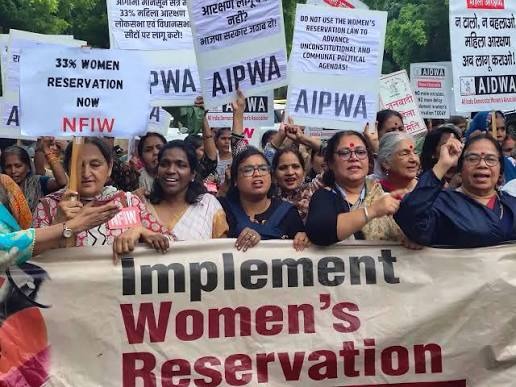
Women's groups demonstrated in Delhi to demand the immediate, unconditional rollout of the 33% Women's Reservation Bill. Protesters criticized government clauses linking enactment to future census and delimitation rounds, urging authorities to enforce the law without further deferrals.
NEW DELHI — Intensifying political pressure on the central government, various women’s organizations under the banner of the National Coalition for Women's Reservation staged a high-profile demonstration in New Delhi. Gathering in large numbers from across the national capital and neighboring states, participants demanded the immediate and unconditional implementation of the 33% women's reservation quota during Parliament's current Monsoon session. The protest highlights mounting public frustration over procedural clauses tying the legislation to upcoming census and delimitation exercises, which critics argue unnecessarily delays political empowerment for women.
Contention Over Delimitation and Legislative Delays
The core grievance centers on the conditional implementation framework outlined in the Constitution (106th Amendment) Act, popularly known as the Nari Shakti Vandan Adhiniyam, which was passed with historic bipartisan support in September 2023. While the statute guarantees a one-third reservation of seats for women in the Lok Sabha and state legislative assemblies, Section 334A stipulates that the quota will only operationalize after the first census conducted subsequent to the act's commencement, followed by a mandatory delimitation exercise.
Addressing the protesting crowds, leaders from participating associations argued that linking the law to administrative bottlenecks effectively postpones its actual realization by multiple electoral cycles. Speakers highlighted a profound policy contradiction, noting that while the legislation is frequently lauded as a milestone for gender parity, its delayed enforcement denies women equitable legislative representation in the immediate term.
Broader Political Impact and Civil Society Response
The street demonstrations have reignited national debates regarding gender representation in Indian governance. Political analysts and civil society representatives point out that women continue to remain vastly underrepresented in legislative bodies relative to their share of the population.
Opposition figures and coalition organizers have urged lawmakers across party lines to press the executive branch for an expedited timeline, bypassing the prerequisite delimitation hold-ups. As parliamentary sessions proceed, the renewed momentum from grassroots women's movements places legislative equity squarely back at the center of national political discourse.
Quote Section
"At this juncture, there is a need for the entire country to unite and demand the unconditional implementation of the Women's Reservation Bill, and for it to be enacted during this Monsoon session of Parliament itself."
— According to official statements released by the National Coalition for Women's Reservation.
Why It Matters
The ongoing agitation underscores the gap between legislative promises and tangible political representation for women in India. For citizens, lawmakers, and civil society groups, expediting the 33% quota directly impacts democratic inclusivity, shaping how future policy decisions reflect the nation's diverse demographic interests.
Key Facts at a Glance
Event: Mass protest demanding unconditional enforcement of the 33% Women's Reservation Bill.
Organizer: National Coalition for Women's Reservation.
Location: New Delhi.
Legislative Background: Constitution (106th Amendment) Act, 2023.
FAQ Section
What is the primary demand of the protesting women's organizations?
The groups are demanding the immediate, unconditional implementation of the 33% Women's Reservation Bill during the ongoing Monsoon session of Parliament.
Why has the implementation of the Women's Reservation Bill been delayed?
The legislation specifies that the 33% quota will take effect only after the completion of the first post-enactment census and subsequent delimitation exercise.
When was the Women's Reservation Act officially passed?
The constitutional amendment bill was passed by Parliament and enacted into law in September 2023.
Which bodies will be impacted by the 33% quota once implemented?
Reservations will apply to directly elected seats in the Lok Sabha, state legislative assemblies, and the Legislative Assembly of the National Capital Territory of Delhi.
Source: The Hindu, Parliament of India, Ministry of Law and Justice