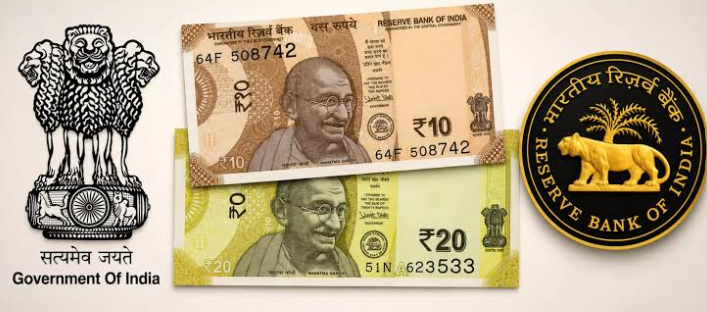
The Indian government has approved a Reserve Bank of India proposal to introduce one billion pieces each of ₹10 and ₹20 polymer banknotes for field trials. Aimed at enhancing note durability and reducing replacement costs, the plastic currency will circulate alongside existing paper notes during the trial phase.
NEW DELHI — The Government of India has approved a proposal submitted by the Reserve Bank of India (RBI) to introduce two billion polymer banknotes for field trials across the country. Union Minister of Finance Nirmala Sitharaman confirmed in a written reply to the Rajya Sabha that the trial will involve one billion pieces each of ₹10 and ₹20 denomination notes.
The central bank’s proposal, submitted under Section 25 of the Reserve Bank of India Act, 1934, aims to evaluate the operational performance, longevity, and public acceptance of plastic-based currency. The government clarified that the polymer banknotes will be issued alongside traditional paper substrate notes, with no plan to completely replace paper currency.
Field Trial Objectives and Substrate Durability
The introduction of polymer currency targets lower-denomination notes that experience high transaction velocity and rapid physical degradation. Standard cotton-paper banknotes in ₹10 and ₹20 values frequently require premature withdrawal and destruction due to soilage, tearing, and environmental wear.
International studies indicate that polymer banknotes exhibit a lifespan two to four times longer than paper-based substrate notes under equivalent environmental conditions. The field trials will assess how plastic substrate notes withstand India’s diverse climatic conditions, high humidity, and intensive daily handling.
| Parameter | Project Details |
| Total Trial Volume | 2 Billion Banknotes (1 Billion per Denomination) |
| Target Denominations | ₹10 and ₹20 Banknotes |
| Statutory Provision | Section 25, Reserve Bank of India Act, 1934 |
| Circulation Framework | Parallel Issuance with Existing Paper Currency |
Procurement Status and Rollout Schedule
According to the Reserve Bank of India, the procurement process for the required polymer substrate and specialized printing materials is in its initial stage. Consequently, the precise expenditure and official launch date remain subject to procurement completion.
RBI Governor Sanjay Malhotra indicated during recent disclosures that the central bank is aiming for initial market circulation at the start of the upcoming financial year, pending successful completion of preliminary testing protocols. Full-scale regular issuance of polymer notes will only be determined following a comprehensive review of field trial outcome data.
Official Sources Section
According to official parliamentary disclosures filed by Union Finance Minister Nirmala Sitharaman in the Rajya Sabha, the central government granted official sanction to the RBI Central Board's recommendation under Section 25 of the RBI Act, 1934.
The Ministry of Finance and the Reserve Bank of India confirmed that Bharatiya Reserve Bank Note Mudran Private Limited (BRBNMPL) and security printing facilities will manage the specialized manufacturing requirements during the pilot project.
Quote Section
"According to officials, the proposal has been approved by the government, and polymer banknotes are proposed to be issued along with paper substrate-based banknotes," stated Union Finance Minister Nirmala Sitharaman in her written response to Parliament.
Central bank officials stated that the pilot project focuses on enhancing currency durability, preventing counterfeiting, and reducing long-term replacement printing expenses for low-denomination notes.
Why It Matters
The transition to testing polymer banknotes carries practical implications for public transaction management, banking operations, and public finance:
Extended Banknote Lifespan: Polymer notes reduce frequency of currency replacement, saving long-term printing and raw material costs.
Clean Note Policy: Plastic substrate currency resists dirt, moisture, and ink absorption, keeping circulating cash cleaner.
Enhanced Security Features: Polymer substrates allow integration of advanced transparent windows and optical anti-counterfeiting elements.
Key Facts at a Glance
Approved Volume: 1 billion pieces each of ₹10 and ₹20 denomination notes.
Legal Tender Status: Polymer notes will circulate alongside existing paper currency as legal tender.
Primary Objective: Evaluating substrate durability and resistance under Indian operating conditions.
Statutory Authority: Approved under Section 25 of the Reserve Bank of India Act, 1934.
Frequently Asked Questions (FAQ)
Will existing ₹10 and ₹20 paper notes be demonetized or withdrawn?
No. The government and RBI confirmed that paper banknotes will continue to circulate as legal tender alongside polymer notes.
Why is the RBI testing polymer currency notes?
Polymer notes are significantly more durable than paper notes, lasting two to four times longer and reducing continuous re-printing expenses for high-velocity small denominations.
When will the polymer notes enter public circulation?
The procurement process is in its initial stage, with the RBI targeting initial pilot rollout at the beginning of the next financial year.
Has India tested polymer banknotes previously?
While preliminary proposals were considered in earlier years, this official parliamentary approval grants formal clearance for a full-scale 2-billion-note field trial across the country.
Source: Ministry of Finance Parliament Disclosures (Rajya Sabha Written Reply), Reserve Bank of India (RBI) Press Statements, Reserve Bank of India Act, 1934.