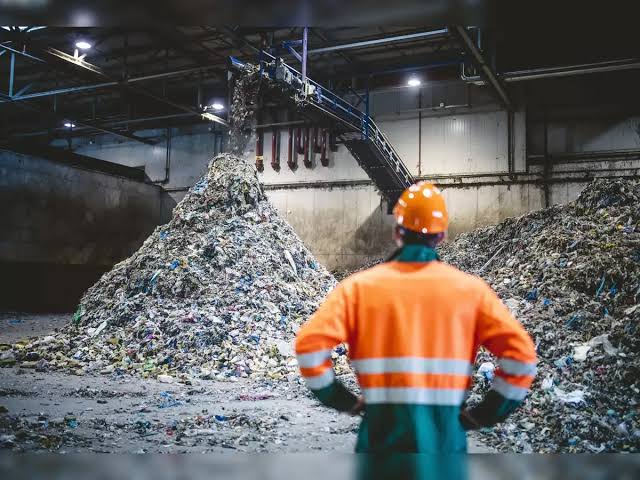
Australia’s product stewardship model offers India valuable lessons for refining its Extended Producer Responsibility (EPR) regulations. By adopting transparent eco-modulated fees, verifiable mass-balance tracking, and formal financial integration of waste pickers, India can transform its EPR portal into an accountable, market-driven mechanism that ensures producers truly pay for waste management.
NEW DELHI, India — As emerging economies grapple with ballooning municipal plastic waste and industrial byproducts, environmental policy analysts and regulatory bodies are evaluating how mature regulatory frameworks can strengthen national sustainability targets. A comparative assessment of environmental frameworks shows that the Australian circular economy framework offers critical policy lessons for India as the nation refines its Extended Producer Responsibility (EPR) guidelines. While India has established expansive mandatory recycling quotas across packaging and electronics, persistent challenges in compliance verification, market liquidity for recycling credits, and informal sector integration highlight the need for systemic fiscal and operational restructuring.
The Core Dilemma: Who Pays for the Waste?
Extended Producer Responsibility is a market-based environmental policy principle that holds manufacturers, brand owners, and importers financially and operationally accountable for the end-of-life management of their products. In practice, however, defining who bears the true cost of collection, transport, sorting, and high-value recycling remains a contentious global challenge.
In conventional municipal setups, local urban bodies and taxpayers carry the financial burden of waste management. Under a fully implemented circular economy model, this economic externality shifts upstream to producers.
In Australia, the National Waste Policy Action Plan targets an 80% average resource recovery rate across all waste streams by 2030, supported by co-regulatory product stewardship schemes. These frameworks ensure that brand owners pay advance disposal fees or contribute directly to Producer Responsibility Organisations (PROs) that manage accredited collection infrastructure, ensuring transparent cost distribution across the entire product lifecycle.
India's EPR Architecture: Progress and Enforcement Bottlenecks
India’s Ministry of Environment, Forest and Climate Change (MoEFCC) made significant strides with the formal notification of the Plastic Waste Management (Amendment) Rules and battery waste management mandates under the Central Pollution Control Board (CPCB). The centralized EPR portal has registered thousands of brand owners and recyclers, establishing mandatory targets for minimum recycling levels and post-consumer recycled (PCR) content usage.
Despite this regulatory baseline, policy evaluations reveal several operational bottlenecks within the domestic system:
EPR Certificate Transparency: The reliance on tradeable EPR credits has occasionally incentivized paper-only compliance, where certificates are traded without guaranteed physical material processing.
Informal Sector Economics: India’s waste collection relies heavily on an informal workforce of over 1.5 million waste pickers who collect and sort up to 80% of recyclable plastics, yet remain largely unintegrated into formal EPR funding streams.
Low-Value Plastics Deficit: Financial subsidies heavily favor rigid, high-value plastics like polyethylene terephthalate (PET), leaving multi-layered plastics (MLP) and flexible sachets to accumulate in landfills and waterways.
Key Lessons from Australia's Circular Economy Model
Policy researchers emphasize three structural mechanisms from Australia's approach that could strengthen India's Extended Producer Responsibility regime:
1. Mandatory Co-Regulatory Stewardship
Australia’s Recycling and Waste Reduction Act 2020 established a mechanism where voluntary industry schemes face mandatory government intervention if agreed recycling targets are missed. By combining statutory oversight with industry-led consortiums (such as the Australian Packaging Covenant Organisation), the model prevents systemic underfunding and ensures baseline processing fees reflect actual collection costs.
2. Full-Cost Recovery and Transparent Eco-Modulation
Australia utilizes eco-modulated fee structures, where producers of non-recyclable or composite packaging pay significantly higher stewardship levies than manufacturers using standardized, mono-material designs. Implementing standardized eco-modulation across Indian packaging sectors would provide immediate financial incentives for sustainable packaging innovation.
3. Traceable Chain-of-Custody Certification
To prevent fraudulent certificate generation, Australian resource recovery networks utilize digital tracing across verified waste transfer stations. Applying similar end-to-end mass balance validation on the CPCB portal would guarantee that Indian recyclers process physical volumes before issuing tradeable compliance credits.
Impact on Industry, Municipalities, and Consumers
Reforming Extended Producer Responsibility frameworks across India carries wide-ranging socioeconomic implications:
Consumer Brands and Packagers: Fast-moving consumer goods (FMCG) corporations face higher short-term compliance costs but gain access to stable domestic supplies of certified food-grade recycled resins.
Urban Local Bodies (ULBs): Shifting collection costs to producer-financed schemes reduces financial pressure on municipal budgets, freeing funds for advanced waste-to-energy and composting infrastructure.
Informal Waste Workers: Formalizing EPR fund allocations enables institutional contracts for waste-picker collectives, improving occupational safety, baseline wages, and social security access.
Official Sources
Policy documentation and data cited in this comparative review originate from:
Official Statements
According to officials at environmental policy research desks:
"The shift from voluntary recycling to enforceable Extended Producer Responsibility requires financial accountability. When policy ensures that product pricing reflects end-of-life disposal costs, circular design moves from a corporate sustainability goal to a core business necessity."
Why It Matters
Environmental Protection: Effective EPR funding stops low-value single-use plastics and hazardous e-waste from entering terrestrial and marine ecosystems.
Resource Security: Enhances domestic material recovery, reducing dependency on imported virgin polymers and scarce raw metals for clean technology manufacturing.
Regulatory Compliance: Establishes a predictable, auditable compliance framework that shields businesses from punitive environmental penalties while driving sustainable product design.
Key Facts at a Glance
Policy Comparison: Examines Australian product stewardship mechanisms to resolve Indian EPR compliance, funding, and tracing hurdles.
Core Principle: Extended Producer Responsibility (EPR) shifts end-of-life waste collection and recycling costs from taxpayers to product manufacturers.
Key Vulnerability: Traceability gaps in credit trading and inadequate funding for informal collection networks in emerging markets.
Solution Framework: Introduction of rigorous eco-modulation, digital mass-balance tracking, and formal inclusion of waste collectors into funded schemes.
Frequently Asked Questions
What is Extended Producer Responsibility (EPR)?
EPR is an environmental policy strategy where manufacturers, importers, and brand owners bear financial and operational responsibility for the collection, treatment, and recycling of post-consumer products.
How does Australia enforce circular economy compliance?
Australia combines statutory regulations under the Recycling and Waste Reduction Act with co-regulatory industry covenants, imposing strict recycling quotas and fees if industry-led initiatives fail to meet national benchmarks.
What are the primary challenges facing India’s EPR system?
Key challenges include fraudulent paper credit generation, low collection incentives for non-recyclable multi-layered plastics, and the economic exclusion of informal waste pickers from producer-financed funds.
What is eco-modulation in waste management?
Eco-modulation is a fee structuring mechanism where producers pay lower compliance fees for easily recyclable, mono-material packaging and higher penalties for complex, non-recyclable materials.
Source: Ministry of Environment, Forest and Climate Change (MoEFCC), Central Pollution Control Board (CPCB), and the Australian Department of Climate Change, Energy, the Environment and Water.