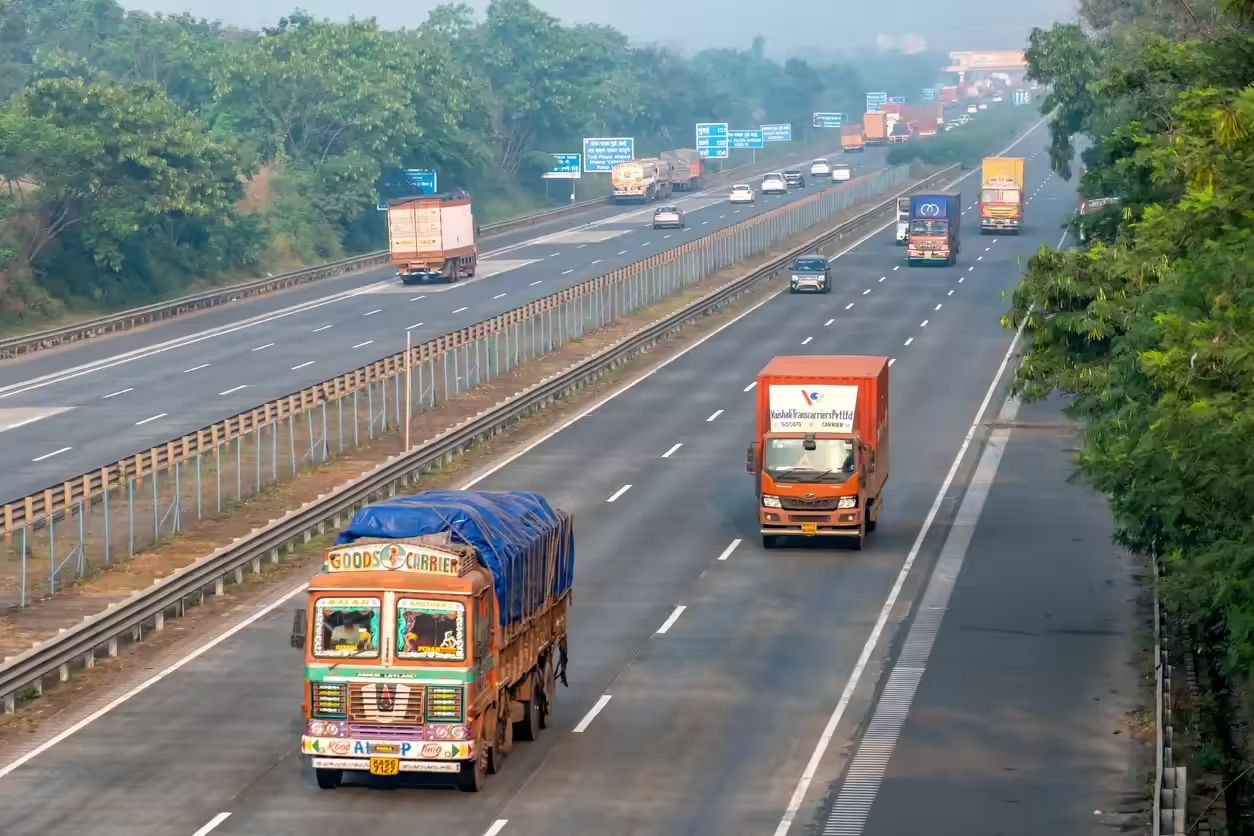
India’s highways carry nearly two-thirds of the nation’s freight, but experts warn that smarter trucks alone cannot solve systemic safety and efficiency challenges. The real need lies in smarter freight infrastructure, rest hubs, monitoring systems, and driver support, to reduce accidents, illegal parking, and logistics inefficiencies.
A new consultation on India’s freight ecosystem highlights that while electrification and connected trucks are important, the backbone of logistics, highways, requires urgent infrastructure reforms. The Supreme Court’s recent observations in the Phalodi accident case have reignited debate on unsafe halts, driver fatigue, and weak enforcement.
Infrastructure Gaps
- Unsafe Parking: Informal roadside stops remain common, creating accident risks.
- Driver Fatigue: Lack of integrated rest-cum-commercial hubs forces drivers into unsafe halts.
- Weak Enforcement: Despite AIS-140 mandates for GPS and emergency buttons, many trucks lack real-time monitoring.
- Limited Telematics: Adoption is confined to large fleets, leaving smaller operators without visibility.
Technology And Regulation
- Telematics: In 2025, 88% of fleets used telematics for safety, but few leveraged data to anticipate unsafe behaviour.
- Compliance Gaps: Unlike EU/US, India has no mandate for hours-of-service monitoring or electronic logging devices.
- ADAS Adoption: Advanced driver assistance systems remain limited to select newer models.
- Connectivity Issues: Fleet managers often face fragmented visibility due to incomplete data integration.
Policy Shifts
India’s highway strategy is evolving from rapid expansion to logistics efficiency and multimodal integration under PM GatiShakti. Future development will link ports, industrial corridors, and inland terminals, focusing on reducing logistics costs and improving reliability. Capital expenditure on highways rose from ₹0.53 lakh crore in FY15 to ₹3.06 lakh crore in FY26, laying the foundation for smarter freight corridors.
Industry Perspectives
Experts argue that electrification and connected technologies are only part of the solution. The bigger challenge is combining infrastructure development, technology-led monitoring, stronger regulation, and driver welfare into one integrated framework. Without this, India’s 10 million trucks will continue to face unsafe halts, extortion-related stops, and fragmented monitoring.
Freight Infrastructure Insights
• India’s highways carry nearly two-thirds of freight movement
• Unsafe halts and fatigue-driven stops expose structural cracks
• AIS-140 mandates often not enforced, limiting monitoring
• Telematics adoption restricted to large fleets, leaving gaps
• Policy shift towards multimodal corridors under PM GatiShakti
• Capital expenditure on highways rose sixfold in a decade
• Experts call for integrated hubs, stronger regulation, and driver welfare
Sources: ET Auto, ET Infra