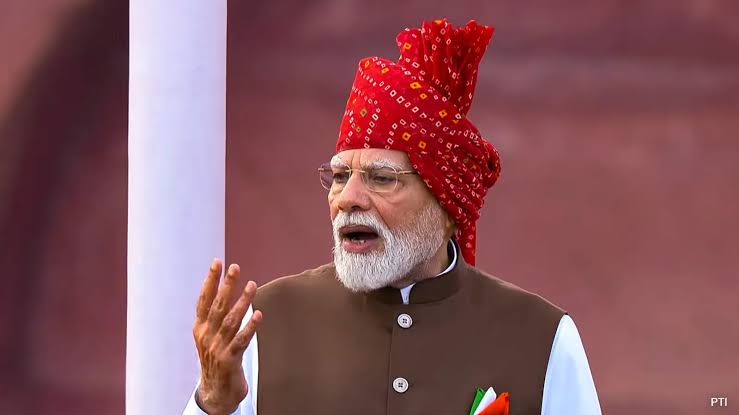
On India's 80th Independence Day, Prime Minister Narendra Modi delivered his 13th Red Fort address wearing a traditional red Bandhani turban. Paired with a brown jacket and tricolour pocket squares, the headgear celebrated indigenous tie-and-dye craftsmanship, promoting Indian handlooms and the 'Vocal for Local' ethos on a national stage.
NEW DELHI — Marking India’s landmark 80th Independence Day celebrations on August 15, 2026, Prime Minister Narendra Modi addressed the nation from the historic ramparts of the Red Fort wearing a striking traditional red Bandhani (tie-and-dye) safa.
The visual choice continues a signature 13-year annual ritual where the Prime Minister uses traditional headgear from diverse Indian regions to showcase native craftsmanship, artisan heritage, and cultural identity alongside his key policy addresses.
Red Fort Protocol and Sartorial Details
Prime Minister Modi arrived at the historic Red Fort on Saturday morning after offering floral tributes at Rajghat. He was formally received by Defence Minister Rajnath Singh, Minister of State for Defence Sanjay Seth, and Defence Secretary Rajesh Kumar Singh before inspecting the Inter-Services Guard of Honour.
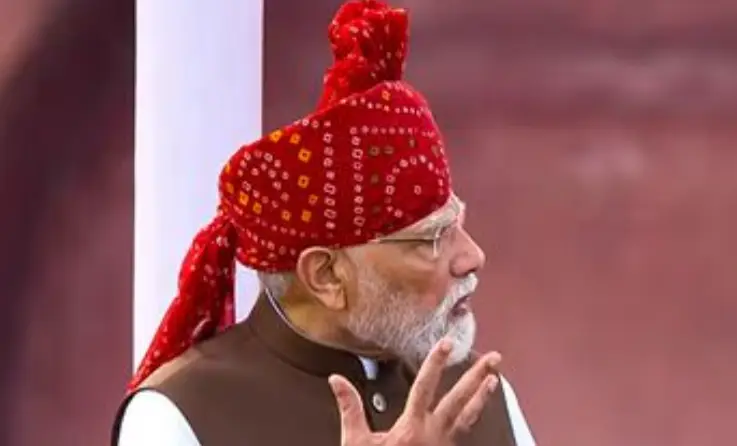
For his 13th consecutive Independence Day address, the Prime Minister paired a traditional red Bandhani turban—featuring fine yellow, white, and green tie-dye patterns and an extended trailing tail—with a full-sleeved white kurta-pyjama, a tailored brown Nehru jacket, and three pocket squares aligned in the tricolour shades of saffron, white, and green.
The intricate Bandhani technique, deeply rooted in the artisan traditions of Gujarat and Rajasthan, involves delicate thread-binding before dyeing to create distinct geometric dot patterns.
A Decade of Turban Diplomacy
Since his maiden Independence Day address in 2014, Prime Minister Modi's annual headgear has evolved into a closely watched symbol of regional inclusion and cultural representation. Over the past decade, his choices have highlighted different indigenous weaving and tie-dye methods across India.
| Year | Turban Style & Description | Regional Heritage Focus |
| 2026 | Red Bandhani safa with yellow, white, and green dots | Western India (Gujarat & Rajasthan) |
| 2025 | Monochromatic all-saffron safa | National ceremonial tradition |
| 2024 | Multi-colored Leheriya wave print in orange, green, and yellow | Rajasthan desert wave-dye technique |
| 2023 | Vibrant multi-hued Bandhani in yellow, green, and red | Traditional Gujarati/Rajasthani craft |
| 2022 | Tricolour-themed white turban with saffron and green stripes | Har Ghar Tiranga Campaign motif |
Strategic & Economic Impact
The recurring emphasis on traditional attire at major state functions serves several practical purposes beyond ceremonial decorum:
Support for Handloom Crafts: Elevating traditional textiles like Bandhani, Leheriya, and Jodhpuri Bandhej on a global platform provides direct support for indigenous weavers and rural textile clusters.
'Vocal for Local' Promotion: The visibility aligns directly with government initiatives promoting domestic manufacturing and self-reliance (Aatmanirbhar Bharat).
Cultural Representation: Rotating through regional patterns signals cultural inclusivity across India's diverse states during central national celebrations.
Official Sources Section
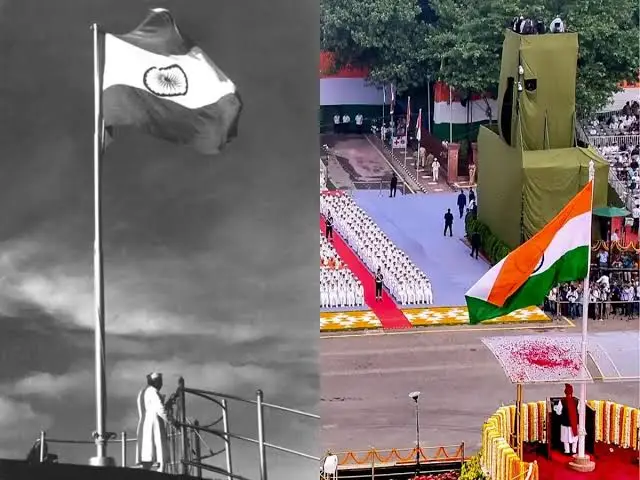
According to official releases from the Prime Minister’s Office (PMO) and reports by Press Trust of India (PTI) and Press Information Bureau (PIB), the 80th Independence Day events commenced with the hoisting of the National Flag followed by the ceremonial 21-gun salute.
Quote Section
"We remember with gratitude the countless freedom fighters whose courage, sacrifice and unwavering commitment ensured the end of colonial rule," Prime Minister Narendra Modi stated via an official address. "Their dreams continue to inspire us as we work together to build a Viksit Bharat."
According to government officials present at the ceremony, the attire choices reflect India's vast handloom ecosystems while reinforcing national pride on the world stage.
Why It Matters
The annual display of India's textile heritage at the Red Fort impacts cottage industries, textile exporters, and local artisan guilds by generating national interest in traditional crafts. For citizens, consumers, and cultural preservationists, highlighting artisanal crafts during key national milestones reinforces the economic value of preserving handloom traditions in an increasingly automated global market.
Key Facts at a Glance
Event: India's 80th Independence Day celebrations at the Red Fort, New Delhi.
Attire Highlight: Deep red Bandhani (tie-and-dye) safa featuring yellow, green, and white patterns.
Ensemble: White kurta-pyjama, brown Nehru jacket, and tricolour pocket squares.
Craft Significance: Celebrates the handloom legacy of Gujarat and Rajasthan.
Milestone: Prime Minister Modi's 13th consecutive address from the Red Fort ramparts.
Frequently Asked Questions
What is the significance of the Bandhani safa worn by PM Modi?
The Bandhani safa is a traditional tie-and-dye headgear native to Gujarat and Rajasthan. Wearing it on Independence Day highlights India’s rich textile diversity and champions the government’s ‘Vocal for Local’ initiative on a global stage.
How many times has PM Modi addressed the nation on Independence Day?
As of August 15, 2026, Prime Minister Narendra Modi has delivered 13 consecutive Independence Day addresses from the Red Fort, starting with his maiden speech in 2014.
What accessories complemented the attire in 2026?
Along with the red Bandhani turban, PM Modi wore a classic off-white kurta-pyjama, a tailored brown Nehru jacket, and three distinct pocket squares in saffron, white, and green representing the national flag.
Source: Press Information Bureau (PIB), Press Trust of India (PTI), Prime Minister's Office (PMO) Releases, Hindustan Times, Times of India, ANI News.