On India's 80th Independence Day, electoral data documents the transformation of Indian elections across 8 decades and 18 Lok Sabha polls. Growing from 17.3 crore electors in 1951 to 97 crore in 2024, the system evolved from paper ballots to EVMs, establishing the world's largest democratic process.
NEW DELHI — Marking India’s landmark 80th Independence Day on August 15, 2026, official electoral historical reviews published by the Election Commission of India (ECI) highlight the extraordinary structural evolution of Indian elections.
Across eight decades and 18 general elections—spanning from the inaugural 1951–52 democratic exercise to the 18th Lok Sabha election in 2024—the country's voting framework has scaled nearly sixfold in registered electors while transitioning from manual paper balloting to end-to-end electronic verification.
The Scale Expansion: 1951 to 2024
When India held its first general election between October 1951 and February 1952, the Election Commission managed an electorate of roughly 17.3 crore voters out of a total population of 36 crore. Universal adult suffrage was established under the Constitution of India, granting voting rights to all citizens aged 21 and older regardless of gender, wealth, or literacy.
By the 18th Lok Sabha general election in 2024, the electorate expanded to nearly 97 crore registered voters. Official ECI data shows that voter participation rates evolved alongside demographic growth, rising from 45.67% in 1951–52 to consistent turnouts above 66% in recent general elections.
| Metric | 1st Lok Sabha (1951–52) | 18th Lok Sabha (2024) | Expansion Factor |
| Registered Electors | ~17.32 crore | ~96.88 crore | ~5.6x growth |
| Parliamentary Constituencies | 489 seats | 543 seats | 54 additional seats |
| Voter Turnout | 45.67% | 65.79% | +20.12 percentage points |
| Minimum Voting Age | 21 years | 18 years | Lowered via 61st Amendment (1988) |
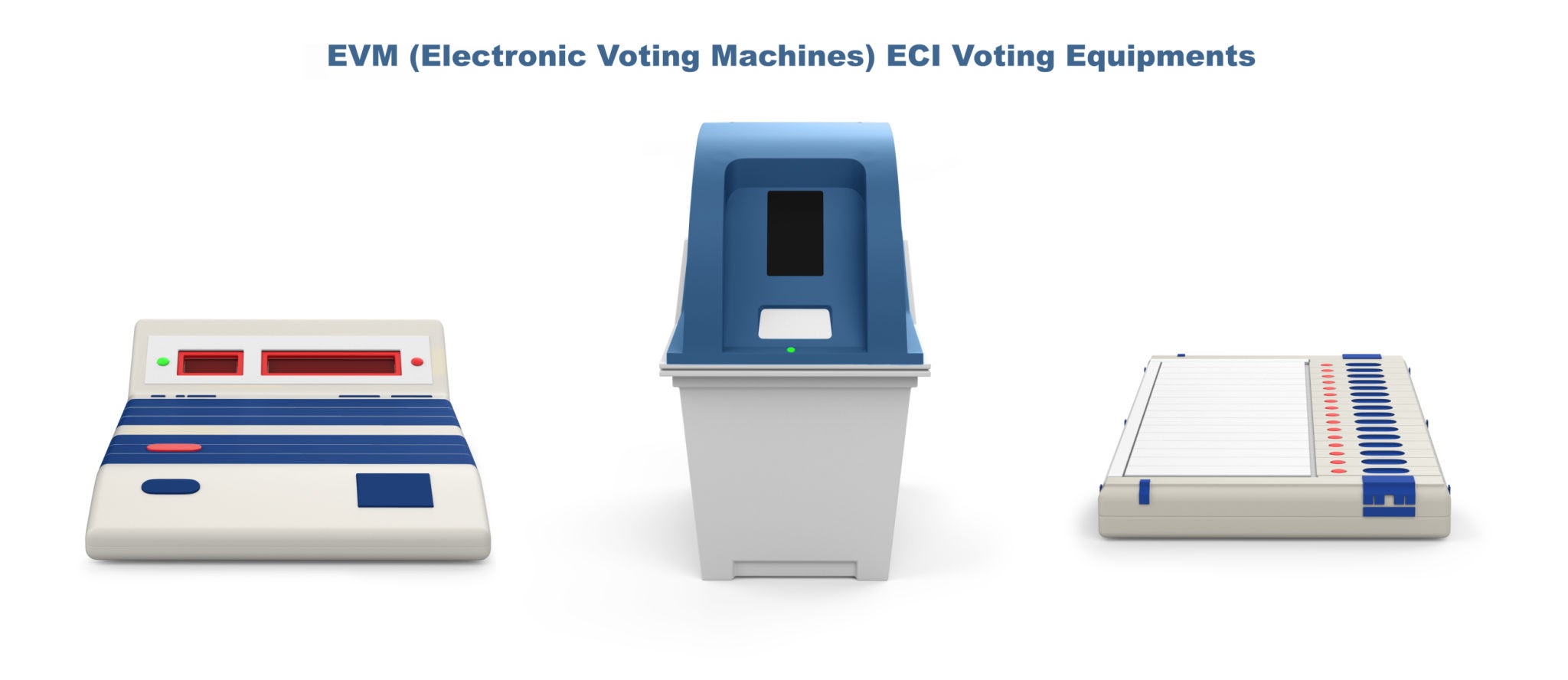
| Voting Method | Paper Ballot Boxes | EVMs + VVPAT | Electronic digital verification |
Technological Evolution from Ballots to EVMs
The operational execution of Indian elections underwent three primary technological phases over eight decades:
The Ballot Box Era (1951–1998): Early elections required separate physical ballot boxes for individual candidates, marked with distinct party symbols due to low national literacy rates. Later, standardized printed paper ballots stamped by voters became the primary national standard.
Electronic Voting Machine (EVM) Rollout (1998–2004): Designed by engineers at Bharat Electronics Limited (BEL) and Electronics Corporation of India Limited (ECIL), EVMs were first piloted in 1982 and fully adopted across all 543 parliamentary constituencies during the 2004 Lok Sabha elections.
VVPAT Verification Integration (2014–Present): The introduction of the Voter Verifiable Paper Audit Trail (VVPAT) added an independent paper trail visible to electors, enhancing audit mechanisms across polling stations.
Legislative Milestones and Franchise Inclusivity
Electoral reforms passed by the Parliament of India have progressively broadened political participation across demographic segments:
Constitutional Suffrage (1950): Article 326 of the Constitution ensured gender-neutral voting rights from the inception of the Republic, decades ahead of several Western nations.
Reduction of Voting Age (1988): The 61st Constitutional Amendment Act lowered the eligibility age from 21 to 18 years, introducing over 50 million young voters to the electoral rolls in 1989.
Gender Parity Momentum: Data from the Election Commission indicates that female voter turnout surpassed male voter turnout for the first time in the 2019 general elections, a trend sustained in 2024.
Digitization of Voter Enrollment: The creation of National Voters' Service Portal (NVSP) and digital Electoral Photo Identity Cards (e-EPIC) streamlined voter registration processes nationwide.
Official Sources Section
According to official statistical reports released by the Election Commission of India (ECI), data from the Ministry of Law and Justice, and archived records from the Press Information Bureau (PIB), the administrative management of Indian general elections involves over 15 million election personnel, security forces, and logistics teams per national cycle.
Quote Section
"According to Election Commission of India officials, the scale, integrity, and technological adaptation of Indian elections over eight decades demonstrate the resilience of constitutional democracy across diverse geographic and demographic regions."
Official ECI historical documentation notes that modern security standards, including randomized EVM allocation and multi-phased polling protocols, safeguard the electoral mandates of over 900 million citizens.
Why It Matters
The historical development of Indian elections provides crucial administrative blueprints for election management bodies worldwide. For citizens, political analysts, and international observers, tracing the path from 1951 to the present underlines how institutional stability, digital innovation, and constitutional guarantees sustain democratic continuity in the world's most populous nation.
Key Facts at a Glance
Total General Elections: 18 Lok Sabha elections conducted between 1951 and 2024.
Electorate Growth: Registered voters expanded from 17.3 crore in 1951 to nearly 97 crore in 2024.
Voting Age Shift: Lowered from 21 to 18 years in 1989 under the 61st Constitutional Amendment.
Technology Shift: Transitioned from manual paper ballot boxes to EVMs with VVPAT verification.
Constitutional Basis: Administered independently under Article 324 by the Election Commission of India.
Frequently Asked Questions
When was the first Lok Sabha general election held in independent India?
The first general election was conducted across 489 constituencies from October 25, 1951, to February 21, 1952, under the supervision of India's first Chief Election Commissioner, Sukumar Sen.
When were Electronic Voting Machines (EVMs) first used in general elections?
EVMs were first piloted in select assembly constituencies in 1982 and were implemented nationwide across all parliamentary constituencies starting with the 2004 Lok Sabha elections.
How many Lok Sabha general elections have taken place since 1947?
As of 2026, India has successfully conducted 18 Lok Sabha general elections, with the most recent 18th Lok Sabha election completed in June 2024.
Source: Election Commission of India (ECI) Statistical Reports (1951–2024), Press Information Bureau (PIB), Ministry of Law and Justice, Parliament of India Archives.