During his 80th Independence Day address at the Red Fort, Prime Minister Narendra Modi unveiled the "Saptadhara" vision—seven strategic streams of national power. Spanning manufacturing, agriculture, technology, infrastructure, defence, green/blue economy, and soft power, the framework aims to accelerate self-reliance and position India as a developed nation by 2047.
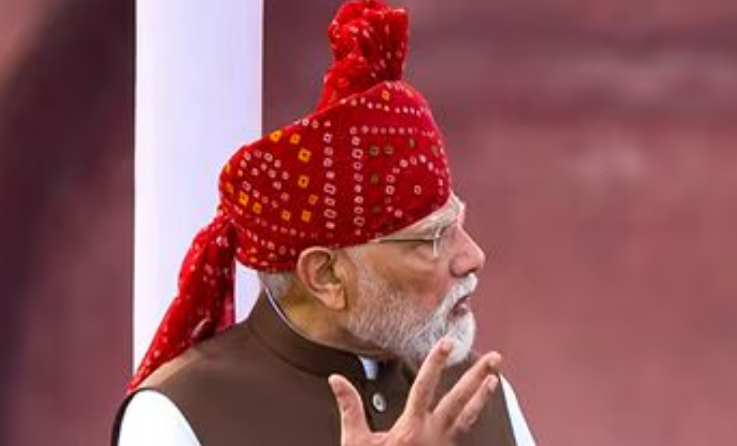
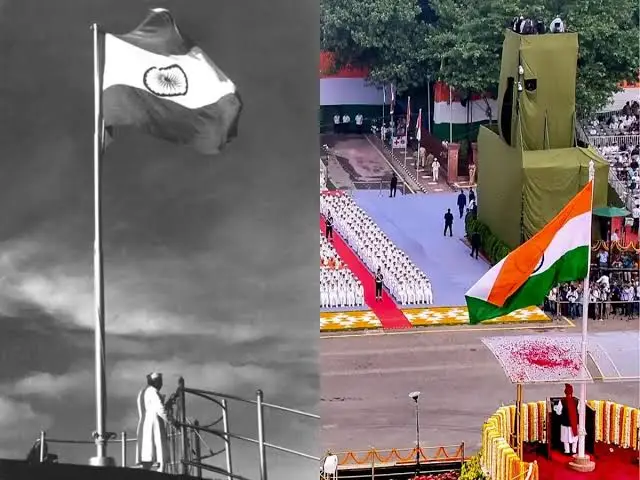
NEW DELHI — Delivering his address to the nation from the ramparts of the Red Fort on India’s 80th Independence Day on Saturday, August 15, 2026, Prime Minister Narendra Modi unveiled the "Saptadhara" framework—a comprehensive vision consisting of seven "streams of power" (saat shaktiyaan) designed to drive the country’s next phase of economic and strategic growth.
Drawing an explicit historical parallel to the ancient Sapta Sindhu (seven rivers) that defined early civilization in the region, Prime Minister Modi stated that the Saptadhara roadmap will give the nation new momentum to achieve the goals of Viksit Bharat (Developed India) by 2047.
Breakdown of the Seven 'Saptadhara' Pillars
The Saptadhara framework outlines strategic national priorities across industrial, technological, security, and socio-economic sectors:
| Stream # | Stream Name | Key Policy Focus Areas |
| 1 | Manufacturing Power | Complete domestic value chains, design-to-production, zero-defect quality |
| 2 | Agriculture & Food Processing | Global branding for millets/spices, expanding exports via FTAs |
| 3 | Technology & Innovation | AI, quantum computing, robotics, space, 6G telecom, data hubs |
| 4 | Gati Shakti (Infrastructure) | High-speed rail networks, urban transit, port-led development |
| 5 | Defence Shakti | Self-reliance, hypersonic defence systems, becoming global supplier |
| 6 | Green & Blue Economy | Green hydrogen, renewable storage, ocean technology, fisheries |
| 7 | Soft Power | Expanding global cultural, educational, and diplomatic influence |
Strategic & Economic Policy Context
1. Manufacturing Power & Supply Chains
Prime Minister Modi identified domestic manufacturing as the foundational engine of the Saptadhara. Urging Indian industries to scale production across complete value chains—moving from component assembly to finished products—he emphasized that Indian goods must compete internationally on "cost, quality, and scale" while adhering to zero-defect standards.
2. Agriculture and Global Exports
Linking agricultural productivity directly to international trade, the Prime Minister highlighted how India's recent Free Trade Agreements (FTAs) open expansive foreign markets for domestic farm produce. The policy focus mandates transforming traditional Indian crops, including millets, spices, fruits, and vegetables, into recognized global brands.
3. Frontier Technologies and Digital Infrastructure
Building on the success of the Unified Payments Interface (UPI) and Digital Public Infrastructure (DPI), the third stream focuses on positioning India as a global innovation hub. Priority sectors include artificial intelligence, robotics, quantum computing, space exploration, next-generation 6G communications, and localized data centers.
4. Gati Shakti and High-Speed Logistics
The fourth pillar concentrates on modernizing physical logistics and transport networks. The initiative prioritizes high-speed rail connections between major urban centers, streamlined freight corridors, and port-led development to lower logistics costs for businesses.
5. Defence Self-Reliance and Export Ambitions
Emphasizing national security, the fifth stream outlines a transition from being one of the world's largest defence importers to a key global exporter of military equipment. The agenda targets leadership in advanced platforms, including hypersonic technologies and indigenous manufacturing.
6. Green and Blue Economy Integration
The sixth stream merges land-based sustainable energy with ocean-based marine resources. India aims for international leadership in green hydrogen, renewable storage solutions, ocean technology, sustainable fisheries, and coastal infrastructure development.
7. Global Soft Power
The final stream focuses on expanding India's diplomatic, cultural, and intellectual footprint worldwide, utilizing educational exchanges, creative industries, and multilateral diplomacy to bolster international standing.
Official Sources Section
According to official releases from the Prime Minister’s Office (PMO), transcripts from the Press Information Bureau (PIB), and reporting by the Press Trust of India (PTI), the Saptadhara blueprint will form the baseline for upcoming inter-ministerial policy directives over the next five to seven years.
Quote Section
"In the coming 5 to 7 years, what could not be achieved in the last 5 to 7 decades, through the prowess and power of this Sapta Dhara, we will give the nation new heights, new momentum, and the capability to surpass new goals," Prime Minister Narendra Modi declared during his Red Fort address.
According to government officials, ministries will establish dedicated task forces to track execution milestones across each of the seven defined streams.
Why It Matters
The Saptadhara framework sets the policy and investment roadmap for Indian industries, domestic manufacturers, agricultural exporters, and technology firms. For investors and consumers, the blueprint signals sustained state backing for advanced manufacturing, green energy infrastructure, defence technologies, and expanded digital services over the coming decade.
Key Facts at a Glance
Concept: Saptadhara defines seven streams of national power invoked by PM Modi on the 80th Independence Day.
Core Pillars: Manufacturing, Agriculture, Technology, Gati Shakti, Defence, Green/Blue Economy, and Soft Power.
Target Timeline: Five-to-seven-year execution horizon driving toward the Viksit Bharat 2047 objective.
Industrial Focus: Developing complete domestic supply chains with emphasis on cost, quality, and global scale.
Strategic Goal: Transitioning India from a global consumer market to an international supplier of defence, tech, and manufactured goods.
Frequently Asked Questions
What does the term 'Saptadhara' mean in PM Modi's address?
Saptadhara translates to "seven streams of power" (saat shaktiyaan). It is a holistic development framework announced by Prime Minister Narendra Modi to guide India's growth across seven key strategic sectors.
How does Saptadhara relate to the Viksit Bharat 2047 vision?
The Saptadhara pillars serve as the structural operational strategy to achieve Viksit Bharat (Developed India) by the centenary of Indian independence in 2047.
What are the specific technology priorities listed under Saptadhara?
The technology stream emphasizes artificial intelligence, robotics, quantum technology, space exploration, 6G communication development, and data storage infrastructure.
Source: Prime Minister's Office (PMO) Speech Transcripts, Press Information Bureau (PIB), Press Trust of India (PTI), Ministry of Commerce and Industry.