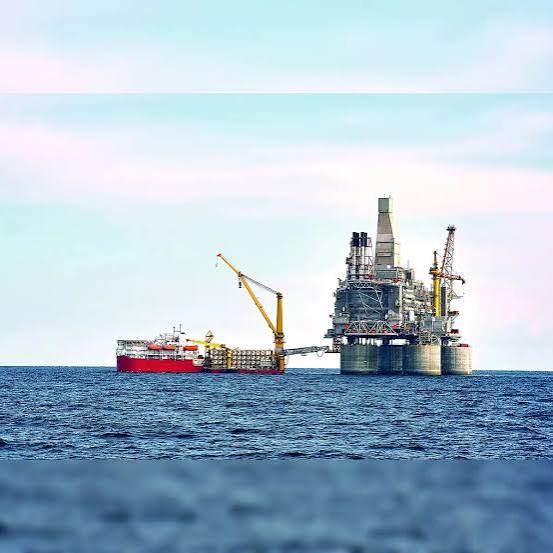
India has launched its ₹84,084 crore "Samudra Manthan" scheme to boost deepwater oil and gas exploration across its offshore basins. By co-funding up to 50% of deepwater test well costs, the government aims to de-risk drilling, increase domestic hydrocarbon production, and reduce reliance on expensive crude oil imports.
NEW DELHI — In a major effort to secure its long-term energy requirements and curb its foreign exchange outlay, the Union Cabinet approved the "Samudra Manthan" National Offshore Exploration Scheme on July 31, 2026. Overseen by the Ministry of Petroleum and Natural Gas, the initiative commits ₹84,084 crore ($8.83 billion) in financial outlays through fiscal year 2030–31 to accelerate deepwater oil and gas exploration across India's offshore basins. The decision comes as India's crude oil import dependency reached an all-time high of 88.7%, subjecting the domestic economy to international energy price shocks and maritime supply chain disruptions.
The ₹84,084 Crore Samudra Manthan Blueprint
Official Cabinet disclosures detail a structured plan designed to eliminate exploration bottlenecks across the country's Exclusive Economic Zone (EEZ). The capital allocation targets four primary operational pillars across eastern and western maritime fronts:
Seismic Data Acquisition: ₹28,534 crore earmarked for extensive 2D and 3D seismic surveys to map subsurface formations and upgrade the National Data Repository (NDR).
Exploratory Drilling Operations: ₹43,200 crore assigned to fund approximately 60 deepwater and ultra-deepwater test wells.
Shared Maritime Infrastructure: ₹10,000 crore dedicated to common offshore hubs, processing platforms, and pipelines to connect remote offshore discoveries.
Indigenous Equipment Manufacturing: ₹2,000 crore allocated to establish specialized manufacturing zones for domestic drilling equipment and rig components.
Under the funding model, the central government will co-finance up to 50% of the eligible drilling expenses for exploratory deepwater wells, capped at ₹675 crore per well. This risk-sharing framework aims to lower the financial barriers that previously limited private sector participation.
| Operational Component | Financial Outlay (₹ Crore) | Primary Objective |
| Seismic Surveys & Mapping | ₹28,534 | Advanced 2D/3D subsurface geological mapping |
| Exploratory Deepwater Wells | ₹43,200 | Co-funding ~60 deepwater and ultra-deepwater wells |
| Shared Infrastructure Hubs | ₹10,000 | Offshore pipeline networks and tie-in platforms |
| Domestic Manufacturing | ₹2,000 | Specialized machinery and rig fabrication units |
State Risk-Sharing and Offshore Target Basins
Historically, high capital requirements and a 75% failure rate for wildcat wells deterred sustained commercial interest in frontier maritime zones. By absorbing upfront financial losses through public subsidies, the state is shifting its policy role from passive licensing authority to risk-sharing partner.
The primary focus areas for deepwater oil and gas exploration include the Krishna-Godavari (KG), Cauvery, Mahanadi, and Andaman offshore basins. Estimates from state-run energy companies indicate that India’s eastern and western offshore regions contain over 5,600 million metric tonnes of oil equivalent (MMTOE) in hydrocarbon resources, much of which remains unmapped. Demonstrating immediate operational momentum, state-owned Oil and Natural Gas Corporation (ONGC) virtually spudded its deepwater exploratory well MN-DW18-1-H-D in the Mahanadi basin off the Odisha coast.
Impact on Citizens, Consumers, and Domestic Industry
For Indian consumers and industry stakeholders, expanded domestic production helps insulate retail fuel prices from geopolitical volatility. The Ministry of Petroleum and Natural Gas projects that successful offshore discoveries could increase annual domestic hydrocarbon output from 454.46 million barrels of oil equivalent (MBOE) to 586.40 MBOE.
Energy analysts estimate that boosting domestic output could shave approximately ₹1 trillion ($12 billion) annually off India's crude import bill. Reduced foreign exchange outflows support macroeconomic stability, while local manufacturing requirements create technical engineering jobs across naval architecture, subsea fabrication, and marine logistics sectors.
Official Sources Section
Policy directives, budget allocations, and technical operational parameters cited in this news report were sourced from official press releases issued by the Press Information Bureau (PIB), regulatory briefings from the Ministry of Petroleum and Natural Gas, public disclosures by Oil and Natural Gas Corporation (ONGC), and corporate statements from Oil India Limited.
Official Quote Section
According to official government statements following the Union Cabinet meeting, the policy initiative aligns with broader economic security objectives.
Union Petroleum and Natural Gas Minister Hardeep Singh Puri stated during the spudding of ONGC's offshore well: "The inauguration of new drilling operations under Samudra Manthan reflects India's resolve to unlock its vast offshore energy reserves. By de-risking frontier exploration in deepwater basins, we are creating a transparent, technologically advanced ecosystem that strengthens our national energy self-reliance."
Why It Matters
As India’s daily energy consumption expands, dependence on foreign crude imports exposes domestic markets to global shipping bottlenecks and price swings. Mobilizing state capital for deepwater oil and gas exploration addresses the structural decline of legacy onshore fields, encouraging long-term capital commitment from international energy companies and domestic field operators.
Key Facts at a Glance
Cabinet Approval: The ₹84,084 crore Samudra Manthan scheme runs through FY 2030–31.
Cost Co-Funding: The central government will subsidize up to 50% of deepwater test well costs, capped at ₹675 crore per well.
Resource Potential: Offshore basins hold over 5,600 MMTOE in estimated hydrocarbon potential.
Operational Progress: ONGC initiated exploratory drilling at the MN-DW18-1-H-D well in the Mahanadi offshore basin.
Frequently Asked Questions (FAQ)
What is the Samudra Manthan scheme?
Samudra Manthan is a ₹84,084 crore government initiative approved in July 2026 to accelerate deepwater oil and gas exploration and build offshore energy infrastructure across India's maritime basins.
How does the government plan to lower drilling risks for energy companies?
The government will co-fund up to 50% of the cost of drilling deepwater exploratory wells, capped at ₹675 crore per well, reducing upfront capital losses for operators.
Which regions are targeted for deepwater energy exploration?
Primary target areas include the Mahanadi, Krishna-Godavari, Cauvery, and Andaman offshore basins along India's coastline.
Where can official documents regarding the scheme be accessed?
Official policy updates and statutory notifications are published on the official web portals of the Ministry of Petroleum and Natural Gas and the Press Information Bureau (PIB).
Source: Statutory announcements and official press releases published by the Press Information Bureau (PIB), the Ministry of Petroleum and Natural Gas, Oil and Natural Gas Corporation (ONGC), and Oil India Limited.