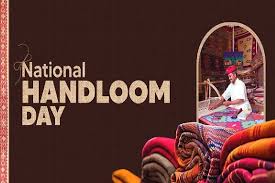
President Droupadi Murmu will lead the 12th National Handloom Day celebrations on August 7, 2026, at New Delhi’s Rashtrapati Bhavan Cultural Centre. The event will honor 22 weavers with the Sant Kabir and National Handloom Awards, celebrating the cultural and economic importance of India’s sustainable, indigenous textile industry.
NEW DELHI — President Droupadi Murmu is scheduled to preside over the 12th National Handloom Day celebrations on August 7, 2026. The national function, hosted at the Rashtrapati Bhavan Cultural Centre (RBCC) in New Delhi, serves as a formal recognition of the nation’s ancient textile traditions and the ongoing efforts to support the millions of weavers contributing to India's rural economy.
The event, organized by the Ministry of Textiles, marks an annual tribute to the Swadeshi Movement, which began on August 7, 1905. By celebrating National Handloom Day, the government aims to underscore the importance of the handloom sector in promoting sustainable development and maintaining the cultural identity of diverse Indian communities.
Celebrating Excellence in Craftsmanship
A central component of the 12th National Handloom Day will be the conferment of prestigious honors. President Murmu is expected to present the Sant Kabir Handloom Awards and the National Handloom Awards for 2025. According to official reports, 22 artisans will receive recognition—comprising three Sant Kabir Handloom Awards and 19 National Handloom Awards—for their exceptional skill, creativity, and dedication to preserving complex weaving techniques.
In addition to the award ceremony, the program includes the release of four commemorative postage stamps and the unveiling of two official publications: “Earth. Root. Thread – Aal Dyed Handloom Textiles of Central India” and the Handloom Awards Book 2025. These releases are intended to document regional textile innovations and provide a historical record of the award-winning works showcased this year.
Expanding Support for the Handloom Sector
The event also provides a platform for the Ministry of Textiles to showcase its ongoing initiatives to modernize the sector while respecting traditional methodologies. Attendees will be able to view an exhibition of award-winning handloom products, alongside live demonstrations of Kani weaving and wall-hanging textile arts.
Union Textiles Minister Giriraj Singh, along with Minister of State for Textiles Pabitra Margherita, will be in attendance to discuss current policies aimed at increasing market access for independent weavers. These initiatives, which include direct-to-consumer digital platforms and geographical indication (GI) tagging for traditional fabrics, are designed to ensure that artisans receive fair compensation for their labor.
Official Sources Section
The details regarding the ceremony and awards are based on official information from:
Quote Section
According to officials from the Ministry of Textiles:
"National Handloom Day is an opportunity to honor the resilience of our weavers and the profound cultural legacy embodied in every thread of our handloom textiles. This ceremony acknowledges not only the aesthetic value of these fabrics but also the economic contribution of the artisans to a self-reliant India."
Why It Matters
For the Indian handloom sector, the recognition provided on National Handloom Day acts as a catalyst for growth. By elevating the profile of traditional craftsmanship, the government aims to encourage younger generations to enter the industry, thereby preventing the extinction of rare weaving techniques. For consumers, the day serves as a reminder of the environmental sustainability of handwoven goods, which typically have a significantly lower carbon footprint compared to mass-produced, industrial alternatives.
Key Facts at a Glance
Event Date: August 7, 2026.
Venue: Rashtrapati Bhavan Cultural Centre (RBCC), New Delhi.
Awards: 22 total honors conferred, including three Sant Kabir Handloom Awards and 19 National Handloom Awards.
Historical Significance: Commemorates the 1905 Swadeshi Movement that promoted indigenous manufacturing.
FAQ Section
Why is National Handloom Day celebrated on August 7?
The date commemorates the Swadeshi Movement, which was launched on August 7, 1905, as part of the fight for Indian independence to support domestic goods.
What is the significance of the Sant Kabir Handloom Awards?
These awards are among the highest honors in the Indian textile industry, recognizing weavers who have achieved excellence in design, technical skill, and the preservation of traditional weaving practices.
How does this event benefit the weaving community?
Beyond the formal recognition, the event generates significant media exposure for handloom products, which helps artisans access new market segments and increases public awareness of the sector’s sustainability.
Source: Ministry of Textiles, President of India, Press Information Bureau