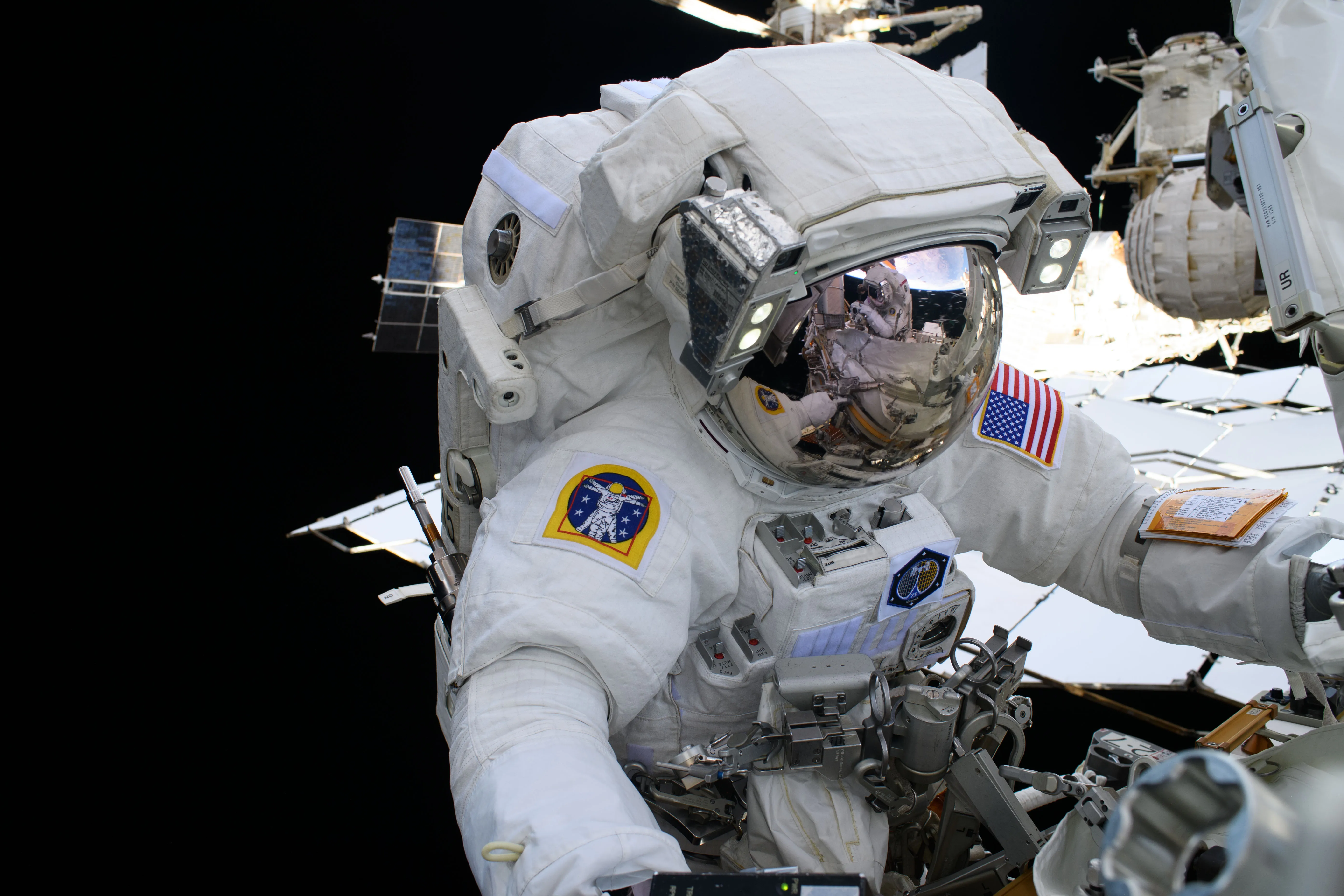
NASA has scheduled live coverage for three upcoming U.S. spacewalks and a preview news briefing from Johnson Space Center in Houston. The extravehicular activities will focus on upgrading solar array structures, replacing external camera hardware, and enhancing power capabilities aboard the International Space Station to support future microgravity research.
WASHINGTON — The National Aeronautics and Space Administration (NASA) has announced comprehensive live media coverage for three upcoming U.S. spacewalks outside the International Space Station (ISS), beginning with a preview news conference from Johnson Space Center in Houston. According to official mission updates issued on Tuesday, July 28, 2026, the series of extravehicular activities (EVAs) will focus on essential maintenance, upgrading solar array structures, and installing advanced scientific hardware to support ongoing microgravity research and long-term orbital station operations.
News Briefing Details and Transmission Schedule
NASA officials confirm that a preview news conference will air live on NASA+, NASA Television, the agency’s official website, and social media channels to outline the specific objectives, timeline, and astronaut assignments for all three spacewalks.
Key operational managers and mission specialists participating in the briefing will address technical preparations, safety protocols, and contingency procedures designed for complex orbital repairs outside the station's pressurized modules.
Preview Briefing Stream: Live transmission from NASA's Johnson Space Center in Houston, Texas.
Primary Broadcast Outlets: NASA+, NASA Television, the NASA App, YouTube, and official agency social media platforms.
Focus Areas: Detailed breakdown of astronaut pairings, tool configurations, robotics support, and timeline constraints for each planned extravehicular activity.
Technical Objectives and Station Infrastructure Upgrades
The planned spacewalks aim to enhance power generation capabilities and complete critical external hardware replacements across the orbiting laboratory's truss structure.
During each planned six-to-seven-hour excursion, space-suited astronauts will exit the Quest airlock, relying on tether systems and assistance from the station's robotic arm, Canadarm2, operated by crewmates inside the orbital facility.
Operational Background and Safety Protocols
Extravehicular activities represent some of the most complex operational tasks conducted in low Earth orbit. Astronauts undergo hundreds of hours of neutral buoyancy training at Johnson Space Center to simulate microgravity environments and master the specialized tools required for complex repairs.
Following routine evaluations of Extravehicular Mobility Unit (EMU) spacesuits, NASA engineers have certified all primary life-support systems and suit components for these upcoming tasks. The primary goal of installing upgraded Roll-Out Solar Arrays is to augment the station's existing power grid, increasing overall energy capacity by up to 30 percent to accommodate expanding commercial and international scientific payloads.
Official Sources Section
According to official advisories, media accreditation notices, and mission announcements:
Quote Section
According to official statements issued by mission operations leadership:
"According to officials, the upcoming series of U.S. spacewalks will significantly enhance power capacity and scientific throughput on the International Space Station, ensuring the orbiting laboratory remains fully operational for international research teams."
Why It Matters
Continuous upgrades to the International Space Station ensure that the orbital facility remains a viable platform for cutting-edge microgravity research, commercial technology demonstrations, and human spaceflight studies. For space agencies and commercial partners, maintaining power infrastructure and external hardware supports long-term operations that lay the groundwork for future deep-space missions, including the Artemis lunar program and eventual human missions to Mars.
Key Facts at a Glance
Event Coverage: NASA will provide live coverage of three U.S. extravehicular activities (spacewalks) and a preview news conference.
Broadcasting Outlets: Available on NASA+, NASA TV, the NASA app, and official digital platforms.
Primary Tasks: Installation of Roll-Out Solar Array modification kits, camera replacements, and power cable routing.
Operational Venue: International Space Station (ISS) in low Earth orbit, managed from Houston, Texas.
Frequently Asked Questions (FAQ)
Where can the public watch NASA's spacewalk coverage?
Live coverage will be streamed on NASA+, NASA Television, the official NASA app, YouTube, and the agency’s official website.
What is the main purpose of these three spacewalks?
The spacewalks focus on upgrading solar array support structures, replacing aging external cameras, routing power cables, and preparing hardware for scientific research payloads.
How long does a typical NASA spacewalk last?
A standard extravehicular activity (EVA) outside the International Space Station generally lasts between six and seven hours.
Who operates the robotic arm during spacewalks?
Astronauts inside the space station maneuver the Canadarm2 robotic arm to assist spacewalkers in moving heavy equipment and reaching distant structural locations.
Source: National Aeronautics and Space Administration, NASA Television, International Space Station Program Office