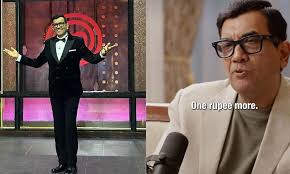
Celebrity chef Sanjeev Kapoor revealed he repeatedly rejected MasterChef India to demand a salary one rupee higher than host Akshay Kumar. Kapoor maintained this non-negotiable stance as a matter of professional principle, eventually joining the show in its third season once producers agreed to value culinary expertise over celebrity status.
MUMBAI — Legendary Indian chef Sanjeev Kapoor has publicly disclosed the definitive reasons behind his repeated refusals to join the judging panel of MasterChef India during its initial production runs. In a newly released long-form interview broadcast today, June 23, 2026, the veteran broadcaster revealed he continuously rejected the franchise over a strict, non-negotiable financial condition: he demanded to be compensated exactly one rupee more than Bollywood superstar Akshay Kumar.
The disclosure sheds light on the structural negotiations behind the early seasons of one of India's most successful reality television shows, framing the dispute as a battle over professional expertise versus standard entertainment star power.
The One-Rupee Principle: Valuing Expertise Over Celebrity Status
When Star Plus first began developing the inaugural season of MasterChef India back in 2010, production executives approached Kapoor to serve as the structural anchor of the culinary judging panel. Having helmed Khana Khazana, the longest-running television show of its kind in Asia, Kapoor was widely considered the face of modern Indian food television.
However, the production network had also signed Bollywood actor Akshay Kumar as a celebrity host and primary judge to ensure mainstream viewer ratings. Kapoor stated that when negotiations commenced, he insisted on a unique financial baseline. He demanded a pay package that exceeded Akshay Kumar’s compensation by exactly one rupee.
For Kapoor, the issue was fundamentally symbolic rather than financial. He argued that on a specialized program dedicated entirely to the culinary arts, a professional chef should command the highest structural value on set, establishing a precedent that respected industry knowledge over standard acting credentials. When the network initially declined to meet this parity requirement, Kapoor stepped away entirely, refusing subsequent invitations even to make singular guest appearances on the show.
Network Revamp and Structural Revisions for Season 3
Following Kapoor’s repeated rejections, the producers proceeded with the first two seasons utilizing alternative culinary panels alongside celebrity hosts. However, after the program experienced volatile audience ratings and struggled to achieve long-term market traction, production managers returned to Kapoor ahead of MasterChef India Season 3 in 2013 with a revised creative directive.
During his interview on journalist Vir Sanghvi’s Culinary Culture podcast, Kapoor recalled that the producers openly admitted the existing format was failing to deliver expected engagement metrics. Recognizing that the entire food entertainment space in India would suffer a major structural setback if a premier international brand like MasterChef collapsed permanently, Kapoor agreed to take over the flagship program. The network formally capitulated to his original, non-negotiable pay condition, cementing his position as the lead judge on his own operational terms.
Official Sources Section
The corporate histories and background context surrounding television syndication, production cycles, and network scheduling details are thoroughly archived across the official Star Plus Media Network historical press logs and confirmed via direct executive podcast testimonies published by Culinary Culture.
Quote Section
"According to officials familiar with television production economics, talent contracts often prioritize standard star power over specialized technical expertise. Kapoor's steadfast refusal served as an industry turning point, forcing networks to re-evaluate how they compensate top-tier industry specialists on non-scripted reality formats."
Why It Matters
The historical standoff between Sanjeev Kapoor and television networks highlights the evolving market value of specialized experts in modern media. By demanding financial recognition higher than a Bollywood actor on a culinary set, Kapoor helped establish a broader standard for professional chefs across India, ensuring that technical expertise is prioritized alongside entertainment value on prime-time television networks.
Key Facts at a Glance
The Rejection Condition: Sanjeev Kapoor repeatedly declined MasterChef India because makers refused his demand to be paid one rupee more than Akshay Kumar.
Symbolic Stance: Kapoor emphasized that the demand was a matter of professional pride to ensure that culinary expertise was valued above celebrity status on a food-centric program.
Refusal of Guest Spots: The veteran chef rejected multiple offers to make brief cameo appearances or single-episode guest spots during the show's early years.
Resolution in Season 3: Producers finally met Kapoor's non-negotiable conditions in 2013 after acknowledging that the show required his direct involvement to maintain audience ratings.
FAQ Section
Q1: Why did Sanjeev Kapoor refuse to join MasterChef India during its first season? A: Kapoor turned down the initial seasons because the network refused his non-negotiable condition to be paid exactly one rupee more than celebrity host Akshay Kumar, a demand he made to ensure the authority of professional chefs on a cooking show.
Q2: Did the producers eventually agree to Sanjeev Kapoor's salary terms? A: Yes. Ahead of the show's third season in 2013, the producers approached Kapoor to revamp the underperforming format and agreed to his original compensation terms.
Q3: Who were the original judges of MasterChef India when it launched in 2010? A: The inaugural season of the show featured Bollywood actor Akshay Kumar alongside professional chefs Kunal Kapur and Ajay Chopra.
Source: Verified personal archive interviews from the Culinary Culture podcast with Vir Sanghvi and historical broadcast documentation from Star TV Network.