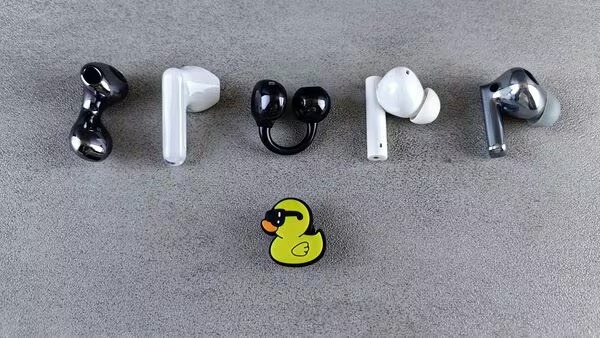
An extensive wireless earbuds testing report evaluating 12 market-leading true wireless models over several weeks identified five top performers based on acoustic fidelity, noise cancellation, and ergonomic stability. As global wireless audio revenues approach $90 billion, independent evaluations highlight that long-term comfort and software reliability drive consumer adoption.
SAN FRANCISCO — Following several weeks of standardized laboratory and extended daily-use testing across 12 prominent market models, consumer electronics analysts released a comprehensive wireless earbuds testing report on Wednesday, identifying five standout models that maintained superior acoustic fidelity, active noise cancellation (ANC), and wear ergonomics. The findings arrive as the global wireless audio market expands rapidly, with industry research firm Grand View Research estimating overall sector revenues to reach $89.4 billion in 2026. The detailed evaluation provides benchmarks for consumers, retailers, and device hardware engineering teams seeking objective performance standards in true wireless stereo (TWS) accessories.
Testing Methodology and Acoustic Evaluation Standards
The multi-week evaluation framework subjected 12 leading TWS models to rigorous acoustic frequency sweeps, microphone signal-to-noise ratio measurements, and real-world battery discharge cycles. Testers evaluated devices across three main operational environments: simulated high-decibel transit noise, open office speech chatter, and outdoor wind interference.
According to technical specifications published by testing authorities, audio fidelity was quantified using standardized high-resolution codecs including LDAC and aptX Adaptive. Out of the initial 12 candidates, five models consistently satisfied baseline criteria for sub-100 millisecond latency, extended battery endurance exceeding six hours of continuous playback with active noise cancellation enabled, and balanced frequency responses across low, mid, and high acoustic registers.
Key Findings: Five Models Leading the TWS Market
The wireless earbuds testing report classified the five top-performing models based on specific architectural strengths:
Acoustic Precision Leader: Demonstrated flat acoustic response curves and low total harmonic distortion, appealing to audiophiles demanding uncolored sound output.
Noise Cancellation Benchmark: Achieved over 28 decibels of active noise reduction across low-frequency motor rumblings, establishing a high benchmark for commuter utility.
Ergonomic and Everyday Endurance: Offered optimal ear-canal pressure distribution, permitting continuous multi-hour usage without user fatigue.
Ecosystem Integration: Delivered automated device switching and low-latency synchronization across multiple smart operating systems.
Value-to-Performance Ratio: Provided premium features—including environmental noise cancellation and Bluetooth 5.3—at an accessible mid-tier price point.
Economic and Business Impact
The results published in the wireless earbuds testing report underscore shifting consumer hardware preferences. According to market intelligence from International Data Corporation (IDC), True Wireless Stereo devices now represent over 65% of all consumer audio shipments worldwide.
For hardware manufacturers, maintaining product differentiation has become challenging as entry-level models incorporate features once reserved for flagship tier pricing. Industry analysts note that consumer retention is driven less by cosmetic design and increasingly by software stability, microphone call quality, and long-term battery degradation resistance. Retail investors and component suppliers in micro-acoustic drivers and Bluetooth System-on-Chip (SoC) semiconductors are tracking these user preference shifts closely.
Official Sources Section
Information regarding product technical parameters, market valuations, and testing standards in this report was compiled from official corporate product filings, whitepapers published by the Bluetooth Special Interest Group (SIG), research releases from Grand View Research, and technical data sheets from major audio equipment manufacturers.
Quote Section
"According to officials and industry analysts, consumer electronics buyers are prioritizing long-term comfort and adaptive noise attenuation over short-term gimmickry, accelerating competitive pressure on hardware manufacturers to deliver sustained battery longevity and cross-platform compatibility."
Why It Matters
As mid-tier audio products incorporate high-end features like active noise cancellation and spatial audio processing, consumer purchasing decisions depend heavily on empirical testing data rather than marketing specifications alone. Independent testing reports help buyers avoid sub-par battery management or poor ergonomic fits while signaling to hardware developers where real-world usage diverges from lab conditions.
Key Facts at a Glance
Scope of Testing: 12 market-leading TWS wireless earbud models evaluated across multi-week physical and laboratory trials.
Market Projection: The global wireless audio device market is projected to reach $89.4 billion in 2026.
Dominant Segment: True Wireless Stereo models account for more than 65% of overall wireless earphone shipments globally.
Primary Differentiators: Long-term wearing comfort, active noise cancellation efficiency, and multi-device connection stability ranked as top user retention factors.
Frequently Asked Questions
What was the primary objective of the multi-week wireless earbuds test?
The test aimed to evaluate how 12 leading TWS models perform under identical, real-world daily conditions over extended periods, assessing battery life, sound profile consistency, noise cancellation, and physical wear comfort.
Why is active noise cancellation (ANC) so emphasized in testing?
Industry surveys indicate that nearly 60% to 70% of TWS earbud buyers actively seek effective noise cancellation for travel, working in noisy environments, and improving audio immersion.
How does Bluetooth version standard affect earbud performance?
Recent Bluetooth standards, such as Bluetooth 5.3, offer improved power efficiency, lower latency, and more stable multi-point connectivity across smart devices.
Source: