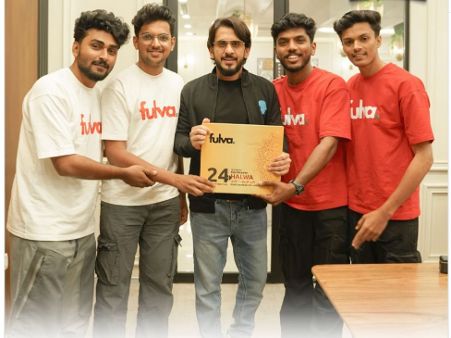
Four childhood friends from Kozhikode, Shabas, Irfan, Thasreef, and Sanu, believed that India's most beloved traditional sweet deserved a bigger stage. They launched Fulva, built it to a ₹6.3 crore ARR with 30% month-on-month growth, and just secured investment from boAt co-founder Aman Gupta through SailThru Ventures. Grandma's kitchen just got venture-backed. Opening
For generations, it sat on the shelves of narrow Calicut bakeries, translucent, shimmering, wrapped in plastic, costing almost nothing. It was one of India's most beloved sweets. It had centuries of heritage, a loyal following across Kerala, and the kind of deep cultural meaning that money alone cannot manufacture. And yet nobody had built a brand around it. Nobody had given it a premium package, a global address, or a story worthy of the sweet itself. Four friends from Kozhikode looked at this gap and decided to change the narrative of an age-old delicacy that is considered the pride of their city. What followed is one of the most unexpected and genuinely inspiring D2C startup stories in India, a tale of halwais, homemakers, 24 flavours, 15 countries, and one of India's most celebrated entrepreneurs writing a cheque.
The Origin Story: A Promise in Kashmir, and a Realisation That Changed Everything
It all began with an unfulfilled promise. Shabas Ahammed, the CEO and brain behind Fulva, visited Kashmir a few years back and was asked by a kind local family to bring back some of the famous Kozhikode Halwa the next time he visited. However, during his next trip, Shabas noticed something that stopped him in his tracks, the halwa, despite its rich history, was poorly packaged and lacked the quality presentation it deserved. “If our traditional delicacies are to shine, we need to bring them into the modern world, in a modern way," Shabas shared. "It was being sold in large blocks with plastic packaging, not fit for travel, and certainly not up to the quality it deserved."
The realisation was clear. The problem was real. And Shabas knew he could not solve it alone. He reached out to his childhood friends, Sanu Muhammed, Thesreef Ali, and Irfan Safar. Together, they founded Fulva under Calicut Cousins Private Limited, with a vision to blur the gap between heritage and modernity. Their goal was clear: to bring authentic Kerala flavours, especially Kozhikode Halwa, to the national forefront while uplifting local artisans.
The company launched with 24 premium varieties of halwa, blending traditional recipes with contemporary flavours such as Mango, Tender Coconut, Grape, Green Chilli, and Dry Fruits. And the market responded immediately. Their first box featuring 24 premium variations of Kozhikodan halwa was an instant hit, and the order tally crossed 300 right in the first month of starting out.
The Defining Turn: Keeping the Halwais, Changing the World
The most quietly brilliant decision Fulva made was one of the first they ever made, and it speaks directly to the soul of what makes the brand different from every other food startup chasing premiumisation. While debating on whether they should set up a manufacturing facility, the founders decided to task the halwais, the traditional sweet makers, with production. "This makes the product more authentic," Sanu explains, adding that the halwais possess a generational skill of making the halwa.
In an era where food startups often strip authenticity from traditional recipes in the name of consistency and scalability, Fulva chose the opposite. The halwais stayed. The recipes stayed. What changed was everything around the product, the packaging, the positioning, the distribution, and the story being told to the world. For decades, Calicut Halwa was primarily a street-side treasure. Visitors to the historic SM Street, known locally as Mittai Theruvu, would find the translucent, oily delicacy wrapped in basic plastic or paper. While the taste was undisputed, the branding remained entirely stagnant. Fulva radically transformed this experience by moving the product into high-end retail environments and employing sophisticated, gift-ready packaging, successfully shifting halwa from a casual purchase to a premium confectionery item.
The community dimension of the brand went even further. Through the 'Empower by Fulva' campaign during Ramadan, the founders united 120 homemakers from Kozhikode who prepared traditional Kerala specialities. They tied up with auto drivers to bring the food to Fulva's facility, where it was packaged and sold, creating a genuine community economy around the brand.
This was a brand built on authenticity, community, and craft. In a D2C landscape full of startups that manufacture trust through advertising, Fulva was earning it the hard way, by genuinely caring about the people and traditions behind the product.
The Strategic Genius: D2C First, Community Built, Global From Day One
90% of Fulva's revenue comes from its Direct-to-Consumer D2C sales via its website, with the rest from corporate gifting partnerships. Its gifting vertical has been highly effective, with major corporate clients onboard. This D2C-first approach gave Fulva something that most packaged food brands spend years trying to build: a direct relationship with every customer who placed an order, and the data and loyalty that comes with it. But the boldest strategic move was the decision to think globally from the very beginning. The startup delivers to foreign shores and has shipped its halwa to the UK, Turkey, Germany, and the UAE. Since launch, the brand has served over 50,000 customers and shipped products to more than 15 countries.
Most Indian food startups think about exports as a Phase 3 ambition, something to pursue after domestic scale is achieved. Fulva treated international shipping as a core part of its identity from day one, because the diaspora audience for Kozhikode Halwa already existed globally. The product had emotional resonance with Malayali communities across the Gulf, the UK, and Europe. Fulva simply needed to package that resonance and ship it to their doors. Beyond individual consumers, Fulva has also seen strong demand from corporate gifting buyers, event organisers, and premium hotels that feature its halwa in curated dessert menus. Three distinct revenue channels, D2C, gifting, and hospitality, built from a single product category, through a team of four childhood friends operating from Calicut.
The Bold Move: Aman Gupta Says Yes
In March 2026, Fulva reached the milestone that signals a startup's transition from promising to proven. Fulva secured investment from Aman Gupta, Co-founder of boAt, through SailThru Ventures. The round also saw participation from investors and industry leaders Prejith Narayan, Salpido Brothers, Ajith Nair, and Rahul Mamman.
Commenting on the investment, Aman Gupta said, "India has a rich food heritage and categories like halwa have incredible potential to be built into modern consumer brands. Fulva is reimagining a traditional product with strong storytelling, premium packaging, and a global outlook. I'm excited to support the founders as they work towards building a brand that can take traditional confectionery items like halwa to a wider audience."
The validation from Aman Gupta, the man who turned an Indian electronics brand into a global consumer powerhouse and became one of India's most recognised investor faces, carries weight that goes far beyond the capital. It is a signal to the market, to consumers, and to the broader D2C ecosystem that the premiumisation of India's traditional food heritage is a serious, scalable, investable opportunity. Gupta's involvement is seen as a major validation of the "premiumisation" trend currently sweeping through India's traditional food sectors.
The founders responded: "We are on a mission to modernise halwa while celebrating and empowering the rich tradition behind it. The strategic support and belief from Aman sir and other investors bring invaluable entrepreneurial experience, brand-building insight, and market access. Their backing will help us scale faster as we work towards building a global brand for halwa."
Scale, Numbers & Real-World Impact
Every figure below is drawn from publicly verified, credible sources published within the last 48 hours. Fulva has been growing at nearly 30% month-on-month and currently operates at an Annual Revenue Run Rate of approximately ₹6.3 crore. In its first year of operations, the brand clocked ₹84 lakh in revenue with around 50% profit margins, a figure that
demonstrates not just demand, but genuine unit economics discipline from a very early stage. The investment comes at a time when India's packaged sweets market is witnessing strong growth, expanding at an estimated CAGR of 16%. India's traditional sweets sector has projections estimating it will reach ₹84,300 crore by 2025, while 90% of India's sweet market remains unorganised, meaning the addressable opportunity for a structured, premium, brand-led player is enormous. The product roadmap ahead is equally ambitious. Fulva plans to introduce several regional and international halwa varieties including Tirunelveli Halwa, Bombay Karachi Halwa, Gajar Halwa, Omani Halwa, and Turkish Halwa, all reimagined for modern consumers. The company is also exploring health-conscious alternatives including sugar-free halwa and nutritionally enriched, protein-rich variants.
The newly raised capital will be deployed towards marketing and brand building, expanding distribution across quick commerce platforms, marketplaces and offline retail, and upgrading production facilities to improve capacity, efficiency, and product consistency.
The Business Lesson: The Best Product Is the One That Already Has a Billion Fans
The sharpest lesson from Fulva's journey is one that every aspiring founder in India's D2C space needs to hear: the biggest untapped market in India is not a new category, it is an old one, done properly. Halwa has been consumed in India for centuries. It has hundreds of millions of loyal lovers across every state, religion, and age group. It carries festival
memories, family rituals, and cultural identity that no marketing budget can manufacture. What it had never had was premium packaging, consistent quality, global distribution, and a brand story worthy of the product. Shabas, Sanu, Irfan, and Thasreef did not invent halwa. They invented the version of halwa that the world was ready to pay a premium for. That distinction, between invention and elevation, is one of the most powerful and replicable frameworks in modern consumer entrepreneurship. The second lesson is about the power of keeping what works. By trusting the halwais and preserving the original recipes, Fulva kept the soul of the product intact while modernising everything else. Authenticity, when it is genuine, is the most defensible competitive moat any food brand can build.
The Bigger Picture: From SM Street to the World Stage
The story of Fulva is not one of corporate boardrooms, but of local roots. Founded by four childhood friends, the brand began with a simple, albeit ambitious conviction: that halwa deserves a much larger stage.
Kozhikode's SM Street, Mittai Theruvu, has served its famous halwa for generations. The halwais who make it have passed the skill from father to son, generation to generation, in the same narrow lanes of one of Kerala's most historic trading cities. Fulva did not displace that tradition. It honoured it, and then carried it to 15 countries, 50,000 customers, and the investment portfolio of one of India's most celebrated entrepreneurs.
Fulva is more than just a brand. It is a bridge between Kerala's traditions and a modern market-based economy. And with Aman Gupta now on board, that bridge just got a great deal wider. Four friends started with a box of 24 halwa varieties and a conviction that their city's most beloved sweet deserved better. They were right. And India, and the world, is beginning to taste just how right they were.
Sources: StartupNews.fyi , KnowStartup, Indian Startup News , TimelineDaily , Restaurant India, BW Marketing World , Business of Food