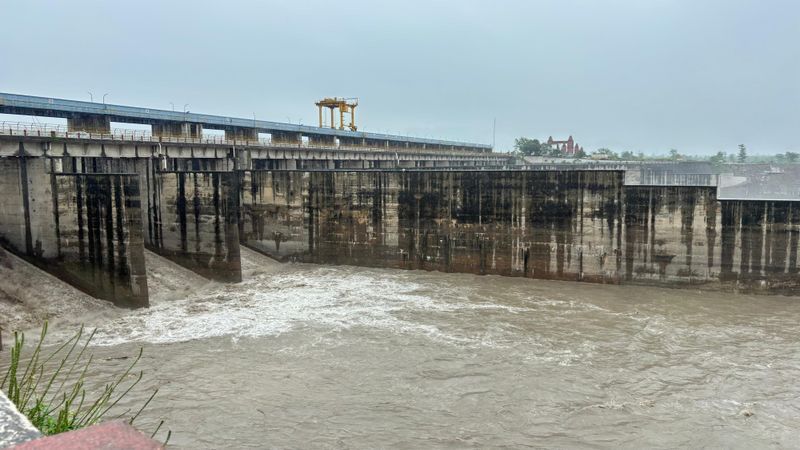
The Hathnikund Barrage is managing a discharge of approximately 45,840 cusecs into the Yamuna River following heavy regional rainfall. As a diversion structure, the barrage is releasing incoming inflows to downstream areas, prompting officials to maintain vigilance and alert communities residing along the floodplains to prepare for potential rises.
Authorities are monitoring river discharge at the Hathnikund Barrage following a surge in water levels that could impact low-lying areas.
HATHNIKUND — The water discharge from the Hathnikund Barrage into the Yamuna River has reached critical monitoring levels as of July 10, 2026, following a surge in inflow triggered by recent heavy rainfall across the northern region. According to official data from the Haryana Irrigation and Water Resources Department, the discharge rate at the barrage was recorded at approximately 45,840 cusecs, with authorities maintaining a round-the-clock vigil to manage the flow.
The increase in discharge, which reflects the heavy monsoon activity in the upper catchments, has prompted local administrations to initiate precautionary measures. While the current flow is being managed through standard diversion protocols, the rise in volume serves as a reminder of the river's potential for rapid escalation during the peak monsoon season.
Managing the Flow: A Diversion Structure
Official data indicates that the Hathnikund Barrage—the primary diversion structure on the Yamuna—recorded significant discharge fluctuations throughout the day. At the time of the latest update, the barrage was operating with multiple gates adjusted to regulate the downstream flow.
Engineers have reiterated that the Hathnikund Barrage functions as a diversion structure rather than a storage dam, meaning it lacks the capacity to hold back large volumes of incoming water. Consequently, the volume released from the barrage is directly proportional to the inflows received from the river’s upstream catchments. This operational reality necessitates constant coordination between the Haryana irrigation authorities and the downstream administrations, including those in Delhi and neighboring districts, to ensure timely warnings for communities in flood-prone zones.
Vigilance Across Floodplains
The rise in water volume has led to a heightened state of alert for district administrations situated along the banks of the Yamuna. In line with established flood control protocols, officials have begun monitoring vulnerable stretches and low-lying embankments.
While the current discharge levels do not yet trigger the highest-level flood alarms, authorities in downstream states have been advised to keep sector officers on standby. Patrolling is being intensified in areas historically susceptible to waterlogging, and contingency plans remain in place should the discharge levels continue to climb due to sustained rain in the hills.
Why It Matters
For citizens living in the floodplains of the Yamuna, and for downstream infrastructure planners, the discharge figures from Hathnikund serve as a critical lead indicator. Since water from the barrage typically takes approximately 48 to 72 hours to reach the National Capital Region (NCR), these real-time updates provide essential lead time for local governments to conduct evacuations, move livestock, and safeguard public property before the river's levels peak in populated areas.
Key Facts at a Glance
Current Discharge: Measured at approximately 45,840 cusecs (AW discharge data).
Barrage Function: Hathnikund is a diversion structure, not a storage reservoir, meaning it cannot store high volumes of water.
Lead Time: Water released from the barrage typically reaches the Delhi region within 48 to 72 hours.
Monitoring: Authorities are tracking upstream rainfall and inflow to provide real-time updates to downstream districts.
FAQ
What does a discharge of 45,000+ cusecs mean for downstream areas?
It indicates a steady increase in river volume. While it does not necessarily mean an immediate flood, it prompts authorities to monitor water levels closely, especially in low-lying embankments.
Why can’t the barrage hold the water?
Hathnikund is a diversion barrage, not a reservoir/dam. It is designed to divert water into canal systems for irrigation and utility purposes, not to store large volumes of monsoon runoff.
Are there immediate flood threats?
As of July 10, 2026, the situation is being managed through standard protocols. Authorities advise residents in riverbed areas to follow local government updates and remain alert to any official evacuation orders.
Source: Haryana WRD Data, Central Water Commission