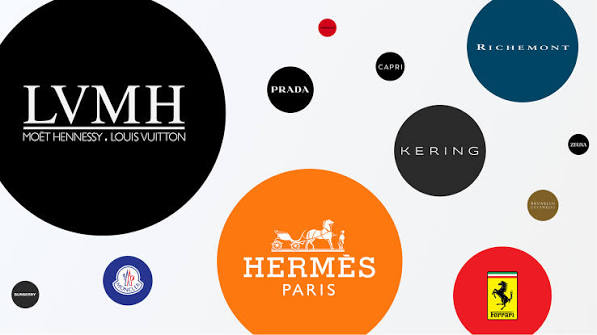
The global luxury market is dominated by major conglomerates like LVMH, Kering, and Richemont, which own labels such as Louis Vuitton, Gucci, and Cartier. Conversely, iconic houses including Chanel, Hermès, and Rolex remain independent under private family ownership or charitable trust structures to safeguard heritage and exclusivity. Outlook India + 1
PARIS — While fashion houses present distinct creative identities to consumers worldwide, the corporate ownership of the global personal luxury market is concentrated within a small circle of multinational holding companies and private family trusts. Market analyses highlight that iconic labels such as Louis Vuitton, Gucci, and Tiffany & Co. are owned by publicly traded European conglomerates. Conversely, historic houses like Chanel, Hermès, and Swiss horology titan Rolex continue to operate outside the conglomerate structure, using private ownership models to maintain creative autonomy and long-term brand heritage.
Conglomerate Supremacy: LVMH, Kering, and Richemont
The global luxury landscape is led by three major European conglomerates that have acquired heritage houses over decades:
LVMH Moët Hennessy Louis Vuitton
Led by Chairman and CEO Bernard Arnault, Paris-headquartered LVMH oversees a portfolio of more than 75 prestige brands across fashion, jewelry, watches, and spirits. Its flagship fashion house, Louis Vuitton, operates alongside Christian Dior, Fendi, Celine, Loewe, Givenchy, Bulgari, Tiffany & Co., and TAG Heuer. LVMH's scale gives the conglomerate significant leverage in global real estate, supply chain sourcing, and media marketing.
Kering Group
Controlled by the Pinault family, French holding company Kering focuses on luxury fashion, leather goods, and fine jewelry. Its primary revenue generator is Italian fashion house Gucci. Kering's portfolio also encompasses Saint Laurent, Balenciaga, Bottega Veneta, Alexander McQueen, Brioni, and high-jewelry houses Boucheron and Pomellato.
Compagnie Financière Richemont
Geneva-based Swiss luxury group Richemont dominates haute horology and high jewelry. Controlled by South Africa's Rupert family, Richemont owns world-renowned maisons including Cartier, Van Cleef & Arpels, Jaeger-LeCoultre, Vacheron Constantin, IWC Schaffhausen, and Panerai.
| Luxury Group | Key Holdings & Brands | Ownership Model |
| LVMH | Louis Vuitton, Dior, Fendi, Tiffany & Co., Bulgari | Publicly Traded (Arnault Family Majority Vote) |
| Kering | Gucci, Saint Laurent, Balenciaga, Bottega Veneta | Publicly Traded (Pinault Family Control) |
| Richemont | Cartier, Van Cleef & Arpels, Vacheron Constantin | Publicly Traded (Rupert Family Voting Control) |
| Prada Group | Prada, Miu Miu, Church's, Marchesi 1824 | Publicly Traded (Prada-Bertelli Family Control) |
Independent Houses: Chanel, Rolex, and Hermès
A select group of premier luxury brands deliberately declines consolidation, preserving independence through alternative corporate structures:
Chanel
Chanel remains privately owned by Alain and Gérard Wertheimer, grandsons of Pierre Wertheimer, who partnered with founder Gabrielle "Coco" Chanel in 1924. By remaining private, Chanel avoids public quarterly earnings pressures, allowing the house to execute long-term capital investments in artisanal workshops and supply chains.
Rolex
Swiss watchmaker Rolex is owned by the Hans Wilsdorf Foundation, a private charitable trust established in 1945 by company founder Hans Wilsdorf. Because it operates under a private foundation structure without public equity shareholders, Rolex reinvests its net profits into research, manufacturing infrastructure, and philanthropic initiatives.
Hermès
French leather house Hermès preserves strict family control, with descendants of founder Thierry Hermès holding over 66% of voting equity. The family established a private holding company, H51, to block hostile takeover attempts and enforce hand-crafted production limits that protect brand exclusivity.
Strategic Implications for Consumers and Investors
For retail consumers, ownership structure shapes brand availability, retail footprint, and pricing velocity. Conglomerates utilize shared distribution infrastructure and digital platforms to drive global volume. Independent houses prioritize artificial scarcity and controlled production to maintain long-term aspirational appeal.
For global investors, luxury conglomerates offer diversified cash flows across retail categories and geographical markets. While economic cycles affect aspirational consumer spending, high-end fine jewelry, bespoke leather goods, and haute horology show structural earnings resilience.
Official Sources Section
Corporate structures, parent company disclosures, and brand ownership data cited in this news report were compiled from annual financial reports published by LVMH Moët Hennessy Louis Vuitton, corporate disclosures from Kering Group, financial filings by Compagnie Financière Richemont, corporate updates from Chanel Limited, and official registry records from the Hans Wilsdorf Foundation / Rolex SA.
Official Quote Section
According to official corporate updates and luxury industry analysts, ownership models dictate long-term creative and commercial strategy.
According to industry analysts at luxury financial desks, "the division between publicly traded conglomerates and private family trusts defines modern luxury economics. Conglomerates leverage global scale and capital markets, while independent houses leverage patience and strict supply controls to protect brand equity across generations."
Why It Matters
Understanding luxury brand ownership reveals how corporate capital dictates consumer trends, retail pricing, and craftsmanship standards. Whether through LVMH's multi-brand acquisition model or Rolex's foundation trust structure, ownership models directly influence global real estate, supply chains, and high-end manufacturing.
Key Facts at a Glance
LVMH Portfolio: LVMH owns over 75 iconic labels, including Louis Vuitton, Christian Dior, Tiffany & Co., and Fendi.
Kering Group: Controlled by the Pinault family, Kering owns Gucci, Saint Laurent, Balenciaga, and Bottega Veneta.
Chanel Privacy: Chanel remains owned by the Wertheimer family, operating outside public equity markets.
Rolex Foundation Structure: Rolex is owned by the Hans Wilsdorf Foundation, a private Swiss charitable trust.
Frequently Asked Questions (FAQ)
Who owns Louis Vuitton and Tiffany & Co.?
Both Louis Vuitton and Tiffany & Co. are owned by French luxury conglomerate LVMH Moët Hennessy Louis Vuitton, led by Chairman and CEO Bernard Arnault.
Which company owns Gucci?
Gucci is owned by French multinational holding company Kering, controlled by the Pinault family.
Is Rolex a publicly traded company?
No, Rolex is not publicly traded. It is owned by the Hans Wilsdorf Foundation, a private Swiss charitable trust that reinvests corporate earnings.
Who owns Chanel?
Chanel is privately owned by brothers Alain and Gérard Wertheimer, whose grandfather Pierre Wertheimer co-founded Parfums Chanel in 1924.
Source: Official investor reports and corporate governance filings published by LVMH, Kering, Richemont, Chanel, and Rolex.