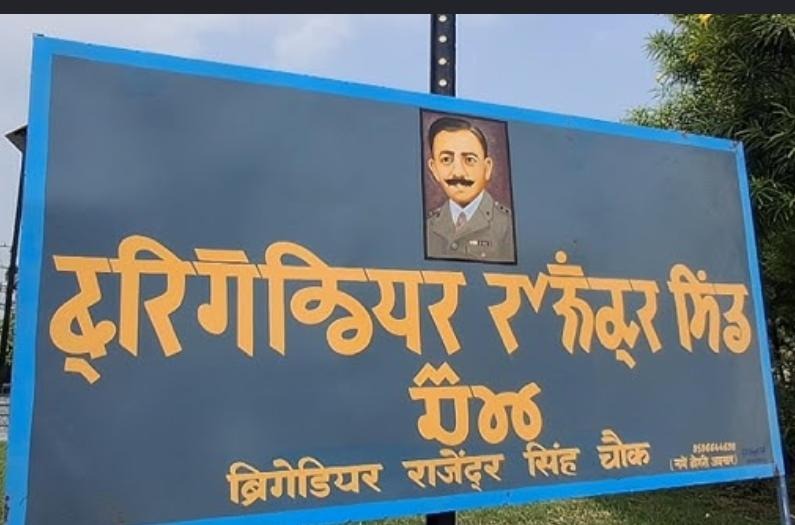
Jammu authorities have launched a linguistic preservation drive by installing public signboards featuring the traditional Namey Dogra Akhar script alongside Devanagari and Roman text. Spearheaded by the municipal corporation and civil society groups, the initiative aims to revive the historical Dogri writing system and reconnect younger generations with regional heritage.
Restoring Traditional Script to Public Spaces
Municipal authorities in Jammu have initiated a comprehensive linguistic preservation campaign, introducing public signboards written in the traditional Namey Dogra Akhar script across major city junctions, intersections, and public institutions. Rolled out in September 2026, the project places the historical script alongside the standard Devanagari and Roman formats.
While the Dogri language received formal recognition under the Eighth Schedule of the Indian Constitution in 2003 and was designated an official language of the Union Territory of Jammu and Kashmir in 2020, its administration and education have predominantly relied on the Devanagari script. The traditional writing system—a modified variant of the ancient Takri script developed during the reign of Maharaja Ranbir Singh—gradually fell out of widespread public use over the 20th century. The current civic rollout seeks to reverse this trend by reintroducing the alphabet into the daily visual landscape of the Duggar heartland.
Community Collaboration and Future Educational Plans
The signage project was developed following extensive advocacy from civil society organizations, notably the Siyana Nagrik Muddad Seva Sanstha, in close coordination with the Jammu Municipal Corporation (JMC). Initial installations span more than 24 prominent locations, with expansion plans targeted at over 40 additional commercial markets and residential colonies.
Cultural experts and municipal officials emphasize that displaying the script in public spaces is a vital first step toward restoring community familiarity. Organizers have announced intentions to follow the signage campaign with formal literacy classes and community workshops, ensuring that the script transitions from decorative municipal displays to active reading and writing among citizens.
Official Sources Section
According to official announcements and administrative briefs released by the Jammu Municipal Corporation (JMC) and the Jammu and Kashmir Academy of Art, Culture and Languages, the collaborative signage program is designed to safeguard regional identity.
"According to officials, integrating the traditional script into everyday civic infrastructure enables residents, visitors, and particularly younger generations to recognize and reconnect with the deep cultural significance of the Dogri language."
Why It Matters
Language preservation extends beyond constitutional recognition to safeguarding the unique scripts that carry historical manuscripts and cultural memory. Reviving traditional alphabets in public spaces strengthens local identity, fosters civic pride, and ensures that regional linguistic diversity endures in an increasingly standardized digital age.
Key Facts at a Glance
Script Revival: Public signboards in Jammu now feature area names in the traditional Namey Dogra Akhar script.
Institutional Support: Spearheaded by the Jammu Municipal Corporation in partnership with civil society groups like Siyana Nagrik Muddad Seva Sanstha.
Historical Context: Namey Dogra Akhar evolved from the ancient Takri script under 19th-century Dogra rulers.
Next Steps: Organizers plan to introduce formal community learning classes to teach reading and writing skills.
Frequently Asked Questions
What is Namey Dogra Akhar?
Namey Dogra Akhar is the traditional modified script derived from Takri, historically used for writing the Dogri language.
Why did the traditional Dogri script decline in use?
Following administrative language shifts in the late 19th century and the formal adoption of Devanagari by literary bodies in 1944 to promote publishing, the traditional script gradually fell out of active administrative and educational use.
Where have the new signboards been installed?
The initial phase covers over 24 prominent chowks, intersections, and public parks across Jammu, with expansion planned for 40 additional neighborhoods.
Where can researchers find official updates on regional language preservation projects?
Documentation and cultural updates are maintained through the official portals of the Jammu Municipal Corporation (JMC) and the Jammu and Kashmir Academy of Art, Culture and Languages.
Source: Jammu Municipal Corporation (JMC), Jammu and Kashmir Academy of Art, Culture and Languages, Press Trust of India (PTI)