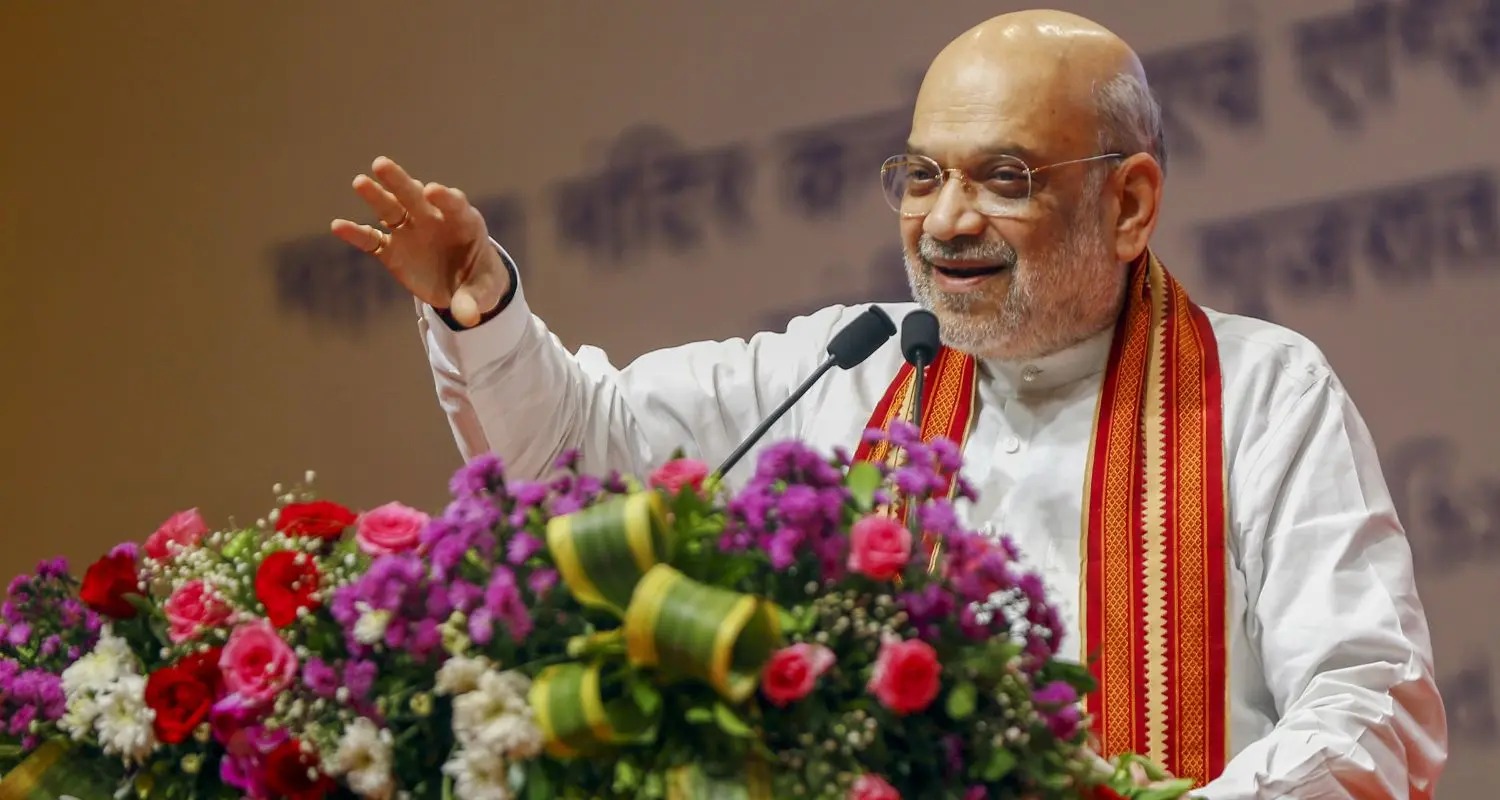
Union Home Minister Amit Shah stated on Hindi Diwas 2026 that Hindi acts as a vital communicative link among Indian languages rather than a competitor. Emphasizing linguistic diversity, Shah stressed that the advancement of Hindi must align with the protection and promotion of all regional mother tongues across the country.
Promoting Linguistic Harmony and National Unity
Union Home Minister Amit Shah underscored the inclusive role of the national language during address events marking Hindi Diwas on September 14, 2026. Commemorating the adoption of Hindi by the Constituent Assembly in 1949, Shah stated that language functions fundamentally as the cultural memory and self-awareness of a society. He noted that Hindi should never be perceived as a competitor to regional languages, but rather as a cooperative companion that strengthens national unity.
Highlighting India's linguistic pluralism, the Home Minister explained that every regional tongue contributes directly to the nation's collective cultural wealth. While noting that his personal mother tongue is Gujarati, Shah emphasized that Hindi provides a practical framework to connect citizens across diverse geographical and linguistic boundaries.
Fostering Regional Respect and Educational Integration
The central administration continues to prioritize the parallel development of regional languages alongside official communication channels. Government frameworks emphasize that true linguistic progress requires ensuring the dignity, literary growth, and digital integration of all languages listed under the Eighth Schedule of the Indian Constitution.
Furthermore, education policies encourage early childhood learning through mother tongues to enhance cognitive comprehension. Authorities maintain that technological tools and automated translation initiatives will bridge communication gaps across states, fostering mutual respect among all linguistic groups.
Official Sources Section
According to official statements, national broadcasts, and public messages released by the Ministry of Home Affairs (MHA), the government remains committed to balancing official language promotion with regional linguistic preservation.
"According to officials, the progress of Hindi is only purposeful when it moves forward while ensuring the dignity, promotion, and protection of all other Indian languages."
Why It Matters
Reaffirming Hindi as a communicative link rather than a dominant rival addresses historical sensitivities surrounding linguistic identity in India. Promoting cooperative federalism through language respect strengthens social harmony, administrative efficiency, and cultural integration across diverse states.
Key Facts at a Glance
National Observance: Hindi Diwas is observed annually on September 14 to mark the 1949 constitutional adoption of Hindi.
Core Principle: Union Home Minister Amit Shah asserted that Hindi is a collaborative link, not a competitor to regional languages.
Preservation Mandate: Official policy stresses that the growth of Hindi must coincide with the protection of all Indian mother tongues.
Cultural Interconnectedness: Linguistic diversity is framed as a fundamental pillar strengthening India's unity in diversity.
Frequently Asked Questions
What was the core message of Amit Shah's Hindi Diwas address?
The Home Minister emphasized that Hindi serves as a unifying link for Indian languages and must grow alongside, rather than compete with, regional mother tongues.
Why is Hindi Diwas celebrated on September 14?
The date marks the official adoption of Hindi as an official language by the Constituent Assembly of India on September 14, 1949.
Does the government policy sideline regional languages?
No, official directives maintain that Hindi and regional languages complement one another, with active administrative focus on protecting all scheduled Indian languages.
Where can citizens access official updates regarding language promotion schemes?
Official notifications and implementation reports are available via the portal of the Ministry of Home Affairs (MHA).
Source: Ministry of Home Affairs (MHA), Press Information Bureau (PIB), India Today