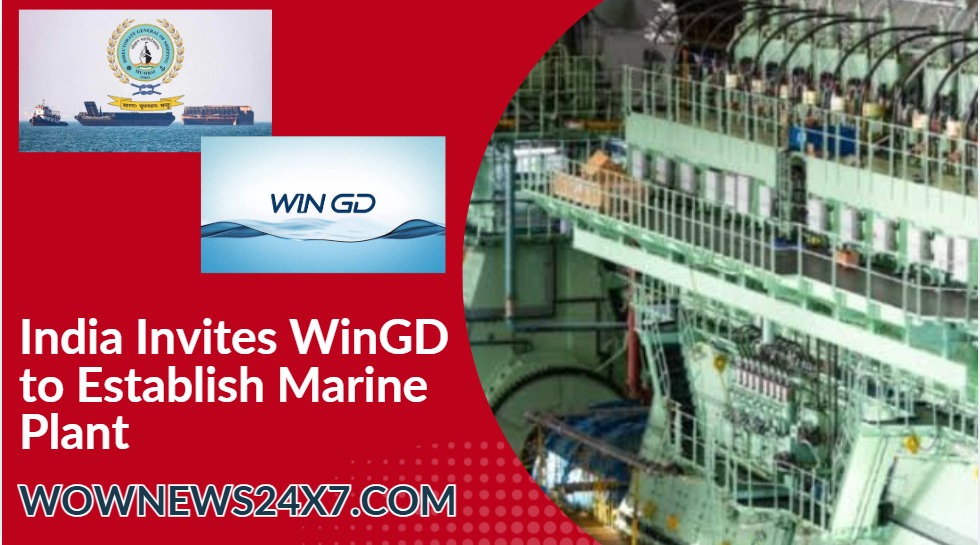
The Directorate General of Maritime Affairs (DGMA) has invited Winterthur Gas & Diesel (WinGD), a major marine engine developer, to set up a manufacturing plant in India. The strategic outreach aims to boost domestic shipbuilding capabilities, expand indigenous heavy engineering, and support sustainable maritime infrastructure growth across the country.
Expanding Domestic Maritime Manufacturing
In a strategic move to strengthen India's heavy engineering and shipbuilding ecosystem, administrative authorities have formally invited Winterthur Gas & Diesel (WinGD)—a prominent marine engine developer—to establish a localized manufacturing plant inside the country. The proposal was advanced during bilateral discussions focusing on expanding India's marine supply chain resilience and accelerating domestic production capacities.
WinGD, recognized globally for designing advanced low-speed two-stroke marine engines utilized in commercial cargo vessels, container ships, and oil tankers, represents a vital technological tier in international maritime logistics. By encouraging the Swiss-headquartered, CSSC-backed engine developer to set up localized production units, Indian authorities intend to cut down heavy import dependencies for large-scale vessel propulsion systems and integrate local foundries into global maritime manufacturing networks.
Strategic Framework and Industrial Impact
The push for localized marine propulsion manufacturing aligns closely with ongoing national initiatives to position India as a premier global shipbuilding and repair hub. Commercial shipyards operating across major coastal clusters require steady access to high-capacity, dual-fuel engines capable of running on liquefied natural gas (LNG), methanol, and emerging green energy carriers.
For domestic shipbuilders, port operators, and heavy engineering firms, a local manufacturing footprint would significantly reduce procurement lead times, lower capital expenditure on imported machinery, and facilitate technology transfers. Furthermore, the initiative is expected to generate specialized employment opportunities for marine engineers, metallurgists, and advanced manufacturing technicians.
Official Sources Section
According to official briefings, administrative disclosures, and updates released by the Directorate General of Maritime Affairs (DGMA) and maritime trade bodies, the collaborative partnership discussions underscore India's commitment to industrial self-reliance.
"According to officials, active engagement with global original equipment manufacturers like WinGD is essential for scaling domestic maritime infrastructure and integrating Indian engineering hubs into worldwide supply chains."
Why It Matters
Establishing localized heavy manufacturing for advanced marine engines reduces foreign exchange outflows and shields domestic shipyards from global supply chain disruptions. Strengthening indigenous propulsion production capacity accelerates national shipbuilding targets, enhances commercial fleet competitiveness, and supports broader environmental transition goals within the global shipping sector.
Key Facts at a Glance
Strategic Invitation: The Directorate General of Maritime Affairs (DGMA) has invited WinGD to establish a manufacturing base in India.
Core Technology: WinGD specializes in low-speed, dual-fuel marine propulsion engines powering large commercial cargo and tanker fleets.
Industrial Objective: The initiative seeks to reduce reliance on imported propulsion systems and bolster domestic shipbuilding capabilities.
Supply Chain Integration: Local production aims to streamline component sourcing for Indian shipyards and heavy engineering firms.
Frequently Asked Questions
Who is WinGD in the maritime sector?
Winterthur Gas & Diesel (WinGD) is a leading global developer of low-speed two-stroke marine engines used for powering large commercial ships.
Why has India invited WinGD to set up a local plant?
The invitation is part of a broader governmental strategy to boost domestic manufacturing, reduce import dependence, and strengthen India's shipbuilding ecosystem.
What types of engines does WinGD manufacture?
WinGD focuses on advanced marine propulsion systems, including dual-fuel engines capable of running on LNG, methanol, and conventional marine fuels.
Where can stakeholders review official maritime industrial policies?
Official updates, trade circulars, and policy frameworks are published regularly through the portal of the Directorate General of Shipping / Maritime Affairs.
Source: Directorate General of Maritime Affairs (DGMA), Ministry of Ports, Shipping and Waterways, Trade Industry Releases