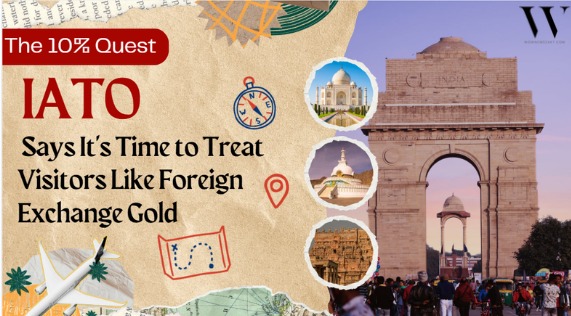
The Indian Association of Tour Operators is pushing to double the tourism sector's GDP contribution to 10 percent by securing strategic export status. The roadmap emphasizes boosting foreign arrivals, upgrading infrastructure, and streamlining visa policies to maximize foreign exchange and nationwide employment.
The Indian Association of Tour Operators has unveiled an aggressive policy roadmap targeting a twofold expansion in the tourism sector's economic footprint nationwide.
In New Delhi, the Indian Association of Tour Operators (IATO) has formally urged central policymakers to implement structural economic reforms aimed at elevating the travel and hospitality sector's contribution to national gross domestic product up to 10 percent. Announced during recent trade consultations, the strategic push arrives as stakeholders seek to leverage non-tariff service exports to insulate the broader economy from external trade volatility. Industry leaders emphasize that unlocking this economic ceiling requires immediate policy interventions, targeted fiscal allocations, and streamlined visa protocols to accelerate inbound foreign tourist arrivals.
Economic Blueprint and Strategic Export Status
According to policy papers released by IATO, granting the travel sector official "strategic export status" remains critical to achieving double-digit GDP contribution targets. The apex industry body notes that international visitor spending functions as a non-tariff export, injecting direct foreign exchange into domestic markets without encountering traditional cross-border tariff barriers.
Government updates published by the Press Information Bureau (PIB) indicate that domestic and international visitor segments have demonstrated resilience, though foreign tourist arrivals require concentrated marketing momentum to surpass pre-pandemic benchmarks. Industry analysts suggest that elevating service quality across tier-2 and tier-3 destinations will distribute economic benefits more equitably across regional economies.
Infrastructure Expansion and Connectivity Needs
Reaching the 10 percent GDP objective depends heavily on upgrading physical infrastructure, surface transport, and regional aviation networks. IATO representatives have actively coordinated with the Ministry of Tourism and the Ministry of Railways to introduce specialized tourist train circuits—such as proposed Vande Bharat routes linking heritage destinations like Khajuraho and Varanasi.
Furthermore, the association has petitioned authorities for enhanced airline seat capacity, fiscal incentives for international charter flights, and fast-tracked digital visa frameworks to eliminate bottlenecks for global travelers.
Official Sources Section
Information regarding these economic targets and policy recommendations is sourced directly from official announcements by the Indian Association of Tour Operators (IATO), policy briefings from the Press Information Bureau (PIB), and official submissions shared with the Ministry of Tourism, Government of India.
"Tourism needs to be seen not as leisure alone, but as a serious economic driver that bolsters foreign exchange reserves and generates massive employment across the entire supply chain," IATO organizers stated.
Practical Implications for Stakeholders
For businesses, investors, and regional service providers, the concerted push to expand the visitor economy signals substantial long-term growth opportunities in hospitality infrastructure, digital booking platforms, and cultural venues. Travelers stand to benefit from improved multi-modal transit networks, simplified e-visa procedures, and more transparent pricing structures as regulatory bodies streamline sector compliance.
Key Facts at a Glance
Target Objective: IATO is pushing to double the tourism sector's contribution to India's GDP to 10 percent.
Core Mechanism: Advocates classifying tourism as a strategic export to maximize non-tariff foreign exchange earnings.
Key Demands: Includes enhanced marketing budgets, expanded e-visa facilities, and upgraded rail-air connectivity to regional circuits.
Employment Impact: The broader travel and hospitality ecosystem supports tens of millions of direct and indirect jobs nationwide.
Frequently Asked Questions
What is IATO's primary target for the tourism economy?
The Indian Association of Tour Operators aims to double the travel and tourism sector's contribution to national GDP, targeting a 10 percent share.
Why does IATO want tourism classified as a strategic export?
Classifying tourism as a strategic export allows the sector to receive prioritized financial incentives, smoother credit lines, and dedicated policy support similar to manufacturing export industries.
How do inbound tourists impact the domestic economy?
International visitors bring direct foreign exchange into the country, strengthening foreign reserves, balancing current account deficits, and creating localized employment across retail, transport, and hospitality.
What policy changes are being requested to support this growth?
Industry representatives have requested streamlined e-visa processing, reduced tax friction, targeted international marketing allocations, and improved regional aviation and rail connectivity.
Source: Indian Association of Tour Operators (IATO), Press Information Bureau (PIB), Ministry of Tourism, Government of India