A Spicy Century: Veeraswamy Battles to Keep Historic London Home
Pearl Doshi - Gujarat Bureau Jun 18, 2026 1,000 Views
The UK’s oldest Indian restaurant, Veeraswamy, is entering a critical five-day legal trial on June 29, 2026, against King Charles's Crown Estate property managers. Fighting an eviction from its historic century-old Regent Street home, the Michelin-starred icon has requested diplomatic intervention from New Delhi to protect its culinary legacy.
LONDON, United Kingdom — Veeraswamy, the oldest surviving Indian restaurant in the United Kingdom, is escalating its legal fight to prevent eviction from its historic home near Piccadilly Circus. According to civil court listings and formal statements issued by the restaurant’s parent group, MW Eat, the Michelin-starred dining establishment will challenge The Crown Estate in a five-day hearing at the Central London County Court. The high-stakes legal battle, scheduled to begin on June 29, 2026, marks the culmination of a year-long impasse over lease extensions that has drawn widespread public scrutiny across London’s hospitality sector.
The conflict originates from a corporate decision by the property management body that oversees the multi-billion-pound land portfolio belonging to the reigning British monarch. According to formal planning applications submitted to Westminster City Council, the landlord declined to renew Veeraswamy's annual lease when it expired, intending instead to reclaim the ground-floor space within Victory House at 99 Regent Street.
The real estate managers plan to execute a structural modification of the Grade II-listed heritage asset. The proposed structural engineering blueprint involves removing the partition wall that separates the entry foyer of the restaurant from the adjacent commercial office entryways. According to project declarations, this integration will create an expansive, high-volume reception hall for the building's upper levels, which have remained completely unoccupied since a major internal water infrastructure failure severed local electrical routing networks. Management maintains that this physical modernization is mandatory to maximize commercial rental yields on the commercial real estate market.
In a bid to preserve the historic site, the executive board of MW Eat has officially petitioned the Ministry of External Affairs in New Delhi, urging the government of India to diplomatically intervene on behalf of the establishment. Corporate leadership highlights that the venue serves as a critical historical anchor for India's culinary diplomacy and soft-power footprint inside Western Europe.
The preservation campaign highlights the extensive history embedded within Victory House. Founded originally in March 1926 by Edward Palmer—the great-grandson of an English colonial general—and a Mughal princess, Faiz-un-Nisa Begum, the kitchen is widely credited with introducing authentic regional Indian gastronomy to the British mainstream. Over its hundred-year operational timeline, its guest books have logged historic global figures, including Mahatma Gandhi, Winston Churchill, Princess Anne, and Charlie Chaplin. Furthermore, records show the establishment was chosen by Queen Elizabeth II to manage catering mandates inside Buckingham Palace for milestone diplomatic receptions.
The legal defense brought forward by MW Eat challenges the structural validity of the eviction framework. The restaurant group argues that contemporary construction engineering standards make it entirely possible to fully refurbish the vacant upper floors without forcing a permanent shutdown of the ground-floor restaurant business.
Financial points of contention heading to the central county court include:
The Rent Equalization Offer: Veeraswamy formally offered to voluntarily match the elevated commercial rents the landlord expects to extract from corporate office clients post-renovation.
The Relocation Deficit: Corporate auditors calculate that the complete physical extraction, asset relocation, and architectural fit-out of an equivalent fine-dining kitchen in the West End would cost approximately £5 million.
The Revenue Deficit: The prolonged legal gridlock has already resulted in significant uncollected rental yields for the public balance sheet since the initial expiration of the lease terms.
The Preservation Protest: A public protection petition gathering more than 20,000 physical and digital signatures from prominent culinary figures, historians, and local citizens was formally delivered to the gates of Buckingham Palace.
The structural, financial, and legal benchmarks detailed throughout this report are compiled in accordance with official case filings submitted to the Central London County Court, public real estate asset planning registries at Westminster City Council, and official corporate declarations distributed via The Crown Estate.
"Even at this late stage, we would urge the government of India to consider intervening on behalf of Indian cuisine—the country's soft power in the UK," stated Ranjit Mathrani, the co-owner of parent company MW Eat. "It is well within the competence of many reputable contractors to deliver the programme of works in a manner which could accommodate the restaurant business. Heritage cannot be relocated, nor can history be replaced."
According to property asset administrators:
"We need to carry out a comprehensive refurbishment of Victory House to both bring it up to modern standards, and into full use. We understand how disappointing this is for MW Eat and have offered help to find new premises on our portfolio so that the restaurant can stay in the West End as well as financial compensation. The Crown Estate has a statutory responsibility to manage its land and property to create long term value for the UK and return its profit to the UK Government for public spending."
The outcome of this real estate dispute carries major structural implications for urban heritage preservation laws, commercial tenant rights, and city planning policies worldwide. If a century-old cultural institution holding a active Michelin star can be legally displaced to facilitate minor office architectural modifications, it establishes a precarious judicial precedent. For commercial business owners, it signals that historical significance and financial parity offers very little legal protection against large institutional real estate trusts focused purely on modern floor-plate optimization.
Centennial Milestones: Veeraswamy formally achieved its 100th year of continuous culinary service on Regent Street earlier this year.
The Valuation Split: The restaurant’s established rental agreement stood at approximately £205,000 per annum prior to the current real estate freeze.
The Relocation Cost: Corporate projections indicate a minimum capital requirement of £5 million to replicate the specialized venue elsewhere.
The Legal Timeline: A definitive five-day civil trial is locked to commence within the central London county court network on June 29, 2026.
1. Is Veeraswamy currently closed to the public during this lease dispute?
No. The Michelin-starred establishment continues to maintain normal operating hours and serve diners at its Victory House location while formal county court proceedings remain pending.
2. Who owns the property portfolio trying to evict the restaurant?
The building is managed by The Crown Estate, a sovereign real estate portfolio belonging to the reigning British monarch in right of the crown. Its annual commercial profits are legally transferred to the UK Treasury for public infrastructure spending.
3. Why can't the restaurant simply move to another location nearby?
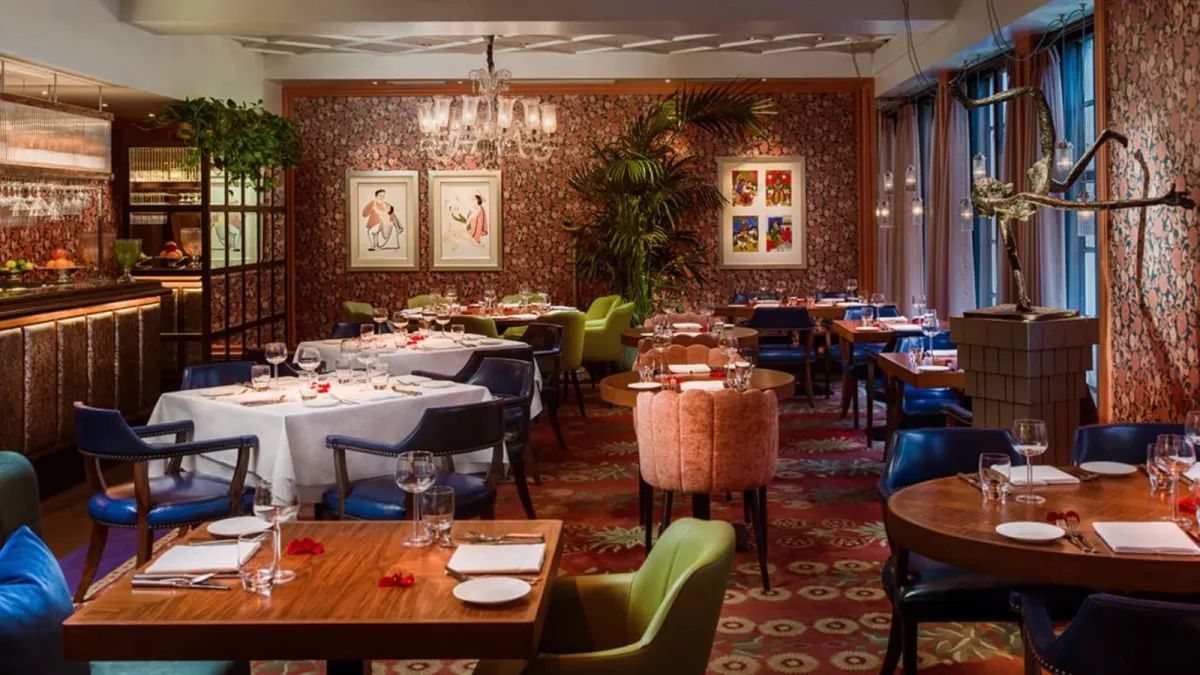
Management notes that the restaurant’s bespoke 1920s Art Nouveau and Indian palace interior design cannot be easily replicated or moved. Additionally, suitable commercial locations in London's West End are severely limited, and full relocation costs are estimated at £5 million.
4. What diplomatic steps has the restaurant taken to secure its future?
The owners have officially appealed directly to the Indian government to intervene through bilateral channels, citing the restaurant's legacy as a premier symbol of Indian cultural soft power in the United Kingdom.
Source: Central London County Court Civil Filings, Westminster City Council Planning Portal, and official press bulletins published by The Crown Estate.