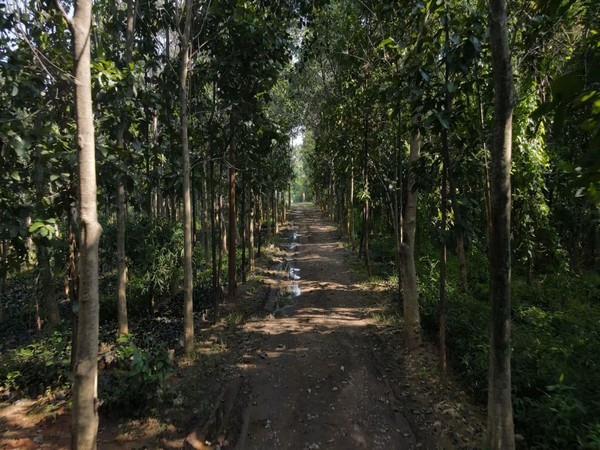
Adani Enterprises has transformed 568 hectares of its Parsa East and Kante Basan (PEKB) open-cast coal mine in Surguja, Chhattisgarh, by planting 1.6 million native trees. Backed by an 88% plant survival rate, an on-site nursery, and Rs 259 crore in state environmental deposits, the project provides a scalable framework for sustainable mine closures.
NEW DELHI — A major opencast coal mine in the Surguja district of Chhattisgarh is undergoing a significant environmental transformation. Through a systematic ecological reclamation program, Adani Enterprises Limited has planted more than 1.6 million trees and saplings across 568 hectares of the Parsa East and Kante Basan (PEKB) mining site, successfully converting an active excavation pit into a thriving green cover.
The developments at the PEKB site represent a broader shift in Indian industrial policy toward sustainable mine closures and post-extraction land rehabilitation. Operating as the mine developer and operator (MDO) for the state-owned Rajasthan Rajya Vidyut Utpadan Nigam Limited (RRVUNL), Adani Enterprises has tied the ongoing extraction of thermal coal to strict biodiversity and afforestation protocols. This model balances domestic energy production with long-term ecological balance, demonstrating how heavily disrupted industrial areas can be systematically restored.
From Industrial Pit to Ecological Reclamation
The open-cast operations at the PEKB coal block, located in the north-central region of the Hasdeo-Arand coalfield, began more than a decade ago to feed thermal power installations in Rajasthan. Because open-cast extraction requires the complete removal of topsoil and vegetation layers, the long-term environmental footprint of the site depended heavily on continuous technical reclamation.
According to progress reports from project officials, the restoration strategy uses a mathematical 40:1 planting ratio. For every single tree removed during mining operations, the company plants 40 native saplings in designated reclamation zones. This aggressive multiplication factor has allowed the program to cover 568 hectares of previously mined surfaces with dense vegetation.
To sustain this high volume of afforestation, project managers established a dedicated 3.5-hectare nursery on-site. The specialized facility houses roughly 500,000 saplings at any given time, ensuring a steady supply of acclimatized plants ready for field transplantation.
Prioritizing Native Species and Local Biodiversity
A common criticism of industrial afforestation programs is the over-reliance on fast-growing, non-native commercial timber, which can create ecological monocultures. Biologists note that monocures fail to support native wildlife or replicate local forest ecosystems.
To address this, the technical team at the Surguja mine focused on indigenous flora species typical of the Chhattisgarh region. The replanted areas are dominated by:
Sal (Shorea robusta)
Mahua (Madhuca longifolia)
Tendu (Diospyros melanoxylon)
Amaltas (Cassia fistula)
Sidha (Lagerstroemia parviflora)
Field audits conducted at the site indicate an overall plant survival rate of approximately 88%, which exceeds typical benchmarks for industrial reclamation projects. Furthermore, forestry experts working on the initiative have reported the successful natural regeneration of Sal forests, a species notoriously difficult to cultivate artificially outside its natural habitat.
Regulatory Funding and Broad Forestry Compliance
The environmental rehabilitation framework extends beyond the immediate boundaries of the PEKB mining lease. Official records indicate that the operating entity has deposited more than Rs 259 crore with the Chhattisgarh Forest Department to fund mandatory state-managed initiatives.
These funds are legally earmarked for:
Compensatory afforestation programs across multiple forest divisions
Regional wildlife management plans
Soil conservation measures in adjacent watersheds
To date, additional compensatory afforestation driven by these funds has covered more than 4,000 hectares spanning the Surguja, Korea, Balrampur, and Surajpur forest divisions. This multi-layered funding structure ensures that the regional environmental footprint remains managed even as mining operations continue.
Official Endorsements and Policy Impact
The scale of the technical reclamation has drawn attention from federal energy regulators. In an official public statement, the Ministry of Coal designated the ecological transformation at the PEKB site as a benchmark for the domestic mining sector.
"After coal extraction, the journey of a mine does not end — it marks the beginning of ecological restoration and sustainable transformation," the Ministry of Coal stated. "The Parsa East and Kanta Basan Mine in Surguja, Chhattisgarh, stands as a remarkable example of this commitment. Today, the PEKB mine is a living testament to the fact that mine closure can pave the way for a greener, more sustainable future."
Company statements further emphasize that environmental rehabilitation is legally and operationally integrated with local socio-economic development. Alongside the physical restoration of the land, the project supports tribal communities in the Udaipur tehsil through specialized initiatives in healthcare, basic infrastructure, and vocational training programs.
Key Facts at a Glance
Total Trees Planted: Greater than 1.6 million trees and native saplings put down within the restored sectors.
Reclamation Area: 568 hectares of heavily mined land successfully converted to green cover.
Target Outlook: Expansion roadmap targets a total green footprint of 4 million trees by 2030.
Survival Rate: Technical audits confirm a sustained 88% plant survival rate across the site.
Financial Allocations: Over Rs 259 crore deposited with state authorities for regional wildlife and forest management.
Frequently Asked Questions
What is the primary objective of the Surguja mine restoration project?
The project aims to systematically rehabilitate land disrupted by open-cast coal mining, replacing excavated pits with native forest ecosystems to restore regional biodiversity and prevent long-term soil erosion.
Which specific tree species are being used in this afforestation drive?
The project prioritizes indigenous species naturally suited to the Chhattisgarh climate, specifically focusing on Sal, Mahua, Tendu, Amaltas, and Sidha trees.
How does the project maintain its high sapling survival rate?
An 88% survival rate is maintained through an on-site 3.5-hectare nursery that cultivates up to 500,000 saplings simultaneously, preparing them for the specific soil and moisture conditions of the reclaimed pits.
What are the long-term environmental targets for this site?
The technical roadmap dictates expanding the current green cover to exceed 4 million trees by the end of the decade, running parallel to remaining coal extraction phases.
Source: Press Trust of India (PTI), Union Ministry of Coal Regulatory Filings, Adani Enterprises Sustainable Operations Division.