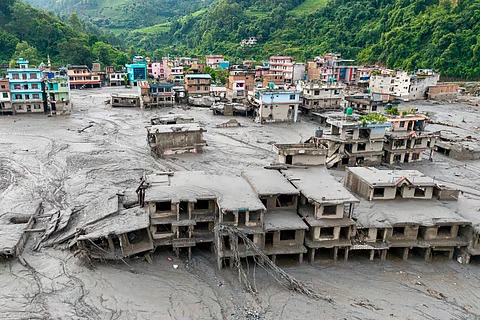
Nepal must rebuild approximately 20,000 homes destroyed by catastrophic glacial-outburst floods as rescue operations press forward for thousands of missing individuals. The government is prioritizing infrastructure clearance, housing reconstruction, and humanitarian relief across the hardest-hit Himalayan districts.
Nepal faces the monumental task of rebuilding approximately 20,000 homes in flood-ravaged areas, while rescue teams maintain an intensive search for thousands still missing following catastrophic glacial-outburst floods.
Authorities in Kathmandu confirmed on Thursday, September 3, 2026, that sweeping reconstruction efforts must be mobilized immediately across disaster-hit Himalayan districts. The catastrophic deluge, triggered by a massive glacier collapse that sent walls of mud, rock, and water tearing through the Bhote Koshi and Trishuli river systems, has completely wiped out entire settlements. With the confirmed death toll nearing 1,000 and thousands remaining unaccounted for, the administration under Prime Minister Balendra Shah is racing against time to clear debris, restore severed mountain roads, and provide emergency shelter to displaced citizens.
Infrastructure Reconstruction and Housing Crisis
The scale of destruction has overwhelmed local municipal capacity, leaving officials confronting a multi-billion-dollar infrastructure deficit. According to the National Disaster Risk Reduction and Management Authority (NDRRMA), around 20,000 houses must be rebuilt from the ground up in severely affected zones such as Rasuwa, Nuwakot, and Dhading.
Heavy excavation machinery has been deployed to clear thick layers of silt and gravel blocking vital regional corridors and trapping workers inside hydropower tunnels. Engineers and disaster management teams are prioritizing the restoration of basic utility networks, temporary bridges, and communication channels to reconnect isolated mountain communities cut off since the disaster struck.
Humanitarian Impact and Ongoing Search Operations
Search and rescue teams, bolstered by specialized personnel and heavy equipment from neighboring countries including India and China, continue combing through debris fields and riverbanks where bodies have drifted downstream. For the tens of thousands of displaced survivors sheltering in makeshift camps, daily life is defined by scarcity. Families face severe shortages of clean drinking water, electricity, and medical supplies while waiting anxiously outside hospitals and makeshift morgues for news of missing relatives.
Official Sources Section
Official updates on housing estimates, casualty metrics, and rescue logistics are based on press briefings and statements released by the National Disaster Risk Reduction and Management Authority (NDRRMA) Nepal and the Office of the Prime Minister and Council of Ministers of Nepal. International field reports were cross-referenced with updates published by Reuters.
Quote Section
"According to officials and disaster management authorities, the government is fully committed to mobilizing resources for large-scale reconstruction, while search and recovery operations remain active across all inaccessible river corridors."
Why It Matters
The disaster serves as a stark reminder of extreme climate vulnerabilities facing Himalayan nations. For citizens and local businesses, the immediate focus is physical survival and shelter, while the long-term economic recovery hinges on rebuilding destroyed transport arteries, reviving regional tourism, and restoring hydro-electric energy assets vital to the national grid.
Key Facts at a Glance
Housing Reconstruction: Approximately 20,000 homes require complete rebuilding in flood-ravaged zones.
Casualties and Missing: The confirmed death toll approaches 1,000, with thousands remaining missing.
Trigger Event: Catastrophic flash floods caused by a high-altitude glacier collapse along the border region.
Rescue Deployment: Joint military and international specialist teams utilizing heavy excavation gear to clear blocked tunnels and roads.
Frequently Asked Questions
What caused the catastrophic floods in Nepal?
The disaster was triggered by a sudden glacier collapse that unleashed a massive wall of water, ice, and debris into the Bhote Koshi and Trishuli river valleys.
How many homes need to be rebuilt?
Authorities estimate that around 20,000 houses must be reconstructed across the worst-hit districts.
Are international rescue teams assisting?
Yes, specialized personnel and heavy machinery from countries like India and China are assisting local security forces in search and clearance operations.
How are displaced survivors being supported?
The government is distributing emergency relief supplies, establishing temporary camps, and working to restore basic road networks and communication lines.
Source: National Disaster Risk Reduction and Management Authority Nepal, Office of the Prime Minister and Council of Ministers of Nepal, Reuters