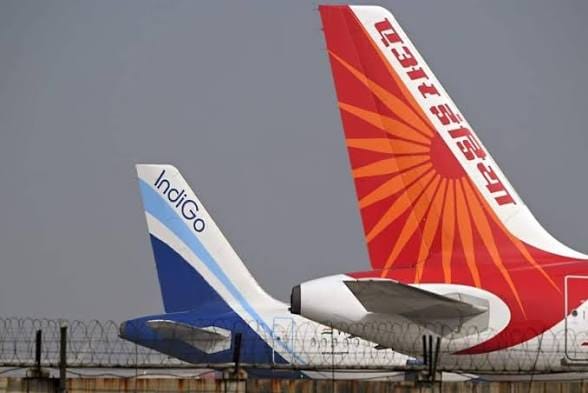
Air India and IndiGo are restoring regular flight schedules following a temporary summer capacity cut driven by high fuel costs and airspace restrictions. Passengers can expect stabilized international and domestic operations, improved seat availability, and reliable booking options moving forward.
Operational Restructuring and Industry Context
The commercial aviation sector in India experienced a complex scheduling phase during the summer months of 2026. Major carriers including Air India and IndiGo implemented strategic reductions across both domestic networks and long-haul international corridors. These temporary scaling-back measures were primarily formulated to counter the commercial impact of persistent airspace limitations over specific global corridors and elevated aviation turbine fuel (ATF) pricing linked to geopolitical developments in West Asia.
Carriers had proactively adjusted frequencies on routes spanning North America, Europe, Southeast Asia, and the Middle East through June, July, and August. With these strategic adjustments concluding, both airlines are stabilizing their flight loops and returning standard frequencies to core metropolitan hubs in New Delhi and Mumbai. The adjustments allowed operators to maintain network integrity while protecting operating margins amidst fluctuating energy costs.
Impact on Passengers, Travelers, and Regional Connectivity
The restoration of regular flight capacities carries broad implications for international travelers, business commuters, and corporate investors relying on consistent connectivity out of South Asia. During the peak restriction window, passengers faced adjusted schedules, consolidated frequencies, and select route suspensions—such as temporary holds on specific European and Southeast Asian runs.
As normalcy returns to standard operational timetables, travelers gain increased seat availability and flexible booking options across major global trunks. Furthermore, regional carriers continue to expand secondary market links—evidenced by ongoing network developments such as IndiGo's new international connection pipelines scheduled out of northeastern hubs like Guwahati. This ensures that corporate and leisure itineraries face fewer bottlenecks moving into the final quarter of the fiscal year.
Official Sources Section
Operational updates and scheduling directives are managed in accordance with official statements released by the carriers and regulatory bodies. Specific details regarding network adjustments have been documented through announcements issued directly via the Air India Newsroom and IndiGo Press Releases portal. Additional regulatory compliance protocols are governed by guidelines from the Directorate General of Civil Aviation (DGCA).
"We are making temporary adjustments to select international services... necessitated by continued airspace restrictions over certain regions and record high jet fuel prices for international operations," stated Air India through official corporate channels. Representatives for IndiGo similarly noted that evolving regional routing dynamics required continuous monitoring and proactive schedule management to ensure passenger safety and operational efficiency.
Why It Matters
For commercial aviation observers and consumers, the normalization of flight frequencies signals a stabilizing operational environment following months of high fuel volatility and airspace rerouting. Travelers booking autumn and winter itineraries can anticipate a return to pre-adjustment timetables, reduced risk of schedule changes, and broader seat inventory across international and domestic sectors.
Key Facts at a Glance
Carriers Involved: Air India and IndiGo implemented temporary capacity adjustments across domestic and international networks.
Core Drivers: Adjustments were prompted by regional airspace constraints and high aviation turbine fuel pricing.
Timeline: The scaling back primarily affected operations between June and August 2026, with schedules stabilizing thereafter.
Passenger Protections: Affected customers were provided alternative re-accommodations, date changes, or full refunds in compliance with regulatory standards.
FAQ Section
Why did Air India and IndiGo reduce flights earlier in the year?
The temporary capacity reductions were initiated to manage the commercial pressures of high jet fuel costs and complex airspace restrictions across specific international corridors.
Are all suspended routes returning immediately?
Airlines are progressively normalizing frequencies based on seasonal demand and regulatory clearance, though specific boutique or low-demand routes may follow individualized rollout timelines.
What compensation or options are available if a flight remains altered?
Under regulatory frameworks, passengers dealing with canceled or rescheduled services are entitled to full refunds or free rebooking on alternative feasible flights operated by the airline.
How can travelers verify their current flight status?
Passengers are advised to check their real-time flight schedules directly through the official mobile applications or web portals of Air India and IndiGo prior to heading to the airport.
Source: Air India Newsroom, IndiGo Press Releases, Directorate General of Civil Aviation (DGCA)