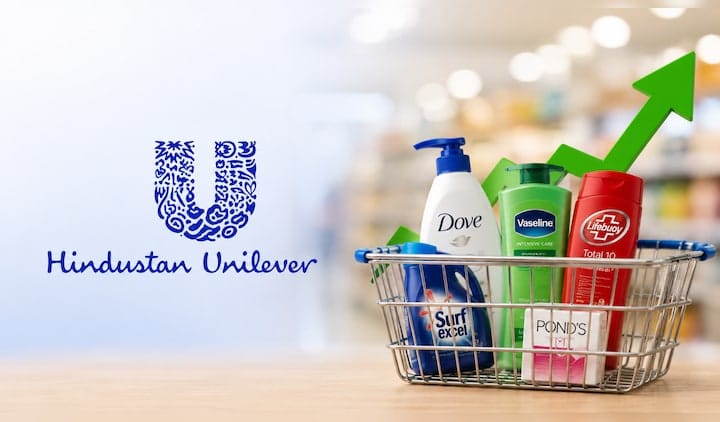
Hindustan Unilever stock is drawing intense valuation scrutiny after a 13-15 percent correction over trailing months. While Q1 revenue rose 10 percent to ₹17,184 crore, analysts debate whether current prices offer an undervalued entry point or fair value amid urban consumption headwinds and rising D2C competition.
Valuation Dynamics and Market Correction Context
The stock of fast-moving consumer goods (FMCG) bellwether Hindustan Unilever has faced sustained downward pressure on domestic exchanges, trading near the ₹1,980 mark. Following a correction of over 13 to 15 percent over the preceding trailing months, market analysts have begun re-evaluating the fundamental pricing of Hindustan Unilever stock relative to its historical price-to-earnings (P/E) multiples. According to exchange volume reports from the National Stock Exchange of India (NSE), institutional interest has picked up modestly, prompting portfolio managers to analyze whether structural tailwinds justify long-term accumulation.
The recent underperformance contrasts with stable top-line metrics. Regulatory filings submitted by Hindustan Unilever indicate that total consolidated income for the quarter ended June 30, 2026, reached ₹17,184 crore, representing a 10 percent year-on-year increase. However, compressed operating margins and rising competitive intensity from direct-to-consumer (D2C) brands have kept valuation multiples under scrutiny.
Strategic Framework and Growth Projections
Addressing investor concerns during recent capital market updates, Hindustan Unilever management outlined its strategic "40:40:20" framework designed to reignite volume-led growth. According to corporate disclosures, the company is shifting emphasis away from near-term margin maximization toward aggressive market penetration, premiumisation, and scaling digital-first brands like Minimalist and Dove.
Brokerage reports from institutional houses indicate that medium-term earnings resilience will hinge on rural demand recovery and raw material cost stability. Financial analysts point out that while headline valuation ratios might appear elevated compared to broader manufacturing sectors, Hindustan Unilever stock historically commands a premium due to its unmatched distribution network and robust free cash flow generation.
Official Corporate Statements and Regulatory Disclosures
Market regulators and corporate communication desks stress that valuation assessments must rely on verified financial health indicators rather than speculative sentiment.
"According to company disclosures, Hindustan Unilever remains focused on sustainable, competitive volume growth while maintaining its core EBITDA margin guidance between 22.5 percent and 23.5 percent for the medium term."
Senior corporate officials noted that productivity initiatives, supply chain optimizations, and artificial intelligence-led media efficiencies will continue to fund strategic reinvestments into key beauty, wellbeing, and home care portfolios.
Practical Implications for Investors and Stakeholders
The ongoing valuation debate surrounding Hindustan Unilever stock carries direct consequences for various market participants:
Long-Term Institutional Investors: Fund managers are weighing discounted entry opportunities against the risk of prolonged urban consumption sluggishness.
Retail Shareholders: Dividend yield expectations—hovering around 2 percent—continue to provide income support during phases of capital price consolidation.
Competitors and Channel Partners: Aggressive pricing and localized distribution strategies by HUL are intensifying margin pressures across smaller regional FMCG players.
Key Facts at a Glance
Current Market Price: Trading near the ₹1,980 level on the NSE.
Financial Performance: Reported a 10 percent year-on-year rise in total quarterly income to ₹17,184 crore for Q1 FY27.
EBITDA Guidance: Maintained within a medium-term target band of 22.5% to 23.5%.
Strategic Initiative: Deployment of the 40:40:20 framework targeting premiumisation and market expansion.
Frequently Asked Questions
Why has Hindustan Unilever stock faced downward pressure recently?
The stock has experienced a correction due to broader market volatility, intense competition from regional and D2C brands in personal care segments, and cautious consumer spending patterns in urban markets.
What do institutional brokerages project for Hindustan Unilever stock?
Major institutional brokerages maintain varying target prices—ranging between ₹2,400 and ₹2,820 over a 12-month horizon—citing potential upside from rural volume recovery and portfolio premiumisation.
Where can investors verify official financial filings for Hindustan Unilever?
Official quarterly reports, shareholding patterns, and corporate announcements can be accessed directly via the Bombay Stock Exchange (BSE) and National Stock Exchange of India (NSE) portals.
Source: National Stock Exchange of India (NSE), Bombay Stock Exchange (BSE), Securities and Exchange Board of India (SEBI)