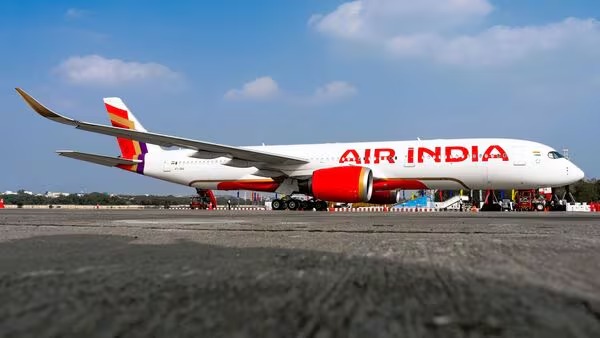
Air India has upgraded its daily Delhi–Melbourne route by deploying a Boeing 777-300ER featuring a premium three-class cabin layout. Replacing the legacy 787-8, the change adds nearly 4,000 monthly seats to the corridor and introduces eight luxurious, fully enclosed private First Class suites.
MUMBAI — Air India Limited has announced the official deployment of its upgraded Boeing 777-300ER widebody aircraft on its daily non-stop service between Delhi and Melbourne, effective Wednesday, July 1, 2026. The premium aircraft replaces the smaller Boeing 787-8 Dreamliner previously operating the route, fundamentally reconfiguring the carrier’s premium capacity. This fleet modernization brings First Class service to the Australian continent for the first time in the airline's history, highlighting a major push to capture high-yield corporate and leisure transit markets.
Introducing First Class and Upgraded Cabin Metrics
The aircraft substitution marks a significant leap forward in passenger comfort and hardware quality. The newly deployed Boeing 777-300ER operates in a high-comfort three-class configuration, delivering a net capacity gain of 78 seats per departure over the outgoing Dreamliner. The interior layout includes:
First Class (8 Suites): Structured in a spacious 1-2-1 configuration, these private suites feature sliding doors for absolute privacy, 1.6-meter-high partition walls, and fully flat beds stretching up to two meters in length.
Business Class (40 Seats): Upgrading from the 787’s 2-2-2 format, the new reverse-herringbone layout provides direct aisle access for all passengers along with a fully flat bed experience.
Economy Class (280 Seats): Expands availability significantly to ease historical overbooking constraints, arranged in a standard widebody seating configuration equipped with modern seat-back entertainment and localized USB power outlets.
The specific aircraft scheduled for the Melbourne leg are among the premium long-haul jets previously operated by Etihad Airways. Following their absolute acquisition and cabin refurbishment by Air India, these airframes have been fully integrated into the mainline international fleet.
Major Capacity Injection to the India-Australia Corridor
By flying the larger twin-engine Boeing 777 daily, Air India is injecting approximately 4,000 additional seats per month into the thriving Australia–India travel sector. This capacity increase represents the single largest volume jump on this particular routing in nearly a decade.
The timing of the upgrade aligns precisely with the mid-year peak travel season. Beyond direct point-to-point transit between Delhi and Melbourne, the deployment targets connecting traffic traveling from Australia to European hubs such as London Heathrow, Frankfurt, and Amsterdam. Routing passengers through Delhi’s upgraded Indira Gandhi International Airport hub slashes overall travel time by two to four hours compared to competing one-stop itineraries through Southeast Asia or the Middle East.
Official Sources Section
Flight schedules, product specifications, and seat-map updates are verified through regulatory filings and passenger listings hosted by Air India Limited. Longitudinal schedule modifications and seasonal capacity expansions are cataloged via the aviation analytical databases at AeroRoutes.
Quote Section
"The daily Delhi–Melbourne flights operating with our B777-300ER featuring upgraded cabin interiors successfully introduce First Class on this highly critical route," Air India stated within its official comprehensive Northern Summer schedule briefing. "Together, the expanded deployment of our new product, additional frequencies on key international routes, and steady fleet induction reflect Air India's continued progress in building a modern, globally competitive full-service carrier."
Why It Matters
For international travelers and the massive non-resident Indian (NRI) diaspora in Victoria, the upgraded Boeing 777-300ER means immediate relief from chronically sold-out cabins and volatile last-minute ticket pricing. For premium and corporate flyers, the introduction of doored suites and flat-bed business options bridges the historical product gap between Air India and elite Middle Eastern carriers. On a corporate level, this rollout demonstrates the concrete execution of the airline’s multi-billion-dollar, Tata-led transformation program, turning legacy fleet upgrades into immediate, high-margin international market share.
Key Facts at a Glance
Effective Launch Date: Daily operations commence on July 1, 2026, under the active summer schedule.
Cabin Configuration: 8 First Class private suites, 40 flat-bed Business Class seats, and 280 Economy seats.
Capacity Expansion: Injects nearly 4,000 additional seats per month into the direct Australia–India market.
Flight Schedule: AI308 departs Delhi (DEL) at 01:15, arriving in Melbourne (MEL) at 17:55 daily.
FAQ Section
What aircraft was previously used on the Delhi–Melbourne route?
Prior to the July 1 transition, Air India operated a smaller two-class Boeing 787-8 Dreamliner on this daily route, which offered no First Class cabin and fewer Business Class options.
What are the key comfort features of the new First Class suites?
The First Class cabin provides private suites with sliding doors, a high privacy partition wall (up to 1.6 meters), a multi-functional wide seat that extends into a full two-meter lie-flat bed, and a dedicated dine-on-demand culinary service.
Are there age restrictions for passengers booking the new First Class suites?
Yes. Air India's official booking criteria generally restrict its Boeing 777 First Class suites to passengers aged 12 and older to maintain a quiet cabin environment. Families traveling with younger children are encouraged to book the newly expanded 40-seat Business Class section.
Source: Air India Official Newsroom, AeroRoutes Flight Index, Executive Traveller Aviation Desk.