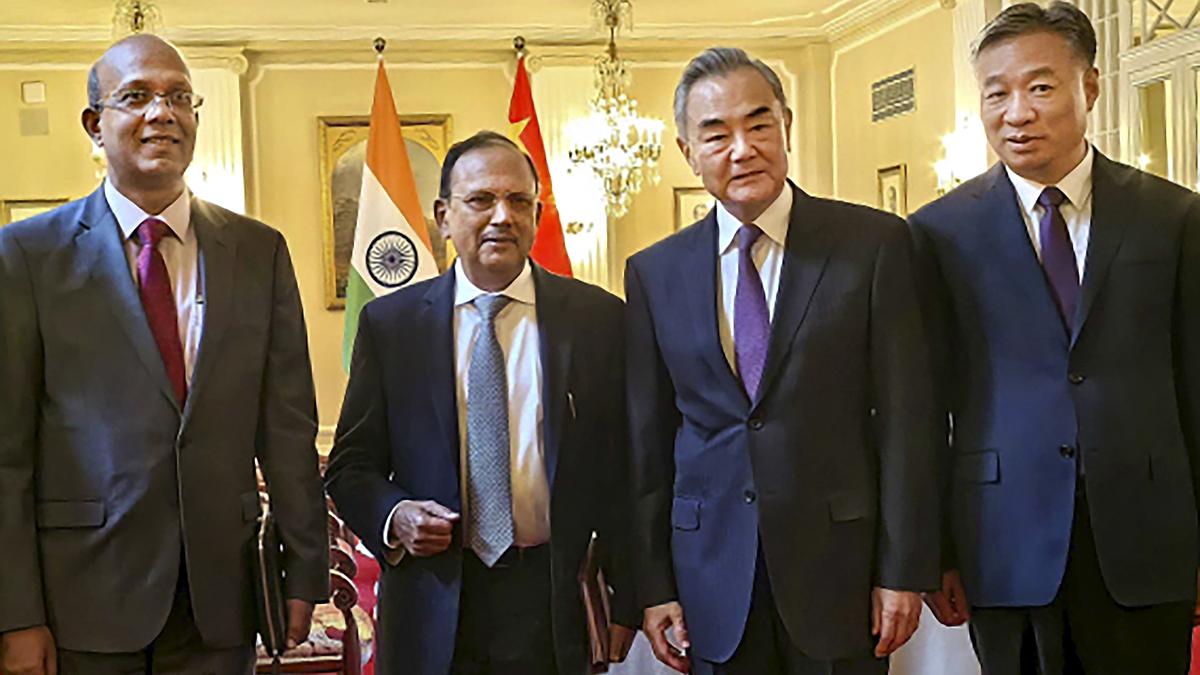
Indian NSA Ajit Doval and Chinese Foreign Minister Wang Yi held constructive talks in New Delhi on June 22, 2026, during the BRICS security meet. Both leaders noted steady progress toward normalising India-China ties, emphasizing that stable, predictable bilateral relations are vital for strategic trust and maintaining peace along the border.
NEW DELHI — Indian National Security Adviser Ajit Doval and Chinese Foreign Minister Wang Yi held high-level bilateral talks on Monday, June 22, 2026, focusing on accelerating the gradual normalisation of diplomatic and economic relations between the two countries. The critical meeting took place in the national capital on the sidelines of the BRICS National Security Advisers' meeting, which India is currently chairing. According to official government statements, both sides reviewed recent developments along the Line of Actual Control (LAC) and described the exchange as constructive and forward-looking.
Stabilising Bilateral Ties After Years of Border Friction
The dialogue comes at a pivotal period for Asian geopolitics as New Delhi and Beijing actively seek to shift away from years of sustained military and diplomatic friction. Relations between the two neighbors faced severe strain following the 2020 border clashes in eastern Ladakh.
However, a definitive turnaround began in late 2024 when a joint patrolling agreement successfully triggered the disengagement of forces at the remaining friction points of the Depsang Bulge and Charding-Ninglung Nala.
In Monday's talks, the two senior representatives assessed the stabilization measures implemented over the last two years. Officials from India's Ministry of External Affairs confirmed that the discussions focused heavily on reinforcing strategic trust and preventing operational misunderstandings along the frontier. Foreign Secretary Vikram Misri, Ambassador Vikram Doraiswami, and Lieutenant General Rajiv Ghai were also present to support the Indian delegation.
Strategic Impact on Regional Trade and Global Investors
The steady progression toward normalising India-China ties carries substantial implications for regional business operations, multinational corporations, and global investors. Following the 2020 dispute, India instituted strict regulatory oversight on Chinese investments, slowed down visa approvals for corporate technicians, and banned several digital applications.
The ongoing, structured restoration of diplomatic normalcy is expected to eventually ease supply chain bottlenecks, particularly for Indian manufacturing units dependent on Chinese electronic components, active pharmaceutical ingredients (APIs), and specialized machinery.
Financial analysts note that predictability between the world's two most populous nations stabilizes border security and fosters a more resilient macroeconomic environment across Asia.
Official Sources Section
According to the official press release issued by India’s Ministry of External Affairs following the conclusion of the high-level meeting:
"The two sides reviewed recent developments in bilateral relations and noted progress towards gradual normalisation. NSA underlined that stable, predictable and constructive bilateral relations contribute to building trust and better understanding between the two sides."
Quote Section
Reflecting on the tone of the diplomatic engagement, Ministry of External Affairs Spokesperson Randhir Jaiswal stated that:
"The discussions were constructive and forward-looking, signaling a shared commitment from both New Delhi and Beijing to stabilize their ties and maintain peace and tranquillity along the border areas."
Why It Matters
The steady mending of bilateral ties between India and China directly impacts regional stability, corporate cross-border strategies, and multinational diplomatic balancing. For local citizens and border communities, de-escalation lowers military readiness risks and re-establishes historical tranquility. For international businesses, normalising India-China ties opens the door for smoother technology transfers, clearer regulatory pathways, and a reduction in geopolitical risk premiums for companies operating across South and East Asia.
Key Facts at a Glance
The Event: High-level bilateral talks between Indian NSA Ajit Doval and Chinese Foreign Minister Wang Yi held in New Delhi on June 22, 2026.
The Context: Meetings conducted on the sidelines of the 16th BRICS National Security Advisors' and High Representatives' meeting.
The Background: Follows the major diplomatic breakthrough of late 2024, which resolved long-standing patrolling and troop blockades in eastern Ladakh.
Core Objective: Advancing the gradual normalisation of ties based on the principles of mutual respect, mutual sensitivity, and mutual interest.
FAQ Section
1. What was the main focus of the talks between Ajit Doval and Wang Yi?
The primary focus was reviewing recent progress in bilateral relations and discussing next steps toward the gradual normalisation of diplomatic, military, and economic ties between India and China.
2. Why are India-China relations normalising now?
The normalisation process follows structured military disengagements and the joint patrolling arrangements established in late 2024, which successfully defused the border standoffs originating from the 2020 Galwan valley conflict.
3. What role did the BRICS summit play in this meeting?
India currently holds the chair of the BRICS group for this session. The high-level security meeting in New Delhi provided the diplomatic venue and sidelines necessary for both leaders to hold direct, face-to-face talks.
4. How does this development affect international businesses?
A stable relationship reduces geopolitical risk in Asia, potentially easing regulatory hurdles, trade friction, technical visa constraints, and supply chain bottlenecks between the two economic giants.
Source: Official statements and digital releases from the Ministry of External Affairs, India.