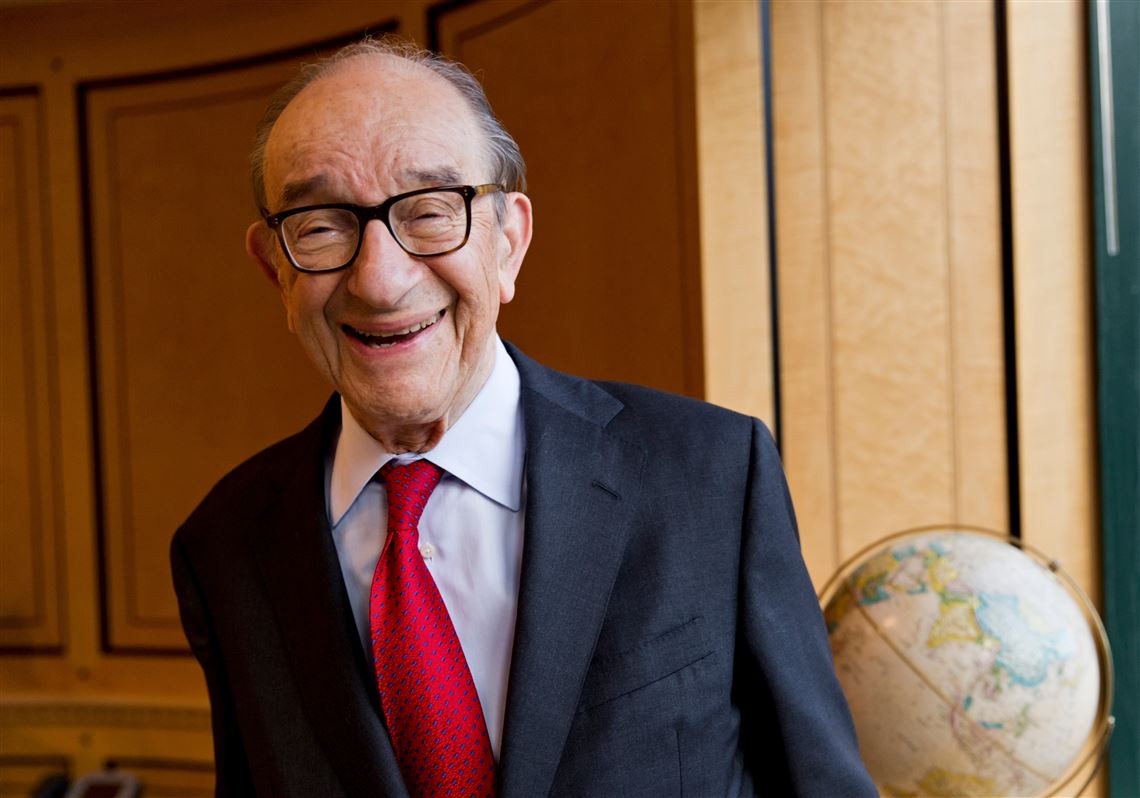
Alan Greenspan, the influential Federal Reserve chair who guided U.S. monetary policy for nearly two decades, has died at age 100. A celebrated and controversial figure, his long tenure spanned four presidencies and defined the modern era of central banking through economic triumphs and the challenges of the 2008 recession.
WASHINGTON — Alan Greenspan, the towering figure of American economic policy who served as the 13th chairman of the Federal Reserve, died on Monday, June 22, 2026. He was 100 years old. His death was confirmed in a statement provided to NBC News by his wife, veteran journalist Andrea Mitchell, who cited complications from Parkinson’s disease as the cause.
Greenspan, whose tenure at the central bank spanned from 1987 to 2006, was widely regarded as the most powerful central banker of the modern era. His leadership presided over the "Great Moderation," a prolonged period of low inflation and steady economic expansion, though his legacy remains a subject of intense academic and public debate regarding the regulatory policies that preceded the 2008 global financial crisis.
A Career Defined by Economic Stewardship
Born in New York City on March 6, 1926, Greenspan’s journey to the helm of the U.S. economy was as unconventional as it was distinguished. A former jazz musician who turned to economics, he served as a private consultant before his appointment by President Ronald Reagan to lead the Federal Reserve in 1987.
Over the next 19 years, he was reappointed by three subsequent presidents—George H.W. Bush, Bill Clinton, and George W. Bush—becoming a fixture of American stability. His tenure saw the nation navigate the 1987 stock market crash, the rapid growth of the dot-com era, and the aftermath of the September 11 terrorist attacks. He was famously known for his cryptic, highly influential communication style, which often moved global markets with a single, carefully chosen phrase.
Navigating Complexity and Controversy
While Greenspan was celebrated for his role in maintaining stability, his later years in office and the period immediately following his 2006 retirement were marked by significant controversy. Critics pointed to his "loose money" policies during the mid-2000s, arguing that a lack of oversight in the subprime mortgage market helped inflate the housing bubble that led to the 2008 Great Recession.
In response to his critics, Greenspan consistently maintained that his decisions were guided by the best information available at the time, frequently dismissing post-crisis scrutiny as "revisionist history." Despite the debates surrounding his final years at the Fed, his influence on monetary theory and his role as an economic polymath remain cemented in the annals of American history.
Quote Section
"He will be remembered for his brilliance and his kindness. Being his life partner was the joy of my life," said Andrea Mitchell, NBC News correspondent and wife of Alan Greenspan, in a statement confirmed to NBC News on June 22, 2026.
Why It Matters
Alan Greenspan’s passing marks the end of an era in central banking. His leadership style and the challenges he faced—ranging from "irrational exuberance" in the stock market to global liquidity crises—set the standard for how the Federal Reserve operates today. His death invites a retrospective look at the "Great Moderation" and serves as a reminder of the immense, often unpredictable, power held by those steering the global economy.
Key Facts at a Glance
Life Span: March 6, 1926 – June 22, 2026.
Fed Tenure: Chairman of the Federal Reserve from 1987 to 2006 (19 years).
Service: Served under four U.S. presidents (Reagan, G.H.W. Bush, Clinton, G.W. Bush).
Economic Milestone: Coined the term "irrational exuberance" in 1996.
FAQ
1. How long did Alan Greenspan serve as Fed chair?
Greenspan served for 19 years, from August 1987 until January 2006, making him one of the longest-serving chairs in the history of the Federal Reserve.
2. What was the "Great Moderation"?
It refers to the period from the mid-1980s until 2007, characterized by relatively low inflation, consistent economic growth, and decreased volatility in the U.S. economy during his tenure.
3. What was the cause of death?
According to a statement from his wife, Andrea Mitchell, he died due to complications from Parkinson’s disease.
Source: Federal Reserve History, NBC News, The Washington Post