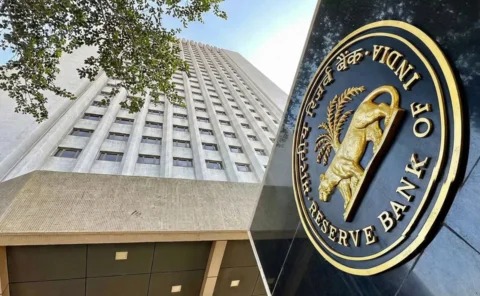
The RBI’s June 2026 Bulletin highlights that while an interim US-Iran peace deal has cooled global oil markets, global economic recovery remains fragile. Domestically, the central bank warns that a projected sub-normal southwest monsoon could disrupt agricultural output, leading to trimmed GDP growth forecasts and heightened inflation risks.
MUMBAI, INDIA — The Reserve Bank of India (RBI) released its June 2026 bulletin today, delivering a cautious assessment of the macroeconomic landscape. The central bank emphasized that the global economic environment remains inherently fragile and volatile, despite a brief window of stability provided by the recent interim US-Iran peace framework. Domestically, the central bank warned that an adverse southwest monsoon, if materialized under developing El Niño conditions, could significantly weigh on India's growth and inflation trajectory for the upcoming fiscal quarters.
The publication underscores a delicate balancing act for policymakers in Mumbai. Even as international crude oil prices ease from their early-2026 peaks following de-escalated tensions in the Strait of Hormuz, structural pressures from elevated input costs and weather disruptions continue to cloud the domestic horizon.
Interim Geopolitical Truce Provides Short-Term Relief to Import Bill
According to data compiled in the Reserve Bank of India Bulletin, the announcement of an initial peace agreement between the United States and Iran in mid-June triggered a positive correction across international commodity markets. Global oil prices, which had spiked to average around $110 per barrel during April and May due to the West Asia crisis, fell sharply following news of the framework. This correction brought immediate economic relief to India, which relies on Middle Eastern imports for roughly 50% of its crude oil and 90% of its liquefied natural gas (LNG) supplies.
The softening of energy prices has helped ease pressure on the Indian Rupee (INR), which had touched record lows near ₹93.88 per US dollar in late March. While financial markets experienced a relief rally led by heavy-weight banking and infrastructure equities, the RBI maintains that the global recovery remains uneven. Advanced economies continue to grapple with monetary tightening and trade frictions, keeping external demand for Indian exports relatively weak.
Developing El Niño Threatens Agricultural Output and Inflation
On the domestic front, the RBI's focus shifted squarely toward structural risks in the primary sector. The bulletin highlighted that meteorological projections from the India Meteorological Department (IMD) indicate a 35% probability of a deficient or sub-normal southwest monsoon, heavily impacted by an emerging El Niño cycle in the Pacific Ocean. Because the southwest monsoon accounts for nearly 70% of India's annual rainfall, a late-season shortfall in July and August could directly damage key summer crops such as rice, pulses, and oilseeds.
Reflecting these compounding risks, the RBI's Monetary Policy Committee (MPC) recently lowered India’s real GDP growth forecast for FY2026-27 to 6.6%, down from an earlier projection of 6.9%. Concurrently, the central bank adjusted its Consumer Price Index (CPI) inflation projection upward by 50 basis points to 5.1%.
Official Sources Section
The underlying assessments, macro-data points, and climate assumptions have been vetted via official institutional statements.
Monetary Authority: Reserve Bank of India (RBI) Monetary Policy Committee Disclosures.
Government Oversight: Ministry of Finance, Department of Economic Affairs Monthly Economic Review.
Meteorological Data: India Meteorological Department (IMD) Long-Range Monsoon Forecast.
Quote Section
"According to officials, the partial pass-through of high global input prices to domestic retail channels has already become visible since May. The MPC stated that while the current underlying inflation pressures remain benign, a generalisation of inflation through second-round effects on wages and corporate expectations remains a distinct possibility that warrants close vigil."
Why It Matters
For everyday consumers, a sub-normal monsoon threatens to spark volatile spikes in food and vegetable inflation at local retail markets. For corporate businesses and logistics firms, prolonged input cost pressures mean compressed profit margins unless those expenses are passed down to buyers. For retail investors and travelers, the relative stabilization of the rupee following the West Asia truce caps near-term currency volatility, though the underlying stock markets remain highly sensitive to rainfall updates over the next 90 days.
Key Facts at a Glance
Growth Revision: India's FY27 real GDP growth forecast reduced to 6.6% due to supply-side and climate risks.
Inflation Projection: CPI inflation estimate raised to 5.1% from a baseline assumption of 4.6%.
Geopolitical Impact: The interim US-Iran peace framework cooled oil prices, easing India's import bill and stabilizing the rupee.
Monsoon Probability: Forecasters project rainfall at 92% of the Long Period Average (LPA), signaling potential shortfalls in later summer months.
FAQ Section
How does the US-Iran peace framework directly benefit the Indian economy?
The agreement reopens vital maritime pathways like the Strait of Hormuz, driving down international crude oil and gas prices. As the world’s third-largest oil importer, cheaper crude narrows India’s trade deficit and shores up the value of the rupee.
Why is the RBI worried about inflation if global oil prices are falling?
While fuel costs have given some respite, earlier spikes have already started transferring into commercial LPG, chemicals, plastics, and base metals. Additionally, if the monsoon fails, domestic food prices could surge, driving up overall retail inflation.
What tools does India have to buffer against a weak monsoon?
India enters the 2026 monsoon season with several structural shock absorbers, including comfortable public foodgrain stocks, satisfactory water levels in key regional reservoirs, and expanded irrigation networks across central states.
Source: