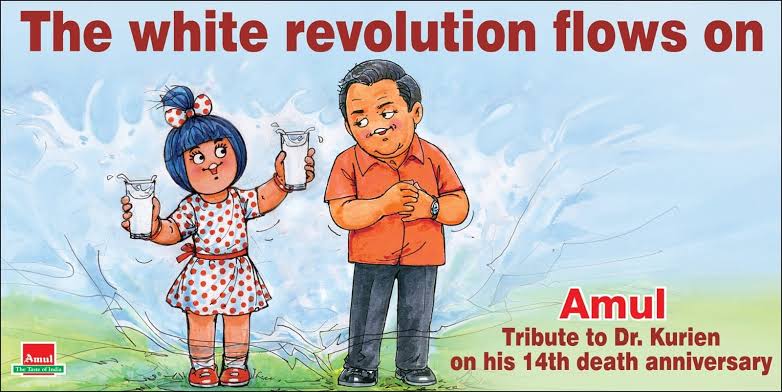
Amul and the Gujarat Co-operative Milk Marketing Federation paid tribute to Dr. Verghese Kurien on his 14th death anniversary in Anand. Known as the architect of India's White Revolution, Kurien established the cooperative model that empowered millions of dairy farmers, securing national milk self-sufficiency and rural economic resilience.
ANAND, India — The Gujarat Co-operative Milk Marketing Federation (GCMMF), the apex organisation marketing dairy products under the Amul brand, commemorated the 14th death anniversary of Dr. Verghese Kurien on Wednesday, September 9, 2026. Kurien, widely revered as the "Father of the White Revolution" in India, passed away on September 9, 2012, in Nadiad, Gujarat. Cooperative leaders, dairy farmers, and agricultural officials gathered across Anand and regional district milk unions to honour the architect of India's multi-tier cooperative dairy model, reaffirming commitments to rural producer empowerment amid contemporary market pressures.
Honoring the Legacy of India's White Revolution
Commemorative events commenced early Wednesday at the GCMMF corporate headquarters and the National Dairy Development Board (NDDB) campus in Anand. Dairy executives, farmer representatives, and agricultural scientists offered floral tributes at Kurien’s memorial, recalling his instrumental role in creating the Anand Model of cooperatives.
Born on November 26, 1921, in Calicut (now Kozhikode), Kerala, Kurien arrived in Anand in 1949 on a government assignment. Rather than departing after his mandatory term, he partnered with local cooperative leaders, including Tribhuvandas Patel, to build the Kaira District Co-operative Milk Producers' Union, later branded Amul.
Kurien's leadership transformed India from a milk-deficient nation heavily reliant on imported milk powder into the world’s largest milk producer. Under his direction, Indian engineers and dairy technologists achieved a critical global breakthrough: manufacturing skimmed milk powder and condensed milk from buffalo milk, a capability previously dismissed by Western dairy experts as technically unfeasible.
Operation Flood and the Creation of Rural Wealth
The cooperative architecture engineered by Kurien culminated in Operation Flood, launched in 1970 under the newly formed National Dairy Development Board. The multi-phased national campaign linked millions of smallholder and landless farmers directly to urban consumers, eliminating predatory middlemen.
Operation Flood established a three-tier institutional structure:
Village Dairy Cooperative Societies: Primary collection centers managed by local farmers, ensuring daily fair pricing based on fat content.
District Cooperative Milk Producers' Unions: Processing facilities that pasteurize milk and manufacture shelf-stable dairy goods.
State Cooperative Milk Marketing Federations: Central marketing entities, such as GCMMF, tasked with nationwide distribution and brand management.
By returning the largest share of consumer expenditure directly to rural producers, the model provided millions of agrarian households with a reliable secondary income, cushioning rural economies against seasonal crop failures.
Impact on Dairy Farmers, Consumers, and Modern Industry
Today, the framework pioneered by Kurien supports more than 3.6 million farmer members across Gujarat alone, processing tens of millions of liters of milk daily.
Nationally, the dairy cooperative network serves as a pillar of food security and consumer price stability. However, the sector faces evolving structural demands. Cooperative unions are currently navigating climate-induced fodder shortages, rising feed costs, and the integration of digital cold-chain logistics.
On this memorial occasion, dairy unions highlighted initiatives to modernize village collection societies through solar-powered automated testing centers and bovine genetic enhancement programs, directly continuing the technological self-reliance Kurien championed.
Official Sources
Information, historical archives, and commemorative proceedings cited in this report were verified through:
Quote Section
"Dr. Verghese Kurien built an institution where the farmer was not merely a supplier, but the rightful owner of the business. As we observe his 14th death anniversary, our responsibility remains clear: protecting producer interests through transparent cooperative values while modernizing our processing and supply networks."
— According to officials at the Gujarat Co-operative Milk Marketing Federation during the Anand memorial ceremony.
Why It Matters
Dr. Kurien’s cooperative blueprint remains foundational to India's rural economic architecture. Dairy farming contributes significantly to India's agricultural gross domestic product and employs millions of rural women. Honoring his legacy underscores the continuing relevance of collective producer ownership, particularly as private multinational dairy enterprises and commercial consolidation expand across Asian agricultural markets.
Key Facts at a Glance
Event: 14th death anniversary of Dr. Verghese Kurien observed on September 9, 2026.
Key Milestone: Founder of Operation Flood (1970), which established India as the world's leading milk producer.
Technical Breakthrough: Pioneered the industrial processing of buffalo milk into skimmed milk powder and condensed milk.
Current Scale: The cooperative network he organized now supports millions of rural producers across India through GCMMF and state dairy federations.
Frequently Asked Questions
Who was Dr. Verghese Kurien?
Dr. Verghese Kurien was an Indian social entrepreneur and dairy engineer widely recognized as the "Father of the White Revolution." He founded Operation Flood, led the NDDB, and established the institutional backbone of the Amul cooperative movement.
When did Dr. Verghese Kurien pass away?
Dr. Kurien passed away on September 9, 2012, at the age of 90 in Nadiad, Gujarat.
What was the significance of Operation Flood?
Launched in 1970, Operation Flood connected rural dairy farmers directly with urban consumer markets through a nationwide grid of cooperatives, ending milk shortages and eliminating intermediaries.
Why is Dr. Kurien's contribution to buffalo milk processing significant?
Before Kurien's team established industrial manufacturing protocols in Anand, global dairy literature considered buffalo milk unsuitable for commercial milk powder production. His success gave India technical independence in dairy manufacturing.
Source: Official memorial communiqués and historical records released by the Gujarat Co-operative Milk Marketing Federation (GCMMF), institutional program updates published by the National Dairy Development Board (NDDB), and regulatory agricultural data from the Department of Animal Husbandry and Dairying.