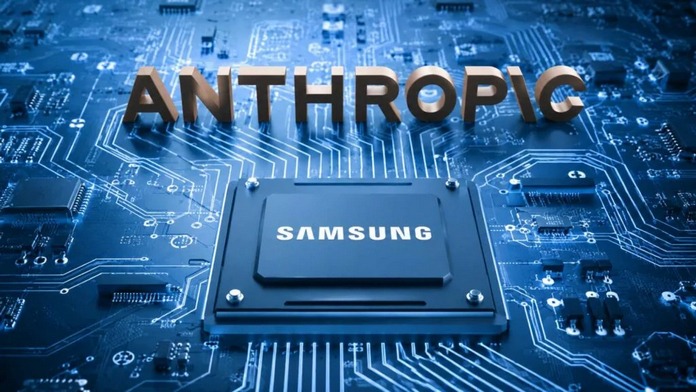
Anthropic is in early-stage discussions with Samsung Electronics to manufacture custom AI accelerator chips. This move aims to help the Claude developer reduce reliance on Nvidia and lower operational costs. While no design is finalized, the effort reflects a broader industry trend toward AI labs seeking custom hardware solutions.
Anthropic is reportedly in preliminary discussions with Samsung Electronics to develop custom AI accelerator chips, signaling a strategic move to reduce reliance on third-party hardware providers.
As the global race for artificial intelligence supremacy intensifies, Anthropic, the developer of the Claude family of models, has entered early-stage negotiations with Samsung Electronics regarding the production of custom AI silicon. The move, first reported on July 2, 2026, reflects a broader industry trend where frontier AI labs are increasingly seeking to vertically integrate their hardware stacks to manage the soaring costs and supply constraints of high-end graphics processing units (GPUs).
Shifting Toward Custom Silicon
Industry observers view these discussions as a deliberate effort by the company to achieve "silicon independence." While Anthropic currently runs its Claude models on hardware sourced from Nvidia, Google, and Amazon, the company is looking to secure a bespoke hardware solution that could optimize performance and reduce operational expenses.
According to reports citing individuals familiar with the matter, the project remains in its infancy. No final design, power specifications, or target workloads have been established, and the effort could potentially be abandoned as the company assesses its long-term infrastructure needs. However, the recent recruitment of Clive Chan—a key engineer who previously contributed to OpenAI’s custom silicon initiatives—suggests that Anthropic is moving beyond initial exploration into active development.
Samsung’s Role as a Potential Foundry Partner
Should the partnership move toward execution, Samsung Electronics would likely serve as the manufacturing foundry. The South Korean tech giant’s advanced 2-nanometer SF2P process and its internal capacity for High Bandwidth Memory (HBM) production make it a logical partner for a startup looking to minimize supply chain bottlenecks.
Samsung has been aggressively positioning itself to capture orders from major AI players, aiming to compete more effectively with Taiwan Semiconductor Manufacturing Company (TSMC). By leveraging Samsung’s advanced foundry capabilities, Anthropic would join an elite list of major tech firms, including Tesla and Nvidia, that utilize Samsung’s manufacturing services for high-performance computing components.
Strategic Context and Industry Trends
Anthropic’s interest in custom chips follows a pattern established by its competitors. Last week, OpenAI unveiled its first custom inference processor, developed in collaboration with Broadcom, to improve the efficiency of its ChatGPT service. Similarly, industry leaders like Google, Amazon, Microsoft, and Meta have already deployed their own proprietary chips—such as TPUs and Trainium processors—to handle the immense data processing requirements of modern generative AI.
Despite the move toward custom hardware, Anthropic has emphasized that it remains committed to its current diversified infrastructure. "A diversified hardware stack including chips from Google, Amazon, and Nvidia will continue to be central to our compute strategy," the company stated in a brief response to inquiries, confirming that its existing partnerships remain essential to supporting the scale of the Claude model family.
Why It Matters
For the AI industry, the shift toward bespoke silicon is fundamentally about economics and latency. As the annualized revenue run rate of frontier AI labs climbs, the cost of renting GPU capacity from traditional cloud providers has become a significant barrier to scalability. By developing chips tailored specifically for the architecture of models like Claude, firms hope to achieve greater performance-per-watt and lower the total cost of ownership for their large-scale computing clusters.
Key Facts at a Glance
Early-Stage Discussions: Anthropic is in preliminary talks with Samsung to explore manufacturing custom AI accelerator chips.
Strategic Goal: The company aims to hedge against Nvidia’s dominance and reduce reliance on third-party hardware.
Talent Acquisition: Anthropic recently hired Clive Chan, a former OpenAI engineer with experience in custom chip development, to lead its semiconductor efforts.
Ongoing Strategy: Anthropic confirmed that chips from Amazon, Google, and Nvidia remain the primary backbone of its current computing infrastructure.
Foundry Potential: Samsung’s 2-nanometer SF2P foundry node is seen as a potential key manufacturing process for these future accelerators.
Frequently Asked Questions (FAQ)
1. Has Anthropic officially confirmed the development of a custom AI chip?
Anthropic has declined to elaborate on its specific discussions with Samsung, stating only that a diversified hardware stack remains pivotal to its ongoing compute strategy.
2. Why are AI companies moving toward custom silicon?
Custom chips allow firms to optimize hardware specifically for their own AI models, potentially improving performance and reducing the massive costs associated with renting standard GPUs.
3. Is this move intended to replace Nvidia hardware?
Not immediately. Anthropic and other frontier labs are currently focused on diversifying their supply chains to manage compute shortages while maintaining their reliance on established providers like Nvidia.
4. What is Samsung's role in this potential partnership?
If a deal is reached, Samsung would likely act as the manufacturing foundry, utilizing its advanced 2-nanometer fabrication processes and HBM memory technology to produce the chips.
Source: The Information, TechCrunch, KED Global, Korea JoongAng Daily