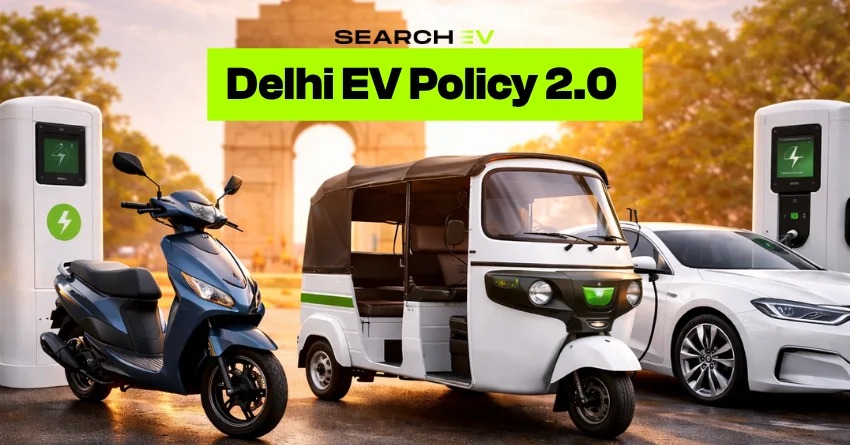
The article covers the impending Cabinet review of the Delhi EV Policy 2.0, which proposes a complete ban on new petrol two-wheeler registrations by April 2028. It highlights the automotive industry's push for structured, enhanced scrappage incentives for older vehicles to ease the consumer transition amid tapering state subsidies.
NEW DELHI, INDIA — As the Delhi government prepares to place its highly anticipated Electric Vehicle (EV) Policy 2.0 before the State Cabinet for final approval, the automotive industry has strongly advocated for a mandatory, phased retirement of older, high-emission internal combustion engine (ICE) two-wheelers. The draft framework, which aims to extend financial incentives and aggressive clean-transport mandates through March 2030, outlines a definitive timeline that will completely ban the registration of new petrol-powered motorcycles and scooters in the National Capital Territory (NCT) by April 1, 2028.
With two-wheelers constituting approximately 67 percent of Delhi's total registered vehicle stock, automotive manufacturers and policy experts emphasize that a proactive, incentive-linked scrappage mechanism is today's most critical requirement to ensure a smooth consumer transition without fracturing the regional retail market.
Strict Mandates Define Delhi's Next Mobility Phase
The draft of the Delhi EV Policy 2.0, originally placed in the public domain for a 30-day stakeholder feedback window, represents a significant shift from voluntary, incentive-backed persuasion to legally binding registration prohibitions. According to official documentation circulated by the Transport Department's EV Cell, the city-state has locked in an aggressive series of deadlines to curb vehicular emissions, which currently account for nearly 23 percent of Delhi's ambient air pollution.
Under the proposed regulatory schedule, commercial ride-hailing aggregators and delivery fleets have already been restricted from adding new fossil-fuel vehicles. The next major enforcement thresholds are scheduled as follows:
January 1, 2027: An absolute registration ban on non-electric three-wheelers (L5 category) takes effect across the capital.
April 1, 2028: New registrations of conventional petrol two-wheelers will be completely prohibited.
March 31, 2030: Target threshold for public and institutional fleets, including schools, to achieve up to 30 percent electrification.
While the automotive sector broadly supports the long-term environmental objectives, original equipment manufacturers (OEMs) have expressed concern regarding the sudden structural drop-off in financial subsidies. The draft policy adopts a tapering incentive structure for electric two-wheelers priced under ₹2.25 lakh. Direct purchase support starts at ₹10,000 per kWh of battery capacity (capped at ₹30,000) in Year 1, before systematically dropping to ₹3,300 per kWh (capped at ₹10,000) by Year 3. Industry analysts point out an inherent policy contradiction: the market is being asked to comply most rigorously in 2028, precisely when state fiscal support is scheduled to disappear.
Industry Demands Scrappage Overhaul to Shield Consumers
To bridge this regulatory gap, auto industry representatives are lobbying the Delhi Transport Department to radically scale up the policy's scrappage incentives. In its current form, the draft EV Policy 2.0 offers a flat ₹10,000 bonus for buyers who scrap an older, Delhi-registered BS-IV or below petrol scooter or motorcycle at an authorized facility.
Automakers argue that a static ₹10,000 incentive provides an insufficient financial trigger for middle-class commuters to discard functional transport, especially when factoring in the higher upfront acquisition cost of high-speed, lithium-ion electric alternatives. The industry has formally proposed a tiered, age-linked scrappage multiplier. Under this counter-proposal, vehicles older than 10 years would qualify for an enhanced, state-subsidized "scrappage credit" redeemable directly at EV points of purchase, effectively functioning as an additional down-payment subsidy to cushion low-income buyers and gig-economy workers from sudden capital strains.
Subsidizing Strong Hybrids Remains a Sticky Issue
The structural finalization of EV Policy 2.0 has run into a complex legislative bottleneck regarding the inclusion of strong hybrid electric vehicles (HEVs). The initial draft outlined a 100 percent road tax and registration fee exemption for pure electric cars priced below ₹30 lakh, while extending a generous 50 percent road tax waiver to strong hybrid variants within the same pricing tier.
Senior government officers have confirmed that the hybrid tax sops face stiff resistance from pure-play EV manufacturers, who argue that state resources should be preserved exclusively for zero-emission tech. Consequently, transport officials are actively considering a compromised revision that would strictly limit the hybrid road tax discount to a tight "2+1 year" window. This operational restriction aims to satisfy immediate automotive supply capacities while keeping the primary financial momentum focused squarely on pure Battery Electric Vehicles (BEVs).
Official Sources Section
The operational timelines, tiered subsidy allocations, and vehicular registration parameters are referenced from the official draft files compiled by the Transport Department's EV Cell under the Government of Delhi. Legislative updates concerning Cabinet review schedules reflect media statements authorized by senior administrative personnel within the Delhi Secretariat.
Quote Section
Commenting on the ongoing internal deliberations ahead of the final Cabinet presentation, a senior Delhi government officer stated:
"The policy is likely to be extended further, and so the approval of the new EV Policy 2.0 is imperative. Our main focus remains heavily weighted toward two-wheelers as they constitute approximately 67% of the total vehicle stock in Delhi, making their rapid electrification critical for achieving meaningful reductions in vehicular emissions. Subsidizing hybrid vehicles remains a sticky issue which is yet to be finalized by the authorities."
Why It Matters
For everyday consumers and daily commuters in the capital, the final iteration of EV Policy 2.0 will directly dictate the on-road cost of personal mobility over the next four years. For the automotive manufacturing sector, a clear, well-funded scrappage ecosystem is vital to prevent sharp volume contractions in the two-wheeler segment, ensuring that the push for clean air does not inadvertently disrupt affordable urban transportation for millions of citizens.
Key Facts at a Glance
Hard Deadline Set: Delhi's draft EV Policy 2.0 mandates a complete ban on the registration of new petrol-powered two-wheelers starting April 1, 2028.
Two-Wheeler Subsidies: Direct purchase incentives for electric two-wheelers start at up to ₹30,000 in Year 1, before tapering down to a maximum of ₹10,000 by Year 3.
Scrappage Credit: The draft currently features a fixed ₹10,000 incentive for scrapping older, Delhi-registered BS-IV or older petrol two-wheelers.
The Hybrid Debate: Policymakers are debating a 50 percent road tax waiver for strong hybrid cars under ₹30 lakh, with proposals to limit the perk to a restricted 2-year window.
Cabinet Review: The final, adjusted draft is scheduled to be placed before the state cabinet headed by Chief Minister Rekha Gupta next week.
FAQ Section
Q: When does the current Delhi EV policy framework expire?
A: The existing, extended Delhi EV policy guidelines remain operational through June 30, after which the newly approved EV Policy 2.0 framework is scheduled to take immediate administrative effect.
Q: Will I be allowed to buy a petrol scooter or motorcycle in Delhi after April 2028?
A: No. Starting April 1, 2028, the regional transport offices (RTOs) in Delhi will permanently cease new registrations for all internal combustion engine (ICE) petrol two-wheelers.
Q: How much direct subsidy can an electric car buyer claim under the new policy?
A: Private electric cars do not receive direct cash purchase subsidies under the 2.0 draft. Instead, they qualify for a 100 percent road tax and registration fee waiver until March 31, 2030, provided the vehicle's ex-showroom price is below ₹30 lakh.
Q: What is the primary demand being made by the auto industry regarding older two-wheelers?
A: The automotive industry is urging the government to introduce a structured, financially viable, and age-linked scrappage retirement plan to aggressively phase out older petrol models, shielding consumers from the economic shock of the 2028 ban.
Source: Delhi Government Official Portal, Delhi Transport Department Gazetted Drafts, Society of Indian Automobile Manufacturers (SIAM) Stakeholder Submissions.