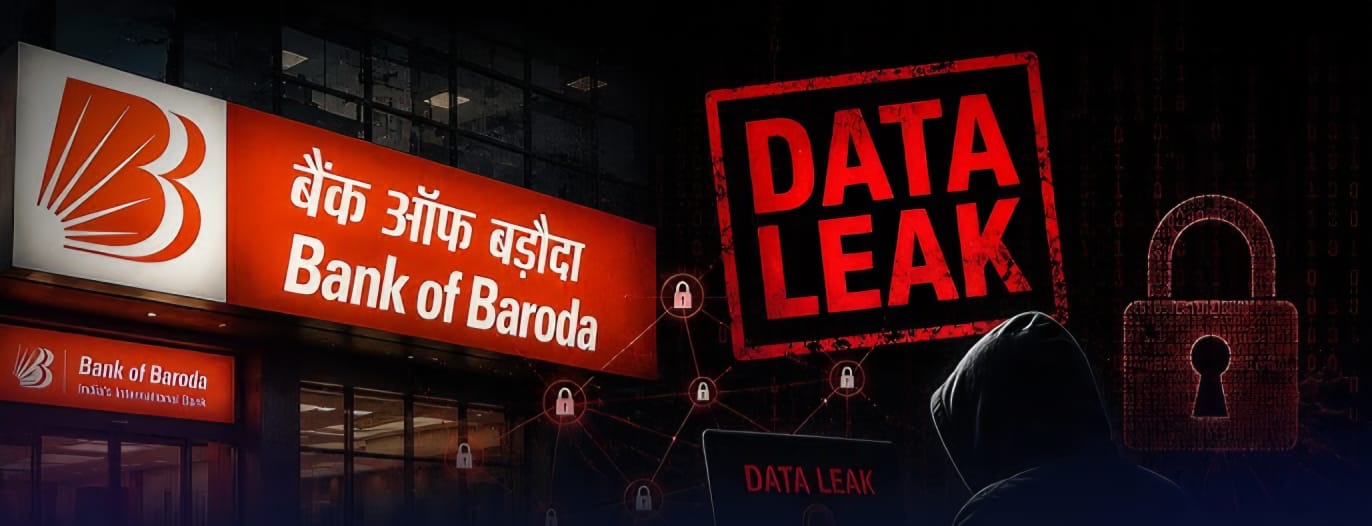
Bank of Baroda activated containment protocols and appointed an independent CERT-In empanelled cybersecurity agency after an anonymous source claimed access to data. Identified as a potential business email compromise, the event has caused no material operational or financial impact, and core banking functions continue running normally.
MUMBAI, India — State-owned Bank of Baroda disclosed on July 27, 2026, that it has initiated containment protocols following a cybersecurity incident linked to an anonymous source claiming unauthorized data access. The bank engaged an independent CERT-In empanelled cybersecurity agency to conduct a forensic investigation into what preliminary findings identify as a potential business email compromise. India’s second-largest public sector bank confirmed that the event has caused no operational disruptions, and core banking functions continue to operate normally without material financial or business continuity impact.
Response Measures and Forensic Investigation
According to a regulatory filing submitted under Regulation 30 of the SEBI Listing Obligations and Disclosure Requirements (LODR), Bank of Baroda activated its incident management protocols immediately upon receiving communication from an anonymous source alleging unauthorized access.
To assess the scope of the incident, the Mumbai-headquartered bank appointed a specialized security team certified by the Indian Computer Emergency Response Team (CERT-In). The independent technical audit focuses on identifying the vector of the potential compromise, verifying affected email repositories, and securing systems against further risk.
Incident Nature: Preliminary findings point toward a localized business email compromise rather than a breach of core banking infrastructure or transactional systems.
Independent Investigation: A CERT-In empanelled cybersecurity firm is performing a detailed assessment to evaluate system logs, email traffic, and data integrity.
Operational Continuity: All retail branches, digital channels, payment gateways, and core banking engines remain online without disruption.
Technical Context and Safeguards in Indian Banking
Business Email Compromise (BEC) attacks typically target corporate communication systems, corporate mailboxes, or third-party email vendors rather than central ledger environments or customer deposit accounts. Financial institutions in India operate under strict cyber resilience guidelines established by the Reserve Bank of India (RBI), requiring immediate isolation of affected servers and mandatory disclosures to regulatory authorities and exchange desks.
Bank of Baroda stated that a detailed technical assessment is currently underway to implement remedial fixes and upgrade preventive access controls across corporate communication channels.
Industry and Stakeholder Impact
For millions of individual retail customers, corporate depositors, and institutional investors, the disclosure provides assurance that core transactional banking remains unaffected. Public sector banks frequently undergo external security audits to maintain strict data protection standards.
Market analysts note that rapid containment and formal communication to capital markets mitigate reputational risks associated with unsolicited cybersecurity claims. The stock exchange disclosure ensures full compliance with SEBI governance mandates.
Official Sources Section
The facts in this report reflect regulatory disclosures filed by Bank of Baroda with the BSE Limited and the National Stock Exchange of India Limited on July 27, 2026, under Regulation 30 of the SEBI (LODR) Regulations, 2015. Verification of security protocol frameworks relies on standards outlined by the Indian Computer Emergency Response Team (CERT-In) and official notices on the Bank of Baroda Portal.
Quote Section
According to official regulatory disclosures signed by S. Balakumar, Company Secretary at Bank of Baroda:
"The Bank received a communication from an anonymous source claiming access to certain data. Based on the preliminary findings available at this stage, the incident has been identified as potential business email compromise and is not expected to have any material impact on the Bank's operations, financial performance, or business continuity."
Why It Matters
Financial institutions handle sensitive economic infrastructure, making swift containment of email threats vital for financial stability. By isolating the issue and enlisting CERT-In experts, Bank of Baroda protects its network while maintaining transparency with equity markets and retail customers.
Key Facts at a Glance
Event Type: Anonymous claim alleging unauthorized data access via email channels.
Preliminary Finding: Identified as a potential business email compromise (BEC).
Audit Agency: Independent CERT-In empanelled cybersecurity agency engaged for investigation.
Operational Impact: Core business systems, ATMs, and digital channels continue normal operations without interruption.
Financial Impact: No material effect expected on operational performance or revenues.
Frequently Asked Questions (FAQ)
What happened at Bank of Baroda?
Bank of Baroda received a communication from an anonymous source claiming unauthorized data access, leading to an immediate cybersecurity investigation.
Are core banking services or customer funds affected?
No. Preliminary assessments indicate a potential business email compromise, with zero disruption to core banking functions or customer account security.
Who is investigating the cybersecurity incident?
Bank of Baroda engaged an independent CERT-In empanelled cybersecurity agency to conduct a thorough forensic investigation.
Has Bank of Baroda reported any financial loss from this event?
No. The bank confirmed the incident is not expected to have any material impact on its financial performance or business continuity.
Sources: Bank of Baroda Corporate Portal, Company Disclosure to the Stock Exchanges