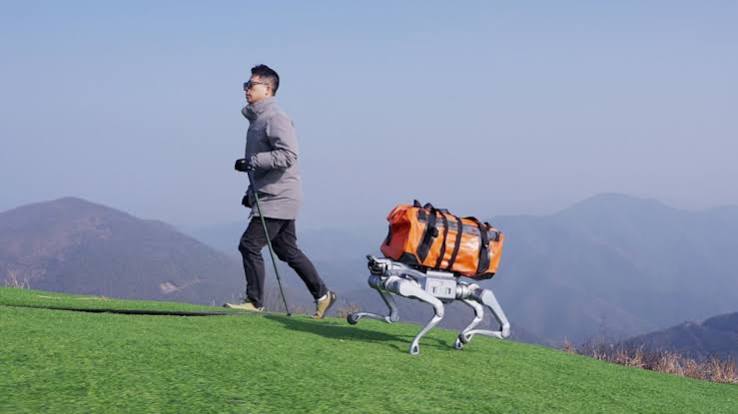
Advancements in AI quadruped robotics are prompting aviation authorities to evaluate robotic dogs as personal travel companions. While quadrupeds offer navigation and carrying support, adoption remains limited by aviation battery capacity caps, cabin spatial regulations, and public transit privacy policies across global airport hubs.
BEIJING — Advancements in artificial intelligence and quadruped robotics are prompting aviation authorities and consumer technology manufacturers to evaluate whether robotic dogs can serve as viable travel companions for domestic and international passengers.
Recent consumer robotics demonstrations and airline regulatory trials in Asia and North America have brought autonomous quadruped devices into public transit spaces. As robotics manufacturers enhance battery performance, obstacle navigation, and conversational AI, aviation regulators are assessing the logistical, safety, and policy frameworks needed to integrate personal quadruped robots into commercial travel hubs.
Technical Capabilities and Public Transit Integration
Personal quadruped robots—commonly referred to as robot dogs—are designed with dynamic balancing algorithms, LiDAR sensors, and visual cameras that allow them to traverse uneven terrain, climb stairs, and follow users through crowded spaces.
Robotics manufacturers, including Hangzhou-based Unitree Robotics and US-based Boston Dynamics, have expanded their product portfolios to include lightweight, consumer-focused quadrupeds capable of emotional interaction, luggage assistance, and environmental mapping.
According to technical specifications published by leading quadruped developers, consumer-grade robotic companions weigh between 12 and 25 kilograms and operate for two to four hours on a single lithium-ion battery charge. When paired with real-time translation models and GPS tracking, these units offer travelers hands-free navigation support, cargo carrying capacity, and companion assistance.
Regulatory Challenges Across Aviation and Rail Networks
Despite technical progress, regulatory frameworks across major transport hubs remain a primary bottleneck for widespread adoption. Transport authorities treat high-capacity lithium-ion batteries under strict hazardous materials guidelines, limiting standard commercial flight carry-on allowances.
Key regulatory hurdles currently under review include:
Battery Capacity Limits: Standard aviation safety protocols set by the International Air Transport Association (IATA) cap passenger lithium-ion batteries at 100 watt-hours (Wh), with special approval required up to 160 Wh. Most high-performance quadruped robots utilize batteries exceeding 200 Wh.
Cabin Space and Transit Safety: Transport operators are reviewing whether robotic companions should be classified as mobility assistance devices, carry-on luggage, or specialized cargo.
Data Privacy and Surveillance: Continuous video and LiDAR mapping in public terminals raise data collection concerns under regional privacy regulations like the EU General Data Protection Regulation (GDPR).
Impact on Travelers, Airlines, and Accessibility Services
For travelers with mobility constraints, neurodivergent passengers, or solo travelers needing navigation aid, robotic companions represent a practical step forward in accessible transit. Accessibility advocates note that autonomous quadrupeds can provide physical stability, carrying assistance, and real-time transit updates inside sprawling international airports.
Conversely, commercial airlines and airport administrators face operational adjustments. Terminal managers must evaluate floor load capacities, crowded terminal flow, and potential interference with existing airport service animals and security equipment.
Official Sources Section
Regulatory updates and policy discussions regarding autonomous devices in transit hubs are derived from official publications and statements by:
Official Statements and Industry Insights
According to aviation safety analysts, integrating autonomous quadruped devices into passenger cabins will require standardized international certification similar to electronic mobility aids.
Industry organizers stated that while technical readiness is high among hardware developers, airport infrastructure and battery safety guidelines must mature before passengers can regularly check in or board with autonomous quadruped companions.
Why It Matters
The potential introduction of robotic dogs into personal travel signals a major shift in urban mobility, airport navigation, and consumer robotics. As battery chemistries improve and regulatory bodies establish clear standards for autonomous devices in transit hubs, robotic companions could transform personal assistance, luggage transport, and accessibility services for millions of global commuters and travelers.
Key Facts at a Glance
Weight & Battery: Consumer quadruped robots typically weigh 12–25 kg and run on 200+ Wh lithium-ion batteries, exceeding current standard cabin carry-on limits without regulatory clearance.
Core Functions: Features include autonomous follow-me tracking, stairs navigation, real-time audio translation, and light cargo transport.
Primary Obstacles: Transport adoption faces regulatory constraints surrounding aviation battery safety, terminal crowdedness, and transit privacy rules.
Accessibility Focus: Initial deployment testing focuses on assisting passengers requiring navigation aid, physical support, or cognitive assistance in complex transport environments.
Frequently Asked Questions
Can I currently bring a robot dog on a commercial flight?
Under current airline guidelines, consumer quadruped robots cannot be brought into passenger cabins as standard carry-on baggage due to battery size limits exceeding standard IATA thresholds. They must typically be shipped via cargo with approved battery handling documentation.
How much do consumer robot dogs cost?
Consumer-grade quadruped companion robots range in price from $1,600 to $10,000 depending on payloads, sensor configurations, and AI processing power.
Do robot dogs pose security or privacy risks in airports?
Because quadruped robots utilize cameras and LiDAR sensors for real-time spatial navigation, airport authorities are evaluating data privacy compliance to ensure recorded terminal imagery complies with public surveillance laws.
Could robot dogs qualify as service animals?
No. International aviation authorities define service animals strictly as trained working animals (typically dogs). Robotic quadrupeds are classified as electronic mobility aids or personal electronic devices.
Sources: International Air Transport Association (IATA), Federal Aviation Administration (FAA)